
The Social Exchange: Strengthening Malaysia’s Social Finance Ecosystem
The Social Exchange is a great initiative by the Securities Commission Malaysia (SC). It is not just an initiative, but a statement that we are not just thinking about the…

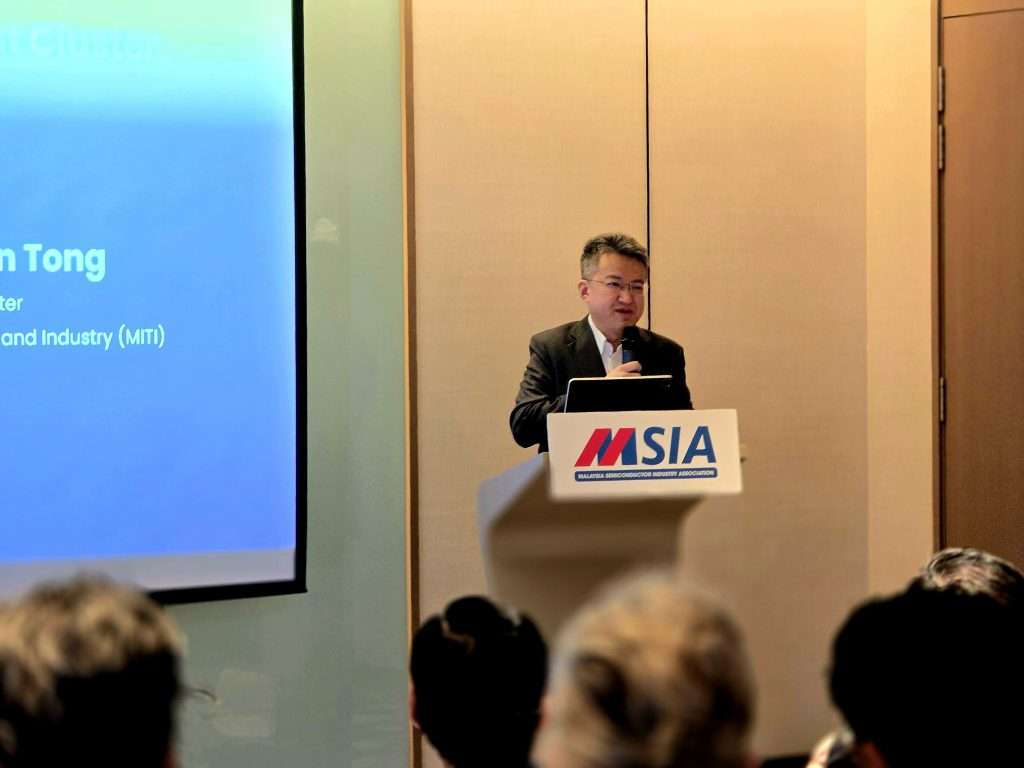
I am delighted to join Penang Chief Minister Sdr Chow Kon Yeow at the launch of the Advanced Technology Equipment Cluster (ATEC) under the auspices of Malaysia Semiconductor Industry Association.
The ATEC is spearheaded by local equipment manufacturers, including ViTrox, Greatech and Pentamaster.
In my engagements with Dutch officials during my visit to the Netherlands in May, it was interesting to find out the emphasis placed on the semiconductor manufacturing equipment sector. One of them categorically told me that “The Dutch semiconductor strategy is equipment-led”. No doubt, the home of ASML can indeed be very proud of its equipment industry.
What is advanced technology equipment all about? CB Chuah of Pentamaster summed it up quite nicely, semiconductor manufacturing equipment is the “process know how”. The equipment makers have to fully comprehend the entire required process of making a chip or a solar panel or a medical device before the equipment needed in the production lines could be made.
While many other industries in Malaysia still rely on unskilled foreign labour to produce with their hands, the semiconductor industry is relatively automated. In other words, there is no semiconductor industry without the equipment makers.
Compared to South Korea, Taiwan and Shenzhen, Professor Kuen Lee of Seoul National University lamented that 52 years since the semiconductor sector began its presence, Penang is still heavily dependent on foreign capitals with almost no globally relevant Malaysian giants like Samsung of Korea, TSMC of Taiwan, or Huawei of China.
Prime Minister Datuk Seri Anwar Ibrahim is cognizant of the challenge. During his speech announcing the National Semiconductor Strategy, he outlined Malaysia’s aspiration of creating 10 Malaysian technology companies each with USD1 billion annual revenue and 100 more with RM1 billion annual revenue. Currently the number of Malaysian technology companies in the region of RM1 billion annual revenue is in the tens.
We want to see more Malaysian companies thriving in the broader semiconductor industry. Interestingly, quite a few sizable Malaysian companies in technology are actually in advanced technology equipment.
When I took a group of scholars, policy think tankers and officials to visit Penang in May, the head of a multilateral bank, who is also a friend of mine who had previously discussed a lot about the future of Malaysian economy, pulled me aside during our tour of the Greatech factory floor, and said “now I know where your optimism about Malaysia’s future comes from”. He realised that there was too much cynicism in the circles in Kuala Lumpur that never bothered to find out that the technology level of Malaysian firms in Penang and Kulim have reached a very high level.
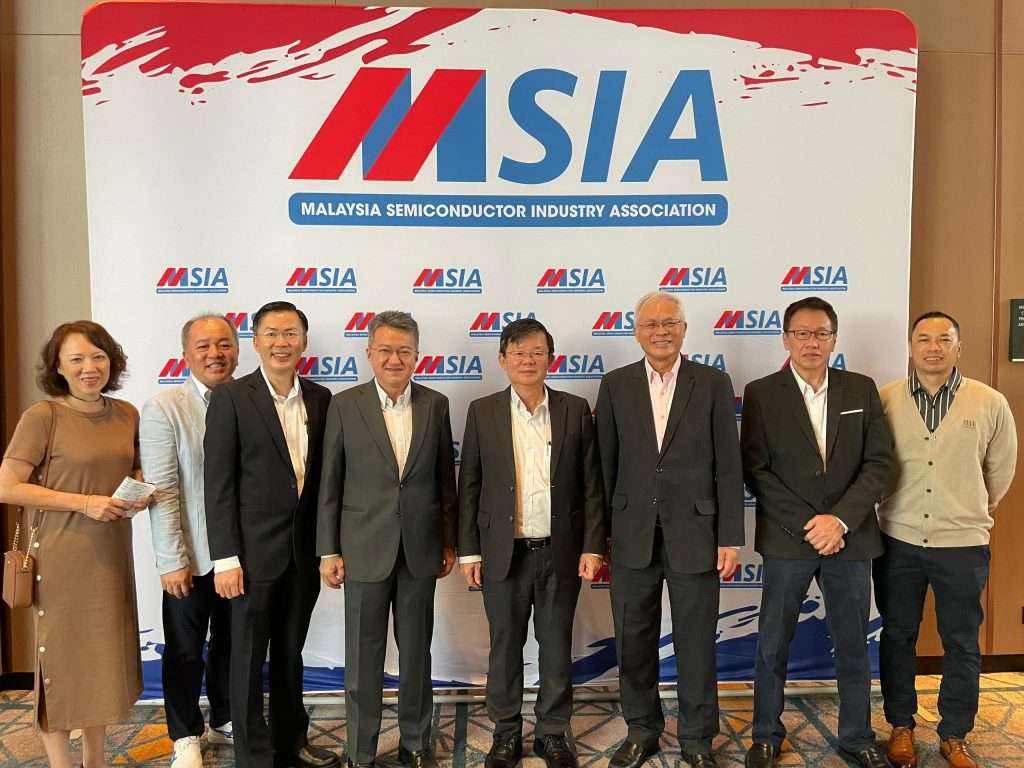
I am therefore very delighted that today’s event is the start of a journey in which we give the equipment sub-sector a proper name and recognition, and see the equipment sub-sector as an important driver in the creation of many USD1 billion and RM1 billion Malaysian companies.
With the formation of the ATEC, I hope this will help to speed up the broader localisation of equipment used by multinational companies that are relocating to our country. Malaysia Investment Development Authority (MIDA) would now have a more robust list of Malaysian equipment makers to present to MNCs and help these MNCs to localise their equipment buys.
It is important that as a nation we do everything to ensure that foreign direct investments (FDIs) into Malaysia contribute to wider benefits for local firms and also better jobs and better pay for Malaysians, and eventually contribute to the rise of Malaysian giants that are globally consequential.
The equipment sector should also not stop short at just making equipment for the semiconductor sector. I visited ViTrox Agritech at Ara Kuda, Tasek Gelugor, yesterday and witnessed how technology for the semiconductor sector can be applied to precision agriculture.
For Malaysia to be an advanced economy, we need to adopt, automate and innovate technologies so as to reduce dependence on unskilled foreign labour in all sectors. I would like to see more equipment companies helping all sectors such as agriculture, furniture, construction, palm oil plantation etc to automate.
In fact, upon becoming Deputy Investment, Trade and Industry Minister, one of my first few meetings with the equipment industry was for my search for dishwasher makers as I believe that an advanced society would have high levels of automation, including automated dishwashers and not falsely assume that washing dishes with hands is cleaner than using a machine. That idea brought me to meet Walta Engineering before meeting other equipment manufacturers in Penang, and led me to discover the Penang Automation Cluster, a role model for collective action and a spirit of collaboration that is universally praised by visitors who try to understand the Penang-Kulim semiconductor industry.
While the Malaysian semiconductor industry has been very well connected vertically to the global supply chain, it is time for us to foster horizontal linkages. This will enable the semiconductor industry to design and invent chips that solve Malaysia’s problems in health, food security, transport, or green transition, just as the equipment makers are making equipment beyond the semiconductor industry.
Only with innovations that solve our national and regional problems can we create products that would improve the lives of millions of ordinary people. And with such products of our creation, Malaysia joins the ranks of South Korea, Taiwan and China to become a technology powerhouse for the decades to come.
This is my speech delivered at the Launch of the Advanced Technology Equipment Cluster by Malaysia Semiconductor Industry Association (MSIA) on September 7, 2024.

