
The Social Exchange: Strengthening Malaysia’s Social Finance Ecosystem
The Social Exchange is a great initiative by the Securities Commission Malaysia (SC). It is not just an initiative, but a statement that we are not just thinking about the…

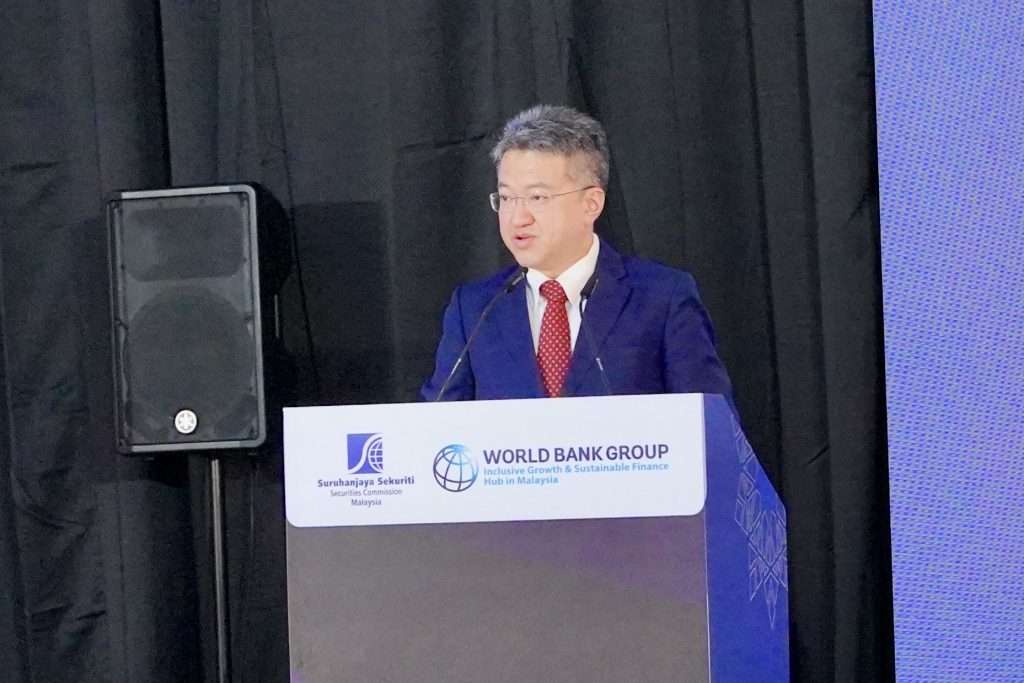
May I thank the Securities Commission and World Bank for the invitation to deliver today’s keynote address at the SC-World Bank Conference 2024. Today’s conference theme “Empowering MSMEs: Cultivating Compassionate Growth through the Capital Market” is timely, as we seek to explore how Capital Markets can bridge the MSME finance gap in Malaysia.
Malaysia’s Second Takeoff: Doing things differently
On 28 July 2023, Prime Minister Datuk Seri Anwar Ibrahim launched the Madani Economy Framework at the Securities Commission, providing clear policy directions for the Malaysian economy to rise again. The Madani Framework was followed by the launch of the National Energy Transition Roadmap (NETR) in August 2023, and the New Industrial Master Plan 2030.
The Madani framework stresses upon the idea of raising the ceiling and raising the floor at once. You included “compassionate growth” in the theme and expressing the aspiration of empowering the MSMEs through the capital market is the best testimony of the Madani spirits.
As we enter the last quarter of 2024, it is clear to all that the Unity Government led by Anwar has provided the political and policy environments for long-term thinking in economic decision-making. Consumption, investment, and export numbers are accelerating, despite the challenges in the global economy. The World Bank has revised Malaysia’s growth rate to 4.9%. The evidence is also clear in financial markets, as gains are returning to the ringgit and stock market. I am sure many of you follow Bursa Malaysia closely, and you would have noticed that total stock market capitalization has resumed its uptrend to an all-time-high this year, after a long period of stagnation.
Relocation of supply chains
To understand the place of MSMEs in the supply chain, let us take a look at the history of the global shifts over the past 60 years.
The shifts in the global economy is providing Malaysia a once in a generation opportunity, too. Globally, there have been four major rounds of relocations of the supply chain. By the 1960s, as costs increased in the United States, outsourcing happened initially to Japan, followed by many other East Asia destinations. Malaysia benefited from the first wave when some of these global firms set up shops in Free Trade Zones in Penang, Petaling Jaya and Shah Alam.
The second wave of relocation of the supply chain was triggered by the United States forcing Japan to appreciate the value of yen through the Plaza Accord in 1985. By 1988, it was too expensive to export from Japan, prompting a wave of relocation to Malaysia and other Southeast Asian countries by Japanese firms and their Taiwanese and South Korean suppliers, paving the way for Malaysia’s first economic takeoff between 1988 and 1997.
The third wave of relocation was to China, especially after China joined the World Trade Organisation in 2001. Every corporation had a China strategy then. Malaysia experienced its lost decades, especially in the manufacturing sector, as the world looked to China. Now we are seeing the fourth wave of relocation of the supply chain: relocating out-of-China.
When the supply chain is relocated away from China, Malaysia is uniquely positioned to benefit. Malaysia has a stable society with rule of law, reasonably good infrastructure, a multilingual and multicultural workforce, strategic location in global trade routes etc.
All stars are aligned
With a favourable domestic environment and global shifts that favour us, we may be in an “all stars are aligned” situation. But how long will this last? Can we build on this to create a long-lasting second takeoff for the Malaysian economy? And, ultimately, what do we want to achieve?
In the 1990s, Malaysia’s technology was deemed not too far inferior from South Korea and Taiwan in Asia. But Malaysia is now very far behind in terms of technology compared to South Korea, Taiwan, and China. During the second takeoff, we must aim to be a bit like Korea to become an innovator and technology producer. We must catch up and, more importantly, leapfrog!
There will be many challenges that Malaysia will face in its road to catch up and even leapfrog. I would like to outline three of them at this occasion:
First, can Malaysia grow at 6% over a period of a decade? Ndiame Diop, the former Country Head of the World Bank, asked me in February 2023 this question. And, what it takes to grow at 6% without overheating the economy and growing sustainably. While a year ago it was hard to conceive that Malaysia would grow at 5%, we are nearing there now. Can Malaysia grow more exponentially? We will have to do things differently.
This leads me to the second challenge: how to fund high growth that is based on innovation? Over the years, different segments of the Malaysian economy acted almost in different spheres. Malaysia Investment Development Authority (MIDA) focuses on growing manufacturing and often via foreign direct investment (FDIs). On the other hand, the government-linked investment corporations (GLICs) and government-linked corporations (GLCs) mostly shy away from manufacturing. The capital markets have not been at the forefront of manufacturing either. The New Industrial Master Plan 2030 is a notable attempt of collaboration between the Ministry of Investment, Trade and Industry and the Securities Commission. SC’s “Catalyzing MSME and Mid-Tier Company (MTC) Access to Capital Market: 5-Year Roadmap (2024-2028)” is another example in which we recognize that we must mobilize capitals towards our industries holistically.
The third challenge is to grow Malaysian technology, and more importantly, globally relevant Malaysian technology companies. We must admit that despite having a head start in the semiconductor industry, Taiwan and Shenzhen, Penang and Malaysia have not built its TSMC, Samsung, Huawei, or BYD.
For Malaysia to be like Korea through the second takeoff, we must grow Malaysian technology companies starting with MSMEs, and especially mid-tier companies, that are owning their technologies or adapting technologies innovatively. It takes a village to create a champion.
A “scorecard” that we can use to measure high quality investment is the 6 pillars of the New Investment Aspirations (NIA), which are increasing economic complexity, creating high-value job opportunities, extending domestic linkages, developing new & existing economic clusters, improving inclusivity and ESG.
For Malaysia to reach the next level and to have high yet sustainable growth, the capital market and everyone else will have to collaborate to seize the once-in-a-generation opportunity of the second takeoff to make Malaysia a regional economic powerhouse.
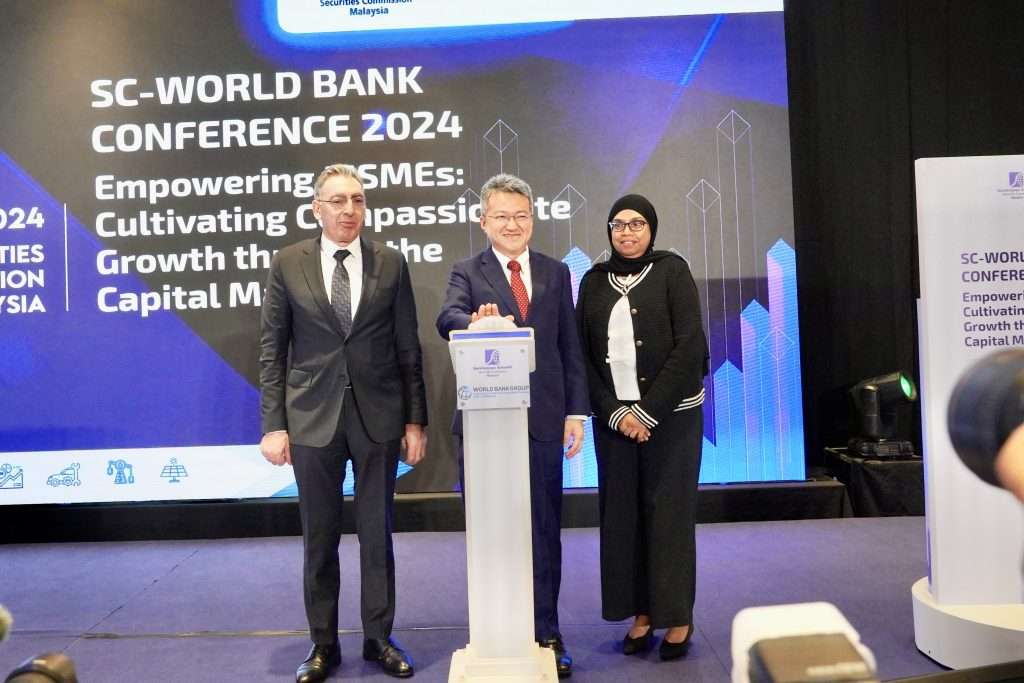
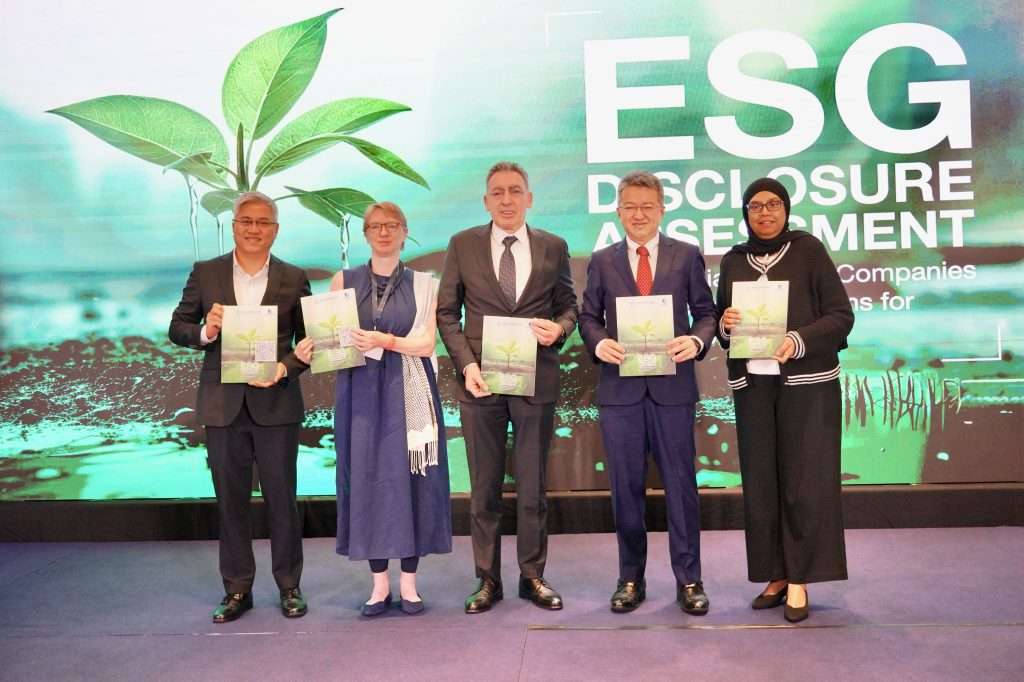
This is my speech delivered at the Securities Commission-World Bank Conference 2024 and the Launch of ESG Disclosure Assessment of Malaysia’s Listed Companies on October 15, 2024.

