
The Social Exchange: Strengthening Malaysia’s Social Finance Ecosystem
The Social Exchange is a great initiative by the Securities Commission Malaysia (SC). It is not just an initiative, but a statement that we are not just thinking about the…

The Data Centre Industry
During the National Investment Council meeting in June, Prime Minister Datuk Seri Anwar Ibrahim has requested MITI together with its agencies, including SIRIM, MIDA, and all relevant agencies, to work on guidelines to regulate the data centre industry.
To start with, we are developing the guidelines on Power Usage Effectiveness (PUE) and Water Usage Effectiveness (WUE). We are also taking one step further to deal with Carbon Usage Effectiveness (CUE) to improve energy efficiency and sustainability.
This is just at the beginning. The government, the multiple agencies within the government, data centre operators and other stakeholders, we are all learning how to manage and deal with data centres and how to grow the industry sustainably. I describe this as “building the ship as we sail it”.
More importantly, the government’s focus is not solely on data centres. Instead, it is about growing the businesses and creating the jobs that are powered by data centres, including the local equipment suppliers, building a robust technology ecosystem and the services jobs in Malaysia.
Data centres are not exactly a new industry. However, we entered a new phase in 2024 with the advent of generative AI The demand for data centres increased exponentially to accommodate its intense computational demands.
The market size of AI is expected to grow by four times within the next six years and it will drive 15% annual growth in global data centre energy demand over the same period of time.
I have been told that a Chat-GPT search consumes about 10 times more energy than a conventional Google search. The energy consumption of AI data centres is immense and will have a significant impact on the net-zero aspirations of many organisations and even countries.
The generative AI boom is presenting the same set of challenges to data centres everywhere in the world.
Prime Minister Anwar in his 2025 Budget speech last Friday, mentioned this: “The country, as in Malaysia, must embark on a new paradigm shift to attract more meaningful investments. We can no longer sustain the outdated approach of offering incentives and support to investors without considering the broader economic benefits. For instance, investment in data centres should not be pursued unless they bring tangible added value to the Rakyat, such as high-paying job opportunities and knowledge transfer. A fresh shift in focus is now essential, ensuring that the support provided uses a multiplying effect that directly benefits the Rakyat and the nation, rather than merely serving the profit motive of the investor companies.”

The Five Questions to Consider
Now, this is a challenge for everyone, that when we grow the data centre business, not just the infrastructure, but we must be thinking about multiple challenges that we have to deal with. And let me outline five of the challenges that I think we can work on together.
First, how to create jobs, and more importantly high value jobs, in this industry. I understand that the data centres on-site doesn’t create a sufficient number of jobs. But how do we generate the multiplying effect of creating jobs in operations, maintenance, and along the entire supply chain?
The job opportunities may not be on-site, but the industry will have to articulate that they are growing jobs at all levels. While developing the data centres in Sedenak, Kulai and Iskandar Puteri which have now become the focal point of data centres, how do we create higher-skilled maintenance, engineering and services jobs in Kuala Lumpur or Johor Bahru. It has to come as a package. We will have to start thinking about how to create jobs that pay well.
I had this conversation with Dato’ Onn Hafiz Ghazi, the Menteri Besar of Johor, and he has made this public as well. He said he had a conversation with data centre operators, so he asked them, “How much do you pay your workers in Singapore?” They said, “SGD 4,000.” Then he asked, “How much do you pay in Malaysia?” “RM 4,000,” they replied.
This is why he advocated for industry players to pay at least 50% of what they pay in Singapore, especially after benefitting from the low cost of utilities, land, and labour, which are 70% cheaper than in neighbouring countries.
Now, this is the question we have to ask: how do we create jobs that pay well? How do we benchmark pay? My advice to the Malaysian industry, whether you are in a data centre or other industry, do not benchmark Malaysian pay against pay in countries with lower skill capacity.
Benchmarking has to be done differently. Malaysia should be understood as a Singapore at a discount. When we think about jobs, we need to think about pay. There is no talent problem in Malaysia – the only problem is that Malaysian talents are working in Singapore. When you offer two-thirds of Singapore pay, they will come back to work in Malaysia.

The second question is water consumption. The data centre industry will have to invest into creating alternative water sources instead of competing with the people for water. For instance, Southern Johor has many rivers, most of which are very dirty. Should investment be put into cleaning them up and reclaiming water from the rivers, apart from other solutions?
The third challenge is energy consumption. Two years ago, the Malaysian government made a commitment to reach net zero as soon as 2050. This year, Prime Minister Anwar made a firmer commitment that Malaysia is to achieve net zero in 2050. Energy intensive industries, including data centres, will have to look into technologies – existing and new – to achieve this national target.
Investments into renewable energy is imminent to allow for the data centre industry to grow while minimising impact on sustainability.
The third question is localisation. This is, again, mandated by the Prime Minister to MITI. The Prime Minister requested MITI and MIDA to look into mechanisms for the data centre industry to localise. One stark example is server racks. Over the past few months, the import of server racks has been quite significant.
How can the government work with the industry players to create Malaysian equipment for domestic consumption of data centres as well as potentially for export? We must remember that Malaysia has very strong metal fabrication and equipment industries that have been serving the semiconductor industry.
Now, this is the fifth and final challenge – the nation will also have to work with the data centre industry to prevent speculative build. AI is going to power a lot more demand for data centres, but at the same time, we need to ensure there is no speculative build which could result in a glut.
Finally, I highly encourage data centre industry players to form an association, to build a collective voice and a common policy platform, as well as to advocate for good and solid policies for the common good of the industry and the nation.
The data centre industry is at a new phase globally. Everyone is facing the same challenge, and this is the best time that we come together and work together – the government, the industry players, the users, and the wider stakeholders – to look at how to build this industry and how to deal with the challenges that I outlined above. I hope we can work together, so that this industry can flourish, and at the same time, Malaysians benefit from your industry.
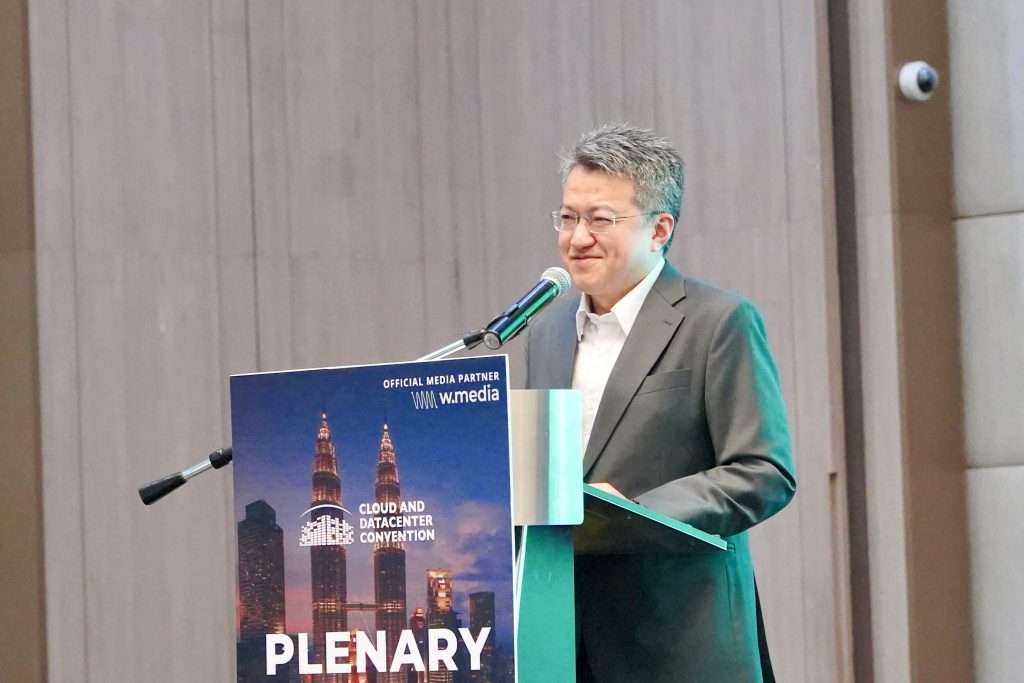
This is my speech delivered at the Malaysia Cloud and Data Center Convention 2024 on October 24, 2024.

