
The Social Exchange: Strengthening Malaysia’s Social Finance Ecosystem
The Social Exchange is a great initiative by the Securities Commission Malaysia (SC). It is not just an initiative, but a statement that we are not just thinking about the…

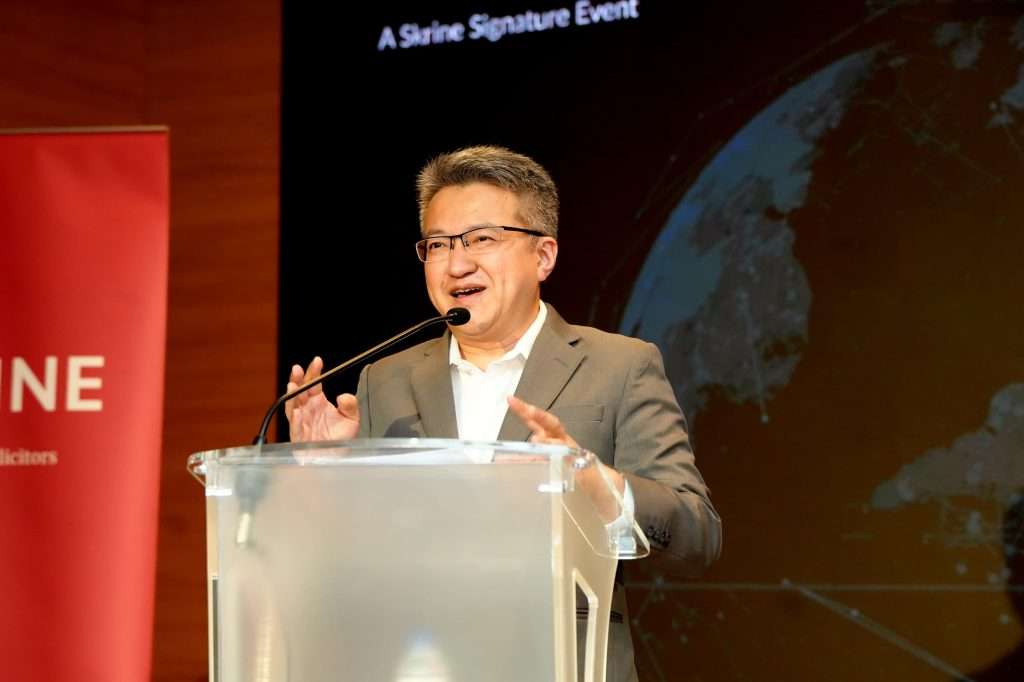
It is my pleasure to welcome all of you to the seminar on “Legal Appetite for Sanctions and Tariffs Risks”.
Shifting Dynamics in Global Trade
Years later, when we look back in hindsight, historians would probably agree that 2025 is the start of a new period in global history, especially in trade.
The hyperglobalisation era, which began in 1989 with the fall of the Berlin Wall and faded with the Global Financial Crisis, and on life support since the Covid-19 pandemic in 2020, has by now officially ended.
The last era was premised on the idea of the world being an efficient single supply chain which resulted in vulnerabilities on various fronts. The new period in history will place a lot more emphasis on security and resilience.

The current trade architecture, especially the World Trade Organisation (WTO) rules, was built upon the ethos of the last era, which will see many countries no longer having faith in them. The case in point is that the world is now dealing with the Trump tariffs.
Tariffs are not simply about raising the price of imported goods. Their effects and consequences are more than that. They disrupt supply chains by creating second-order effects. For instance, goods that were originally destined for the US market are now being redirected and flooding other markets, including ours. This creates serious challenges as the influx of imports could undermine our local producers.
At the same time, national security concerns over goods such as high-performance artificial intelligence (AI) chips and critical minerals have placed Malaysia in the crossfire, exposing us to export controls and the risk of sanctions. While we maintain a policy of neutrality, some exporters have misinterpreted this stance and sought to use Malaysia as a base to tariffs evasion or sanctions circumvention. This is why we cannot afford to fall asleep at the wheel but rather to be vigilant. These developments have also pushed the government to strengthen enforcement and tightens domestic oversight over certain imports and exports.
Changing Our Mindset
All of this tells us that we need to change the way we see and think about trade. Trade should no longer be seen as an end in itself, but as a means to achieve a broader purpose. The old model of overlying on trade and racing to the bottom, where Malaysia and other ASEAN members compete to manufacture as cheaply as possible and export to the US, is no longer sustainable. What is needed now is for both the government and the private sector to think carefully about the next five, ten and twenty years, and to determine the best strategies for us to exist and adapt to this changing global landscape.
Broadly, there are three things we can do and should continue to do:
Market Diversification
First, we must continue expanding and diversify our export markets. By doing so, our exposure to shocks from any single economy will be reduced. And, this will help us develop a more resilient and adaptive supply chain where disruptions in one part of the world do not paralyse our entire system. This growing concern for resilience in supply chain is attributed to the shift in global focus from a ‘just-in-time’ to a ‘just-in-case’ strategy. Governments and corporations no longer just think about efficiency but also stability and resiliency.
Malaysia is already taking steps in this direction by strengthening trade and investment ties with emerging markets in Central Asia, the Middle East, Africa and Latin America. Malaysia must also continue with its neutrality position and to remain as a stable, reliable and trusted actor in the global trading system.
Market Creation
Second, when there is a collision between two major markets, the collateral damage can be far-reaching. Yet within this challenging scenario lies the opportunity to shape a third major market. In light of that, we must start seeing ASEAN as one market. It is time we move away from the mindset of competing with one another through low wages, aggressive offering of tax incentives, or market access. Instead, we must recognise the strength of working together to build an integrated regional supply chain and a vibrant consumer base of our own.
ASEAN has a population of over 680 million people. That is not a small market, except that our people are not rich as yet. A stronger and more integrated ASEAN, with a strong middle class, will not only encourage major powers to engage with us as a single unit but may also attract other emerging economies to trade with us, invest in us, and grow alongside us.

Arming ourselves with the Law
Third, we must arm ourselves with the law. While economic and policy measures are essential, they are not sufficient on their own. In this new era, we must equip ourselves with the law. The law is not merely a set of technical rules because at its core, it is an instrument to advance justice, maintain order (including international order) and create a level playing field.
The law can certainly serve two purposes: to advance and to defend our national interests. Hence, in navigating this ever-evolving global trading system, the law must be part of the equation.
Even when we speak of tariffs or the threat of sanctions, whether in a seminar or in real-world policy discussions, the first question that should come to mind is: what is the legal basis for such action? If such power exists, is it limited? Are there conditions that must be met? And above all, is it appropriate to invoke that power in the circumstances?
In fact, what has kept the world in check for so long, even with its imperfections, is the existence of international legal norms that hold states accountable and provide a framework for peaceful settlement of disputes. The law may not be perfect but dismantling it would leave us exposed to the very instability and uncertainty that we seek to avoid.
As Malaysia charts its course through this changing global economy, it is important that both government and private sector actors work together to strengthen our legal knowledge and enhance our ability to navigate complex legal and regulatory challenges. This is precisely why seminars like today’s are important. They provide not only a platform for learning, but also an opportunity to foster dialogue and develop a shared understanding of how we can move forward together in this evolving landscape. Malaysia must stay ahead of the curve.
Appreciation to Skrine
Before I end, allow me to express our appreciation to our friends at Skrine for organising this seminar and to all eminent speakers and attendees for participating in this important discussion.
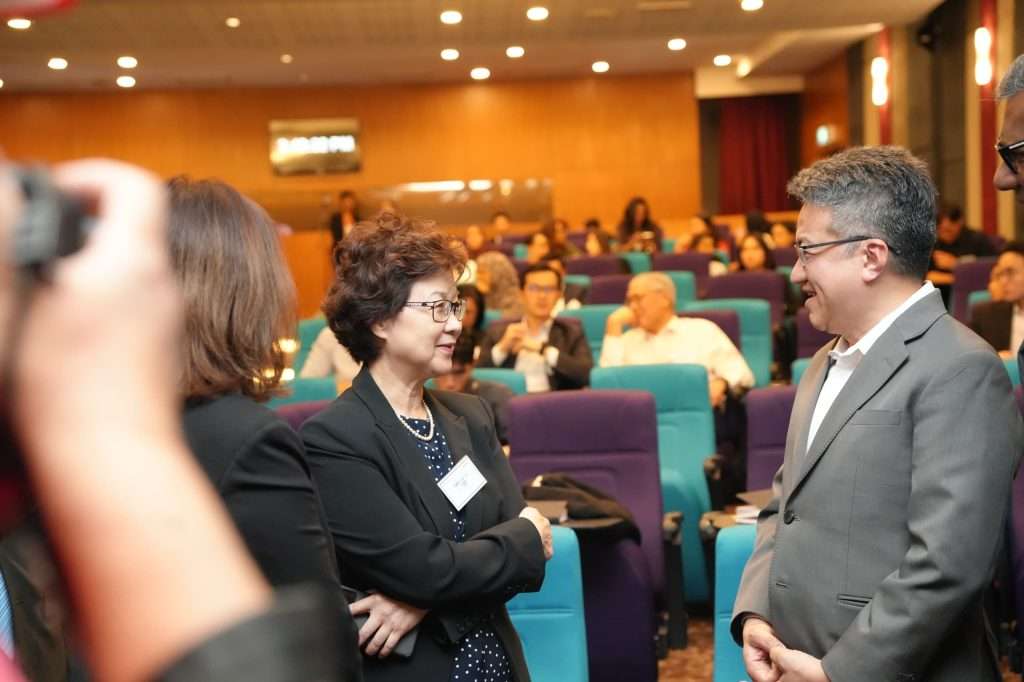
This is my speech delivered at the “Staying Ahead of the Curve: Legal Appetite for Sanctions and Tariffs Risks” seminar organised by Skrine, held on 15 July 2025 at the Asian International Arbitration Centre

