This week I made two separate day trips, one to Johor and another one to Penang. In spite of a hectic schedule, I was so drawn to a book that I finished reading it during the long car ride and in between meetings. The book was “Shades Of Grey: A Political Memoir of Modern Indonesia 1965-1998” by Jusuf Wanandi.
I met Pak Jusuf, one of the founders of the Centre of Strategic and International Studies (CSIS), Indonesia, in two consecutive installments of the Asia Pacific Roundtable, organised by Institute of Strategic and International Studies in Kuala Lumpur.
During this year’s session, I was seated next to him and was swayed by his fervent speech at the closing session in which he advocated for a Leaders’ Meeting for Regional Comprehensive Economic Partnership (RCEP). While I didn’t know him personally, I was both surprised and impressed that at 88 years old he was so passionate, lucid, and perceptive.
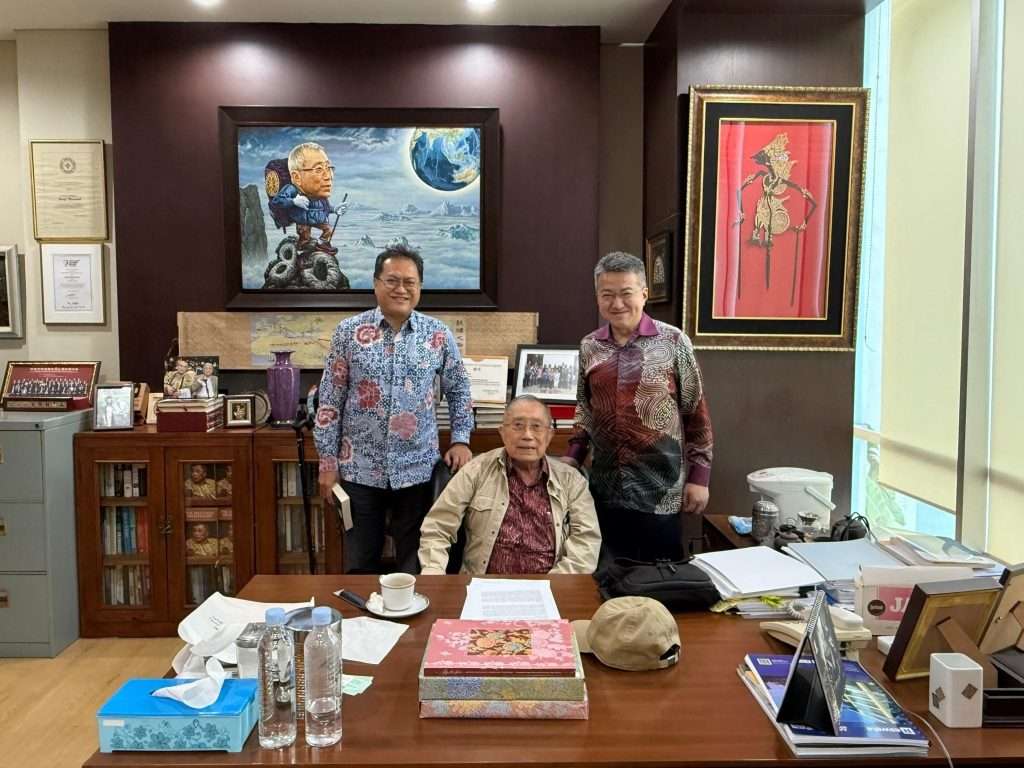
When I was in Jakarta last week, I paid him a visit, and we had a wonderful conversation. One of the stories he told me was that, with General Ali Moertopo, he was involved in the secret negotiations to end Indonesia’s “Konfrontasi” against Malaysia. Konfrontasi (1963-66) was President Sukarno’s campaign against the formation of Malaysia which he accused of being a tool of Western neo-colonialism.
A year after the conflict ended – as Pak Jusuf shared with me – he went around Malaysia, Singapore, Thailand, and the Philippines to understand these societies weeks before ASEAN was officially established on 8 August 1967.
His story was so captivating that I asked him if he had written these experiences in memoirs. That was when he presented me with his book “Shades Of Grey” as a gift. Jokingly, he added that his book was published slightly earlier than the dark erotic novel “Fifty Shades of Grey”.
By the time I finished reading the book, I realised how heavy the “shades of grey” Pak Jusuf meant:
- In 1965, as an anti-communist activist, he was worried whether his side would win the battles against the Indonesian Communist Party, a close ally of Sukarno. They did win but it was followed by mass killings;
- In 1967, he and his allies pushed for Suharto to become President, and to remove all remaining powers of President Sukarno. While the first 20 years of Suharto were in general good in the eyes of Pak Jusuf, he believed that they had removed an old dictator to hand over power to a new dictator.
- After the failed coup in 1965, and as of 1971, “up to 600,000 people were still being detained – for nothing”. Through his intervention, by 1974, “more than 550,000 of them were released”. Of the remaining 2,000 or so detainees, “many were still detained when Suharto was forced to step down in 1998.” The numbers are mind-boggling.
- He also explained the context of Indonesia’s involvement in East Timor, which later became a stain in Indonesia’s human rights record.
Over the years since my study at the Australian National University which has a very strong Indonesian studies programme, I have been trying to keep myself abreast with the political development in Indonesia. This book, by a participant-intellectual, certainly stands out for its candour.
A witness to the making of modern Indonesia and ASEAN, Pak Jusuf’s life stories are fascinating. I encourage all of you to read this to have a better feel of the history of ASEAN and Indonesia.