
The Social Exchange: Strengthening Malaysia’s Social Finance Ecosystem
The Social Exchange is a great initiative by the Securities Commission Malaysia (SC). It is not just an initiative, but a statement that we are not just thinking about the…

I would like to thank ASEAN Deputy Secretary-General Satvinder Singh and the ASEAN Secretariat for the report on the outlook of this year and the next.
I would also take this opportunity to welcome Timor-Leste for joining the group and be part of this big ASEAN family. Timor-Leste’s accession to ASEAN will happen on 26 October 2025 at the ASEAN Summit in Kuala Lumpur.
The year 2025 is likely to be remembered as a watershed year in global economic order. The major changes that the world experienced this year, especially with the United States being less keen on international cooperation, and the shift from a unipolar to a multipolar world, are likely to be irreversible.
Against the background of a more volatile world, for ASEAN, in simplest terms, we will have to deal with two major challenges in the next 20 years.
Firstly, how to defensively prevent Gen Z protests by providing more meaningful jobs with better pay, and a sense of upward social mobility.
All our policies, especially economic policies, will have to gear towards ensuring that the Gen Z are with us. From now on, this objective should guide all our economic actions.
Secondly, how to get rich before getting old. ASEAN is comparatively much younger compared to Northeast Asia. This young population is our asset. While this is a major societal change, we must do everything possible by 2045 to ensure that ASEAN gets rich before we get old.
ASEAN must be ever-ready to deal with geopolitical fallouts and wars, climate disasters, financial crises, as well as pandemic and health challenges. To anticipate and mitigate such risks should be very high on the ASEAN agenda.
I would like to take this opportunity to thank Indonesia for co-chairing the ASEAN Geoeconomics Task Force (AGTF).
When the world was faced with the possibility of Trump tariffs and its associated second order effects such as a race to the bottom price war and overcapacity due to the loss of the US market, the ASEAN Economic Ministers’ Retreat in Desaru, Johor in February 2025 decided to establish the AGTF. I am honoured to co-chair the Task Force with my Indonesian colleagues Ibu Dyah Roro Esti Widya Putri, Deputy Minister of Trade, and Bapak Djatmiko Bris Witjaksono, Director General of International Trade Negotiation, Ministry of Trade.
It has been a very fruitful experience, and we had multiple discussions online as well as offline in Kuala Lumpur and Jakarta. The Task Force has completed its ASEAN Geoeconomics Report with the title “This Time It Is Different: ASEAN’s Agency in Shaping the New Global Agenda”. It will be presented to the historic joint meeting of ASEAN Foreign Ministers’ Meeting (AMM) and ASEAN Economic Ministers’ Meeting (AEM) tomorrow. This is the first AMM-AEM joint meeting in more than two decades.
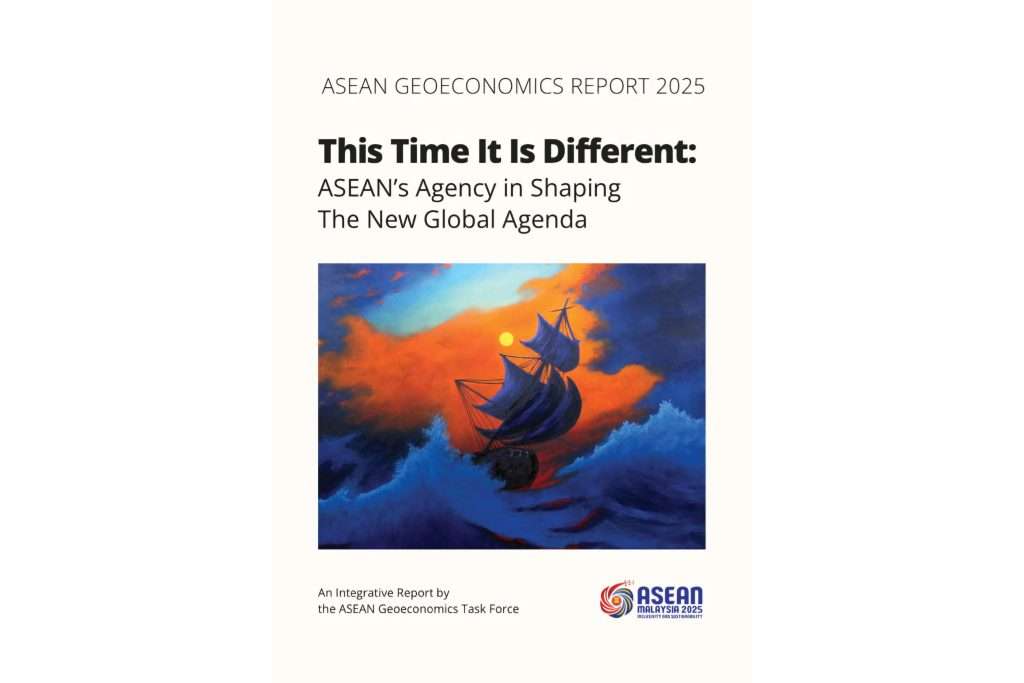
There are many talks about navigating the global challenges. And we would like to present the view that ASEAN has agency that could shape the global order to a certain extent.
We are not saying that we can do everything but ASEAN centrality means that we do have agency, and we are able to shape the agenda and develop the new global order to some degree.
A strong ASEAN means a rich ASEAN that has a strong middle class and a sizable market, and not merely a production site.
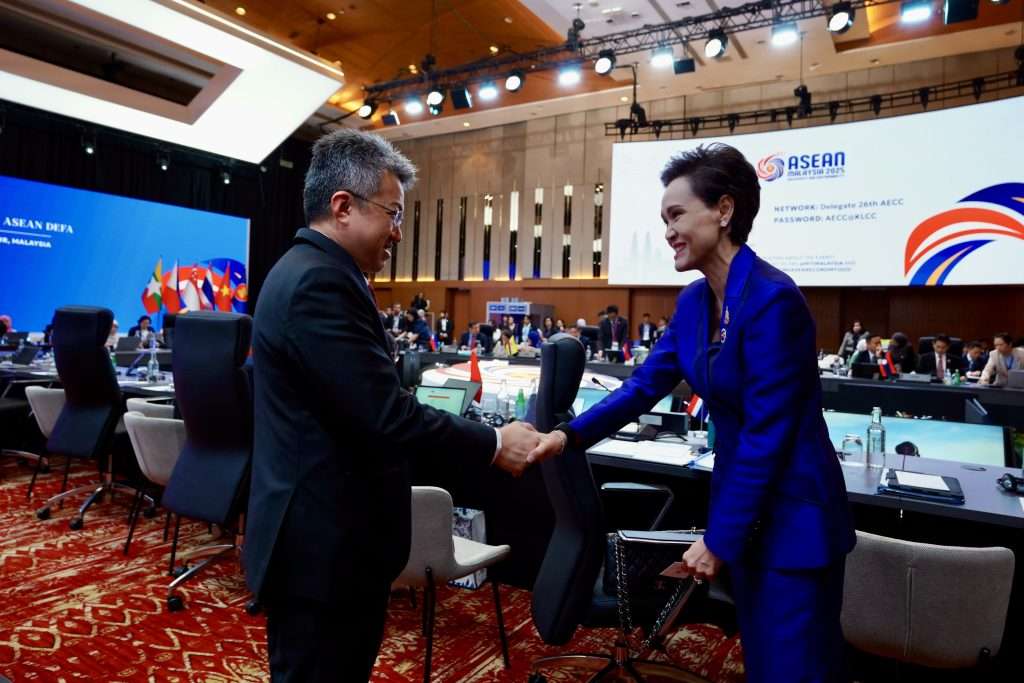
We hope that this spirit of the ASEAN Geoeconomics Task Force will be embodied in the way we run the ASEAN economic pillar into the future. In this exercise, we have been very clear from the beginning that both the economic and security pillars have to work together a lot more.
We would like to see the regularisation of an annual joint meeting of AEM and AMM. We would also like to see that the ASEAN Secretariat will be structured with a lot of combined AEM and AMM works, constantly linking the economic and security pillars at every step.
Prime Minister Dato’ Seri Anwar Ibrahim had said in July that ASEAN needs to ensure even closer alignment between its foreign and economic policy tracks to strengthen regional cohesion amid rising geopolitical and trade tensions.
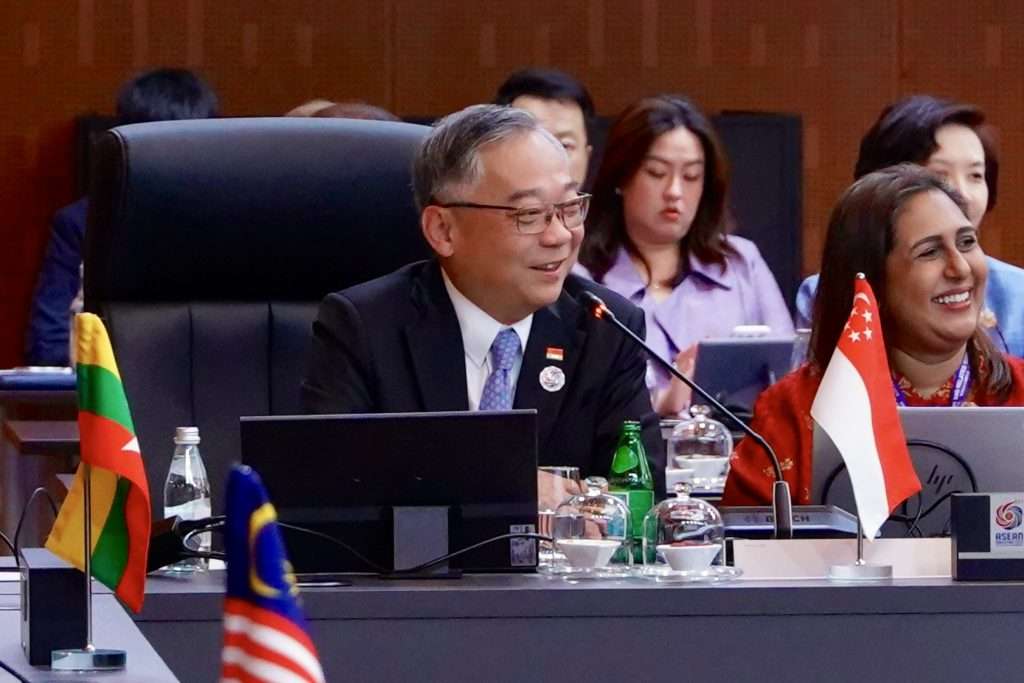
We agree with his assertion that ASEAN Foreign Ministers and Economic Ministers must move in concert to face challenges, as such synergy is essential to translate ASEAN’s unity into tangible outcomes.
ASEAN must heed Prime Minister Anwar’s call to ensure the success of ASEAN’s Vision 2045 that hopes for greater synergy across pillars and sectors.
The ASEAN Geoeconomics Report is a call to action to build habits of coordination that match the realities we confront, as advocated by Dato’ Seri Anwar.
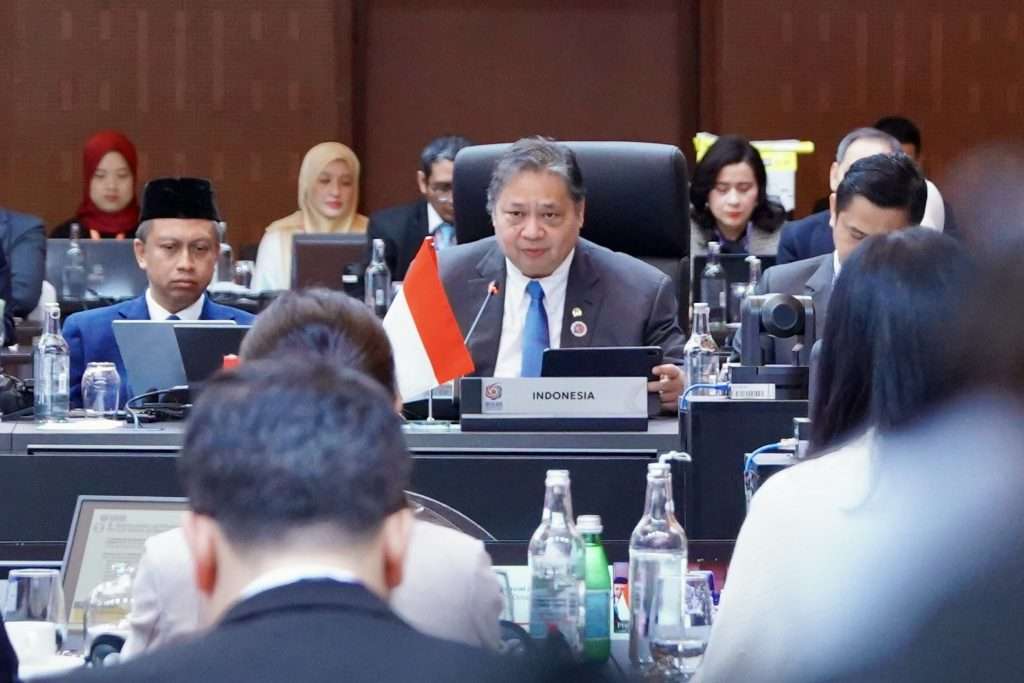
Within the ASEAN economic pillar, there should be a lot more integration between trade and finance so that we present a more integrated approach towards the economic governance of ASEAN.
On the point about the ASEAN Business Entity (ABE), the ASEAN Business Advisory Council led by Tan Sri Nazir Razak has presented this idea. During Indonesia’s chairmanship in 2023, a similar idea of ASEAN Incorporated was proposed, too. During our Budget 2026 speech by Prime Minister Anwar on 10 October 2025, he affirmed Malaysia’s commitment to recognise the ABE status. And we hope that this recognition will be extended to all ASEAN Member States in the years to come.
The idea of ABE should not be about recognising companies with ASEAN-wide footprints only. It should also aim to produce ASEAN multinationals, especially technology-based multinationals, so that we will not just be recipients of foreign investments but also our own creators and innovators of technologies.
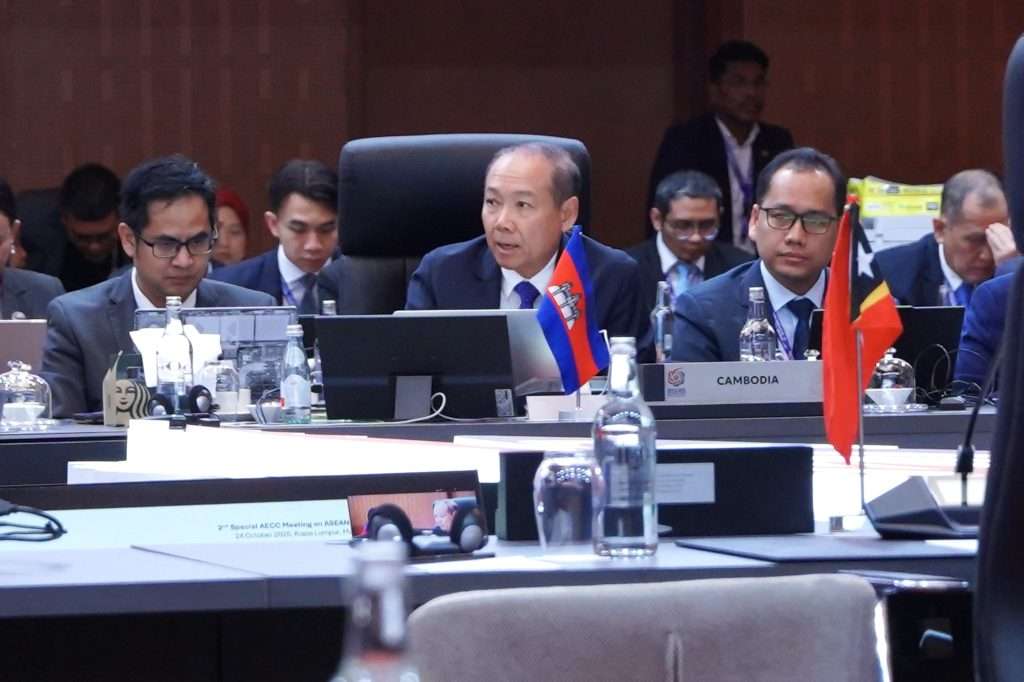
We would also like to support the idea of common external tariffs, proposed by the Philippines and mentioned in the ASEAN Geoeconomics Report. It is time for ASEAN to do more than just trade deals to look at more robust ways of integrating our regional economies. Working on an ASEAN Industrial Policy should also be on the ASEAN agenda.
Let me take this opportunity to congratulate the Philippines as the next ASEAN Chair for 2026. Hopefully we will see a lot more collaboration to ensure the continuity in our Priority Economic Deliverables (PEDs) and our common agenda of building a resilient and inclusive ASEAN.
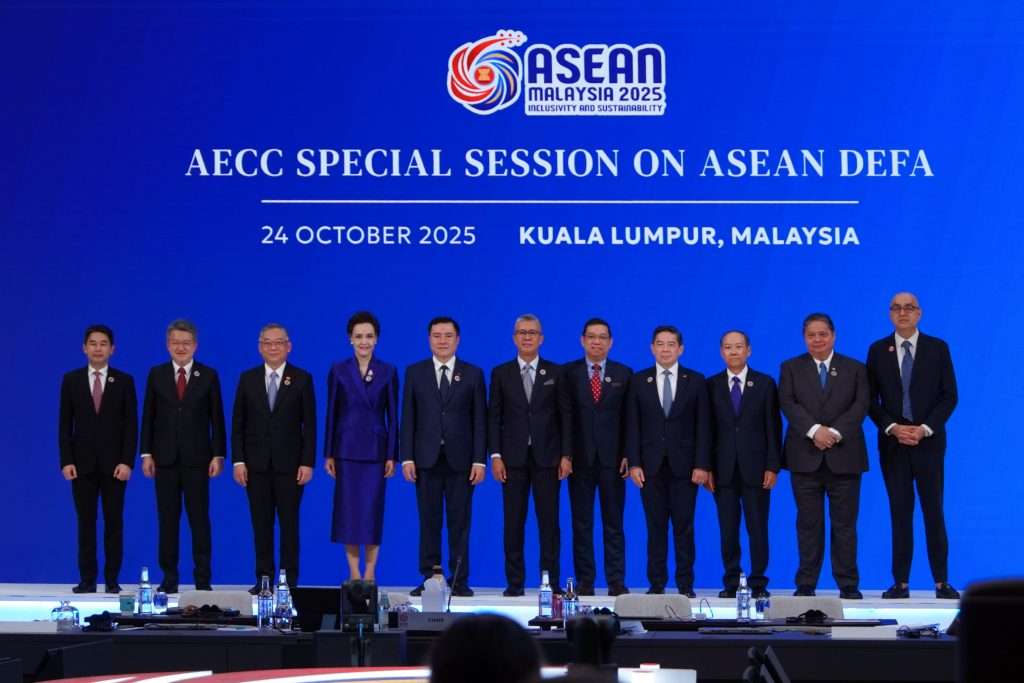
Together with all ASEAN Economic Ministers, I would like to congratulate Tengku Zafrul Aziz for his sterling performance as the Chair of ASEAN Economic Community in 2025. Tengku Zafrul has been very effective in holding ASEAN Member States together and finding common solutions in face of the various challenges including “Liberation Day” tariffs.
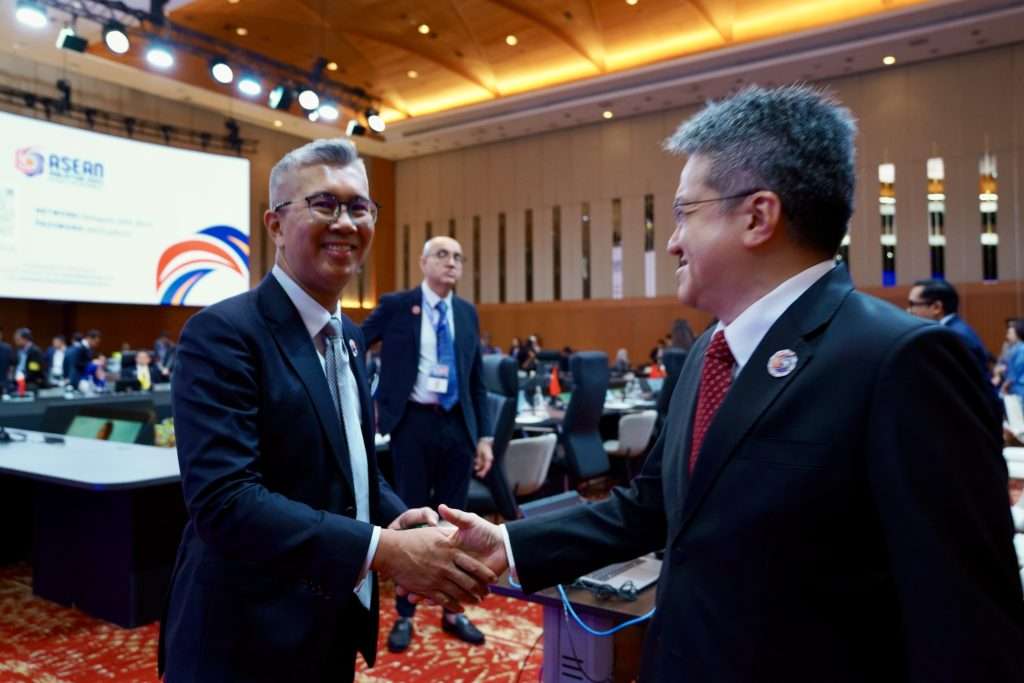
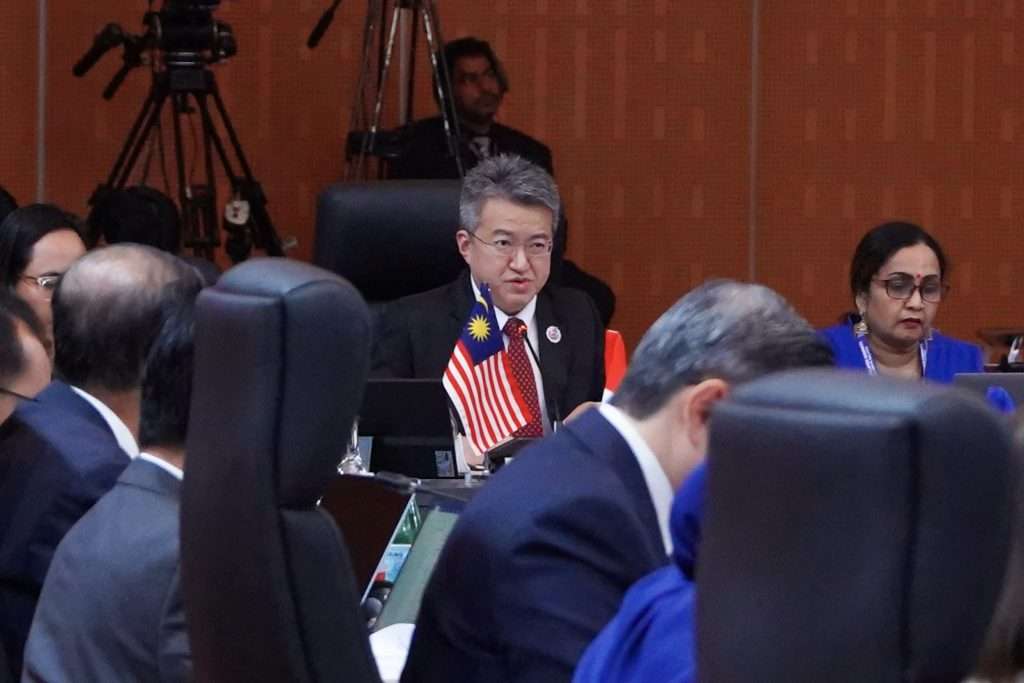
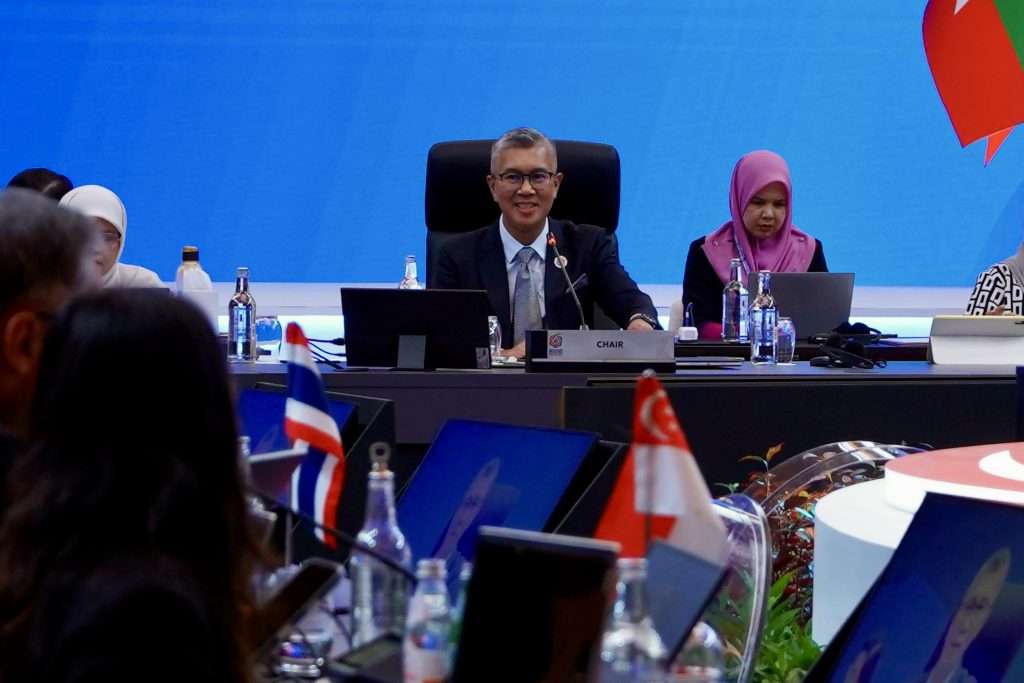
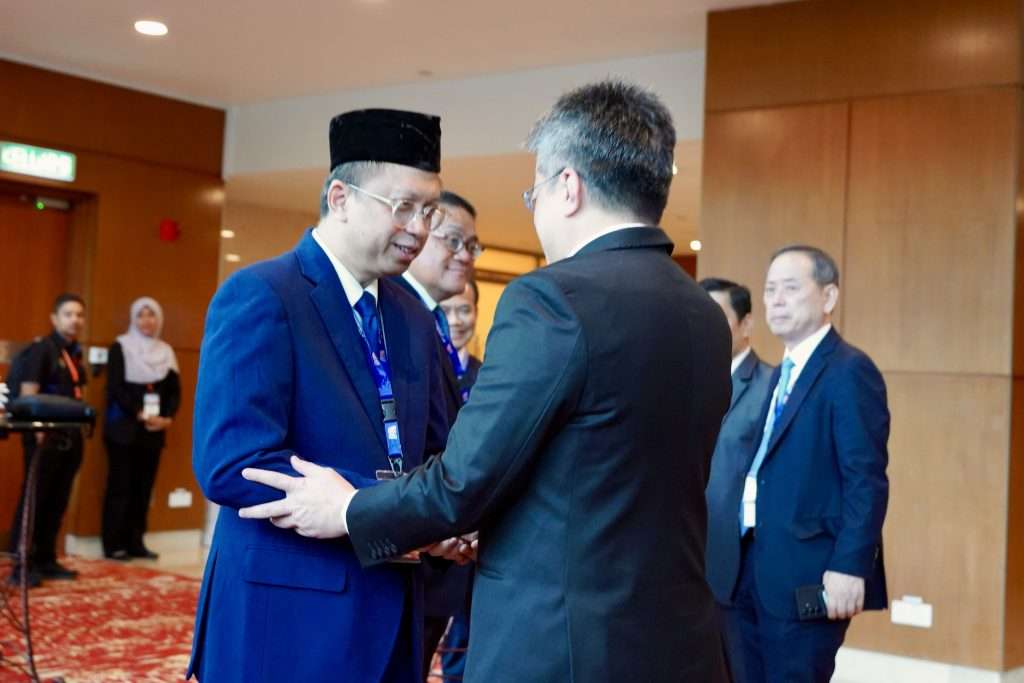
This is my speech delivered at the 26th Meeting of the ASEAN Economic Community Council, chaired by YB Senator Tengku Datuk Seri Utama Zafrul Aziz, Minister of Investment, Trade and Industry of Malaysia. The meeting was attended by Trade and Commerce Ministers from all ASEAN Member States.

