
Accountant’s Mission in the New Era
It gives me great pleasure to welcome fellow Malaysians and international delegates to the CPA Congress 2026. I visited the Malaysian Institute of Accountants last week to discuss the long-awaited…

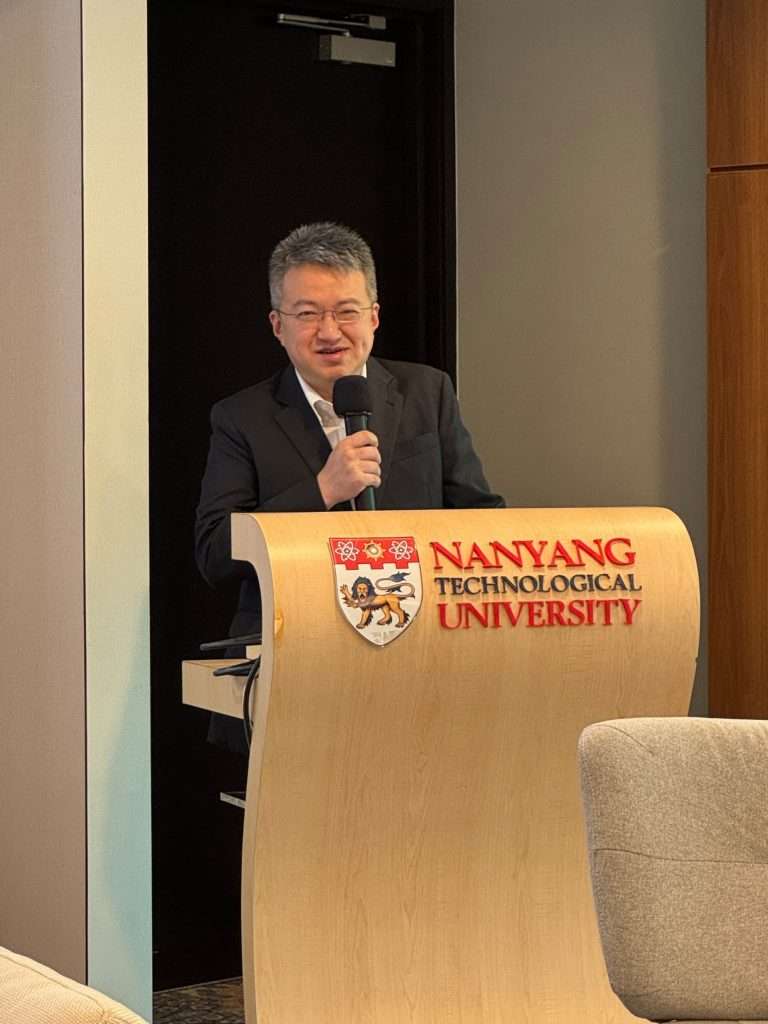
May I thank Professor Duncan McCargo and the Global Asia Research Centre at Nanyang Technology University of Singapore, for inviting me to the “Asia Disruptors and Disruptions” conference. I truly enjoy the company of this very interesting group of scholars who, in my opinion, read the pulse of Asia much better than most other commentators.
I invited Duncan to speak at the Penang Institute some 15 years ago when I was a Member of Parliament in Penang and was still heading the Institute. I was and still am intrigued by his ability to frame concepts with lethal effect, such as the “networked monarchy”.
I was initially surprised that he invited me to speak here but he explained that he decided to do so after listening to my keynote address at the ASEAN Roundtable organised by ISEAS – Yusof Ishak Institute in October last year.
Many Asian societies have gone through disruptions or ruptures in recent years, especially Gen Z protests, such as in Sri Lanka, Bangladesh, Nepal, Indonesia and others. It is important to understand why precarity caused disruptions and how to build resilient societies post-crisis through solidarity and social market.

Addressing precarity
I said at the above ISEAS event that what keeps ASEAN government leaders awake at night is the twin-challenge of how to avoid Gen Z protests and how to ensure that our people get rich before we get old, i.e. becoming aging societies. The median age in Singapore and Thailand are 43 and 40 respectively while in Vietnam and Brunei 32, Malaysia 31, Indonesia 30, Myanmar 29, Cambodia 27, The Philippines 26, Laos 24, and Timor Leste 21. In short, apart from Singapore and Thailand, most other ASEAN countries have relatively younger populations, especially when juxtaposed alongside Northeast Asian nations.
Gen Z protests are inevitably about jobs, pay, upward social mobility and the pursuit of a sense of justice. While these relatively younger ASEAN societies have to worry about Gen Z, they should also have another concern in mind, which is ASEAN becoming an aging society in twenty years.
At the core of ASEAN societies is the precarious economic condition of the many. “Precarity” is not exclusively an ASEAN or Asian phenomenon but a common condition of our time, and a predictable consequence of half a century of neoliberal economic ideas. Precarity is the source of economic anxiety and economic insecurity, and it shows up in times of economic crisis, like the one we are in now.
If I may generalise, in most ASEAN and even Asian societies, labour protection is generally poor and wages are low, with a sizable informal sector not protected by formal labour laws, especially among women. This is made worse by the widespread gig work opportunities mushrooming in recent years, which are rarely protected, though the Malaysian Parliament passed a Gig Workers Act last year.
There is also a significant number of migrant workers who are even more vulnerable while causing a race-to-the-bottom wage stagnation across Asian societies. There are around 1 million documented Bangladeshi workers in Malaysia, as well as half a million each of documented Indonesian and Nepalese workers. There is also a sizable number of undocumented foreign workers.
Let me add a twist to this. While Malaysia hires millions of foreign workers, there are 1.1 million Malaysians working as migrant workers in Singapore. While some of them are professionals, many of them are low wage unskilled workers in Singapore.
There are up to 10 million Bangladeshi migrant workers in West Asia, and with their jobs likely hanging in the balance, they are the least noticed victims of the war of choice by the United States and Israel on Iran. I cannot imagine what would happen to Bangladesh if all these workers were repatriated at once. Of course, on the bright side, if the war ends soon, there may be reconstruction jobs available. Anyhow, life is never going to be the same for the West Asia states, and foreign workers working there are likely to suffer.
In fact, in my constituencies of Iskandar Puteri and Perling in Johor, there are many veterans of Malaysian workers who worked in Singapore and got retrenched in global economic crises of different eras. Many of them are not originally from Johor but from different parts of Malaysia, and they never find it viable to return to their home states after a stint in Singapore. Another global crisis at hand means another potential retrenchment and repatriation that we will have to be prepared for.

The butterfly effect of global crises
If we look back in history, it is littered with examples of globally-originated crises causing protests and upheavals in ASEAN and Asia, or what I would call the butterfly effect of global crisis.
Prime Minister Anwar Ibrahim was a youth leader when he was placed under the draconian Internal Security Act detention in December 1974 after leading protests against extreme poverty in Baling in the northern state of Kedah. The food and fuel twin-crisis in the remote Kedah town can be traced back to the global oil crisis during and after the October 1973 Arab-Israeli war. The war was short but the energy crunch, food crisis, and the subsequent stagflation caused sufferings, harm and upheavals across the globe for the years that followed.
On 4 May 1998, 10 months after the Asian Financial Crisis first started in Thailand in July 1997, pressured by the International Monetary Fund (IMF), President Suharto raised fuel prices by 71%, immediately triggering riots in Medan and Jakarta. Suharto, a military strongman-turned authoritarian ruler, was gone by 21 May. The Asian Financial Crisis also resulted in elite disintegration in Malaysia which saw Prime Minister Mahathir Mohamad sacking his deputy Anwar Ibrahim on 2 September 1998, triggering the Reformasi movement and realigning Malaysian politics forever.
There are at least four reasons why ASEAN and Asian societies are so precarious and especially dangerous during any global crisis:
First, the elite are often extractive and corrupt than developmental compared to those in Northeast Asia, with very little concern for inequality among their people;
Second, the 1960s saw the radicalisation of the left globally, influenced by Maoism, and Asian societies were directly affected by Mao Zedong’s attempt to export China’s revolution. And, in the context of the Cold War, the confrontation between the conservatives and the progressives often ended up with the lumping together of the centre/moderate left or social democrats with the communists, and they were either thrown into jail or murdered, often with the encouragement of the CIA.
As a side note, last year I befriended the 89-year old Pak Jusuf Wanandi of CSIS, Jakarta. His memoir, Shades Of Grey: A Political Memoir of Modern Indonesia 1965-1998, should be a recommended reading for every Southeast Asianist. After a coup in 1965, and as of 1971, “up to 600,000 people were still being detained – for nothing”. Through Pak Jusuf’s intervention, by 1974, “more than 550,000 of them were released”. Of the remaining 2,000 or so detainees, “many were still detained when Suharto was forced to step down in 1998.” The numbers are just mind-boggling.
With the delegitimising and demise of the centre/moderate left or social democrats, there is no alternative discourse to how resources should be allocated in a society, resulting in a one-dimensional and one-sided embrace of the ethos of capital owners.
Third, the last 50 years saw neoliberal ideas prevail over other economic ideas, especially in the Anglo-Saxon societies and in Asia. Milton Friedman’s portrayal of Hong Kong as the ultimate ideal free market society continues to affect Hong Kong, Singapore, China and many other economies in Asia. To this date, Singapore is still very much in a competition with Hong Kong to ensure a low tax environment for the rich, when both societies are now aging and actually require substantial tax revenue to provide adequate healthcare for their population.
Fourth, as these societies mostly grow through export-oriented industrialisation, the idea that foreign investors should be given all sorts of tax incentives and assistance, including labour union busting and suppression of wages as a policy, is also widespread.

Societies after disruption
When we discuss disruptors and disruptions in Asia, there are three concerns that come to my mind:
First, what the disruptors tell their supporters in rallying support
At various times when crises result in strains in the societies and when protests and uprisings take place, the rallying points or what issues that rally those who oppose the establishment will have long term consequences on the paths these societies take after the furor subsides. Identities such as race, religion or region are easy to mobilise but leave permanent scars which post-rupture societies may have to pay the price for when these cleavages flare up in new conflicts.
Second, what the disruptors do if they win and have to govern
In 2023, Prime Minister Anwar made a pertinent remark when asked why he wasn’t pushing some of the stronger yet divisive reform agenda, he pointed out that the failure of the short-stint Muslim Brotherhood government in Egypt after the Arab Spring was an example of rushing things without first building public support and broader societal coalition for such agenda.
There are endless stories of revolutionaries failing to govern and falling by the wayside.
In government, it is important to build societal coalitions, to be able to get the bureaucracy to accept and implement the governing agenda, to govern for all and not for sectional interests, and at the minimum to hold things together and not to allow the government to fall apart. Stabilising the ship is a crucial part of healing post-disruption societies.
I am a witness of the collapse of the Pakatan Harapan Government caused by the Sheraton coup in 2020. It was a case of race and religion dominating the headlines while the new administration struggled to convey a singular and coordinated message.
Third, a progressive government must articulate a solidarity agenda to deal with precarity, economic anxiety and economic insecurity, and how to build a better society.
It is easy for post-rupture governments to focus on anti-corruption given that corruption of the past administrations is likely to be the main cause of why a rupture happened. For instance, Rajni Gamage and Preeti Chandrakumar Patil argued that Sri Lankan President Anura Kumara Dissanayake’s first year in office was remembered for anti-corruption actions but these acts are generating diminishing political returns as time went by.[1]
Any progressive government must have a clear policy agenda to create jobs, uplift wages, and ensure upward social mobility which are what Gen Z cares most about. Jobs have to come from growth and equitable distribution happening at once, but growth is a must for sure.
Dynamic growth with the potential of leapfrogging the economy can only happen if there is widespread productivity gains and technological upgrade across the board. Countries may need to acquire and own more technologies in the hope to capture technological rents, which will then help nations to grow exponentially.
Dani Rodrik in his book “Shared Prosperity in a Fractured World: A New Economics for the Middle Class, the Global Poor and Our Climate” makes an interesting point that as technology develops so quickly with the potential of replacing human in manufacturing jobs, the idea that growth has to come from making physical goods may not be exactly true. He thinks a strong service sector is important when it comes to the creation of decent jobs for the many.
Fourth, the provision of public goods is the foundation of a people that feels less insecure and anxious. Housing, public transportation, healthcare/care in general, and education are part of livelihoods which would cause economic insecurity if their provision is in question.
Not all of these can be provided by the state given the fiscal constraints of these societies. However, neither should all of these be fully privatised and be in the realm of profit-making ventures.
Some form of social market in which private capitals can be involved in the provision of these public goods in a guided manner to ensure that housing, public transportation, healthcare/care and education do not cost the aspiring middle class a bomb is something that post-rupture governments have to keep in mind.
In conclusion, as the current crisis in West Asia develops, ASEAN and Asian societies will have to be prepared for disruption. But more importantly, leaders and aspiring leaders should also prepare a more robust agenda to govern and rebuild societies through solidarity and social market, post-crisis.
[1] ISAS Brief, No. 1290 – 23 September 2025

