
The Social Exchange: Strengthening Malaysia’s Social Finance Ecosystem
The Social Exchange is a great initiative by the Securities Commission Malaysia (SC). It is not just an initiative, but a statement that we are not just thinking about the…


In his book “As Empires Fell: The Life and Times of Lee Hau-Shik, the First Finance Minister of Malaya”, published during the Covid-19 pandemic, my friend Dr Ooi Kee Beng wrote that “(H.S. Lee’s signature) is the only non-Malay signature on the Treaty of Malaya Independence signed in February 1956 in London”, and “if one further considers the fact that he was not even born in Malaya”. These facts tell us that the story of H.S. Lee is indeed a fascinating one, to say the least.
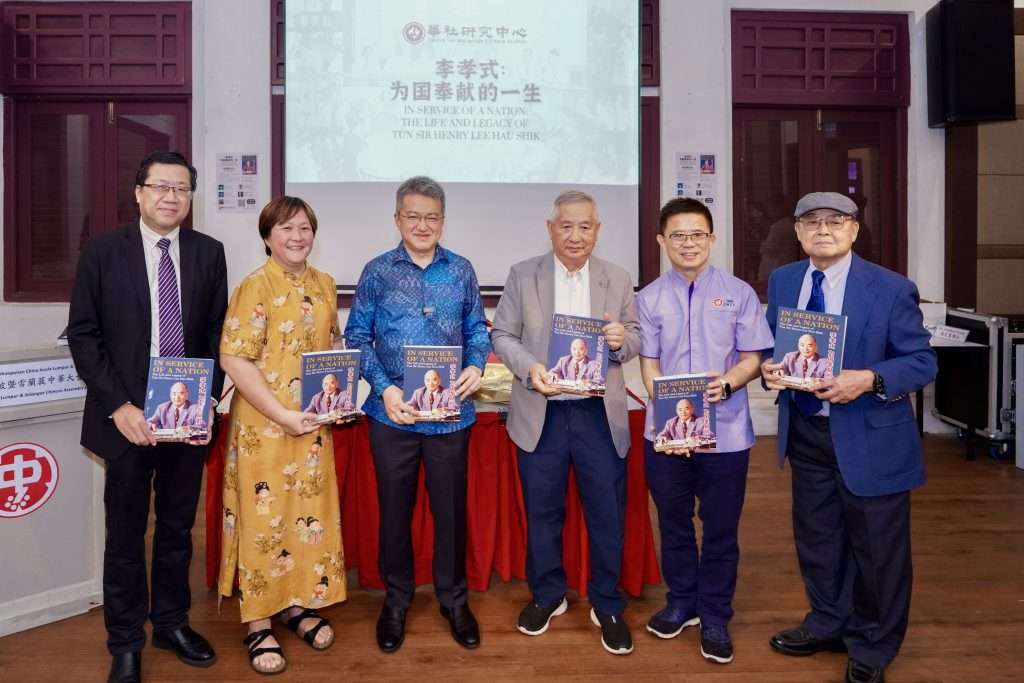
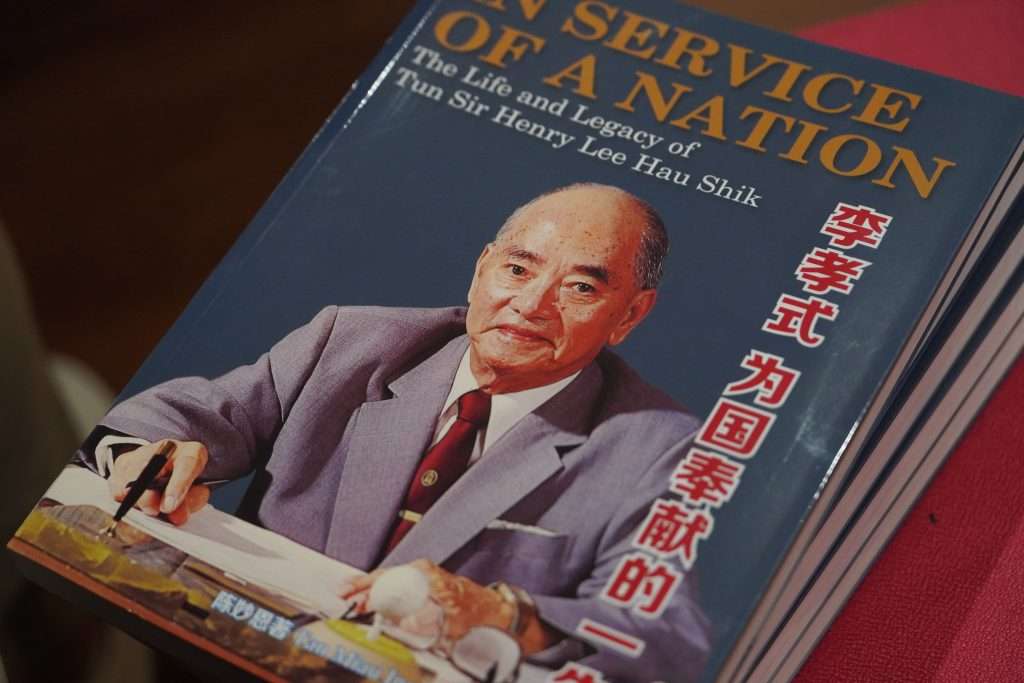
Hence, it gives me great pleasure to launch a new book “In Service of A Nation: The Life and Legacy of Tun Sir Henry Lee Hau Shik” by Dr. Tan Miau Ing.
These two books on Tun H.S. Lee will help us understand one of the key figures that led Malaya into independence, especially as we approach the 70th anniversary of Merdeka in 2027.
The two books also told a story of a very long academic relay run: Miau Ing worked as a journalist at The Star when her then superior Professor Lee Kam Hing tasked her to assist Datuk Douglas Lee Kim Kiu to organise H.S. Lee’s papers. The papers were donated to the Yusuf Ishak Institute of Southeast Asia (ISEAS) on 5 May 2010. Kee Beng was then working at ISEAS and had the chance to consult the papers extensively for his book. From there, Miau Ing did her PhD thesis on H.S. Lee with the Department of History, the University of Malaya, and published in Bahasa Melayu her book “Tun Sir Henry Lee Hau Shik: Ahli Tokoh Perniagaan Dan Tokoh Politik” (2018). And now, this pictorial. I hope to see more publications emerge from these foundations – the H.S. Lee Papers and Miau Ing and Kee Beng’s works – and I will mention some of the intersections between H.S. Lee and other key personalities during his time in the hope that future scholars will inquire into studying these questions.

When I was asked by Mr Chiam Yan Tuan of the Centre for Malaysian Chinese Studies to launch Dr Tan Miau Ing’s book on Tun H.S. Lee, I felt obliged, apart from Mr Chiam being my teacher at New Era College back in 1998 and 1999, but also because now that I am the Deputy Finance Minister, I felt a sense of affinity with H.S. Lee, Malaysia’s first Finance Minister.
At the Treasury Building in Putrajaya, the portraits of H.S. Lee and other former Ministers of Finance appear in all the three main meeting rooms. He was appointed Finance Minister in 1956 and occupied the position until the general election of 1959, laying the foundation for the finances of Malaysia. I hope there will be research in the future on his role in the Ministry of Finance and on how key decisions he made in that capacity had impacted the nation.
Born in Hong Kong in 1901, H.S. Lee was educated in Chinese and English, and went on to graduate in economics and law from the University of Cambridge in 1924. I wonder if he had met Tunku Abdul Rahman Putra al-Haj in Cambridge then, given that their stints there overlapped, and they were both known to like fast cars. The Tunku was there from 1922 to 1925. In 1926, Lee arrived in Malaya from Hong Kong. Growing up in Kuala Lumpur, I only know of Kam Lum Tai as a restaurant. Only until I read this book did I realise that the entity was established by H.S. Lee’s father Kwai Lim and its previous business was a major “foreign labour” recruitment agency, importing Chinese workers, providing them with inns to reside, and making significant profits by giving loans to labourers. Lee clearly had a very unusual class status compared to the tens of thousands of Chinese workers that Kam Lun Tai recruited to Malaya.
H.S. Lee also got himself deeply involved in the mining industry. By the 1930s, he was a key leader in Selangor Miners’ Association and Federated Malay States Chamber of Mines, as well Selangor Chinese Assembly Hall and Selangor Chinese Chamber of Commerce. He was also a member of the Kuala Lumpur Sanitary Board (Town Council).
The lead up to World War II saw H.S. Lee playing a prominent role in raising funds for the campaign against the Japanese war on China after the Marco Polo Bridge incident in July 1937. The Singapore-based Mr Tan Kah Kee was particularly famous for his role in the fundraising campaign, and it is interesting to read that Lee “opposed granting too much power to the federated associations under Tan Kah Kee’s leadership” (page 68).
Tan and Lee’s trajectories were a huge contrast and it is a worthy subject for future inquiry: Tan was disillusioned with the Kuomintang Government after his visit to the wartime capital of Chongqing in 1940, got closer to the Communist Party, before eventually becoming part of the Communist China’s national leadership whereas Lee continued to be close to the KMT until the end of WWII and later became a national leader of the new nation of Malaya.
It was during the war that Lee acquired the military title of Colonel from both China and Britain – a feat indeed – and with a 60,000 dollar bounty on his head by the Japanese, he ended up in exile in India. It is also interesting to note that there were tensions between Lee and Tun Sir Tan Cheng Lock and his son Tun Tan Siew Sin on how to organise the Malayan Chinese in India at that time: Tan intended to form an Overseas Chinese Organisation (OCA) to include all Chinese in India and Chinese from Malaya while Lee’s plan was to form a Malayan Chinese Association branch of the South Seas Chinese Association set up by KMT (page 92). I also wonder if Lee met with any of the Malay elites who were at that time also residing in India, such as Tun Hussein Onn.
Only through Miau Ing’s book did I know that China Press, a newspaper that is still in circulation, was founded by H.S. Lee in 1946 at the request of the British Military Authority to counter the Communist-backed Min Sheng Pao and to win the hearts and minds of the Chinese readers (page 165).
As Emergency was declared in 1948, Miau Ing alluded that Lee had influenced the British Director of Operations, Lieutenant General Sir Harold Briggs to relocate villagers into the New Villages to stave off the food supply to the Communists. As the Communists relied on villages at the fringes of forests for supply, and the Communists were assassinating miners and planters, what is known as the Briggs Plan might have moved as many as 1.2 million people into new settlements.
While Lee was close to the British authorities, he was not acquiescing. The Associated Chinese Chambers of Commerce of Malaya (ACCCM), in which he was highly influential, together with two major political forces – the Pusat Tenaga Ra’ayat and the All-Malaya Council of Joint Action launched a Hartal – a general strike – throughout Malaya on 20 October 1947 to oppose to the Federation of Malaya Agreement.
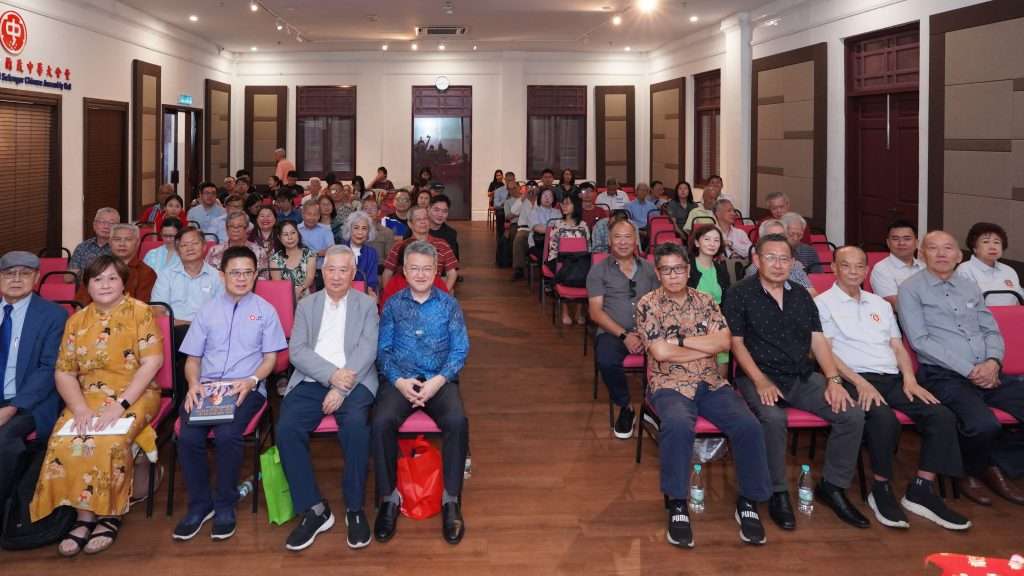
The Malayan Chinese Association (MCA) was formed in 1949 with the encouragement of the British High Commissioner Sir Henry Gurney and with significant participation of H.S. Lee. It is interesting to note that MCA was formed at a Conference held at the Selangor Chinese Assembly Hall, the very building where we are having the book launch today.
As the head of MCA’s Selangor chapter, Lee’s decisions, based on local sentiments, in the 1952 Kuala Lumpur Municipal election, had far reaching consequences which he would not have thought about. He mounted a challenge with the Kuala Lumpur Division of UMNO, against the favorite of that time, Onn Ja’afar’s new party, the nominally multiracial Independence of Malaya Party (IMP). Ironically, the chairman of the IMP’s founding committee was Tan Cheng Lock, the MCA president. It was not uncommon for one to be a part of more than one political party back then.
The UMNO-MCA formula proved very successful throughout the various local elections in the peninsula, for instance, winning a clean sweep in the Johor Bahru Town Council.
From 1952 to 1955, the Alliance of UMNO and MCA, with the later addition of MIC, took considerable time to work out the differences among themselves and eventually entered the crucial 1955 peninsula-wide election with a clear campaign agenda for independence.
Malaysia experienced several pivotal moments when alliances were shaped and reshaped, including the post-1969 structure of Barisan Nasional in which MCA had a diminished role as UMNO took on a dominant position, the fall of Barisan Nasional in 2018, and the subsequent search of a new governing formula ever since. We are probably now close to the season of election which will decide on the post-2018 governing formula for Malaysia in the years and decades to come. Malaysians do not want to go back to the old order nor the ideas and arrangements of pre-2018. I am a firm believer that this is the time for a new formula to kickstart a new political order that suits our time and that would bring Malaysia to the new era. There’s no turning back for us.
The stories of Tun Sir H.S. Lee, especially his historic role in the 1952 Kuala Lumpur Municipal Election, which decided the fate of the nation and the political alliance of UMNO and MCA, at least until 1969, is worth reading by this generation of leaders and readers, as some of the lessons may still be relevant.
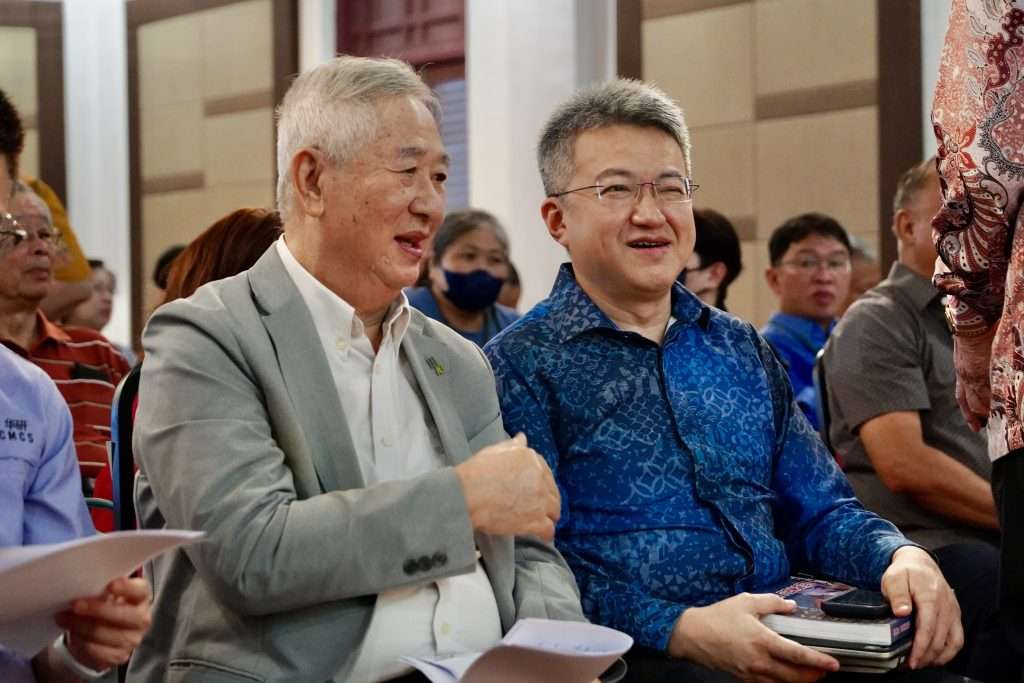
This is my speech delivered at the Launch of the “In Service of A Nation: The Life and Legacy of Tun Sir Henry Lee Hau Shik” book on Saturday, 18 April 2026 at the Kuala Lumpur and Selangor Chinese Assembly Hall.

