
The Social Exchange: Strengthening Malaysia’s Social Finance Ecosystem
The Social Exchange is a great initiative by the Securities Commission Malaysia (SC). It is not just an initiative, but a statement that we are not just thinking about the…

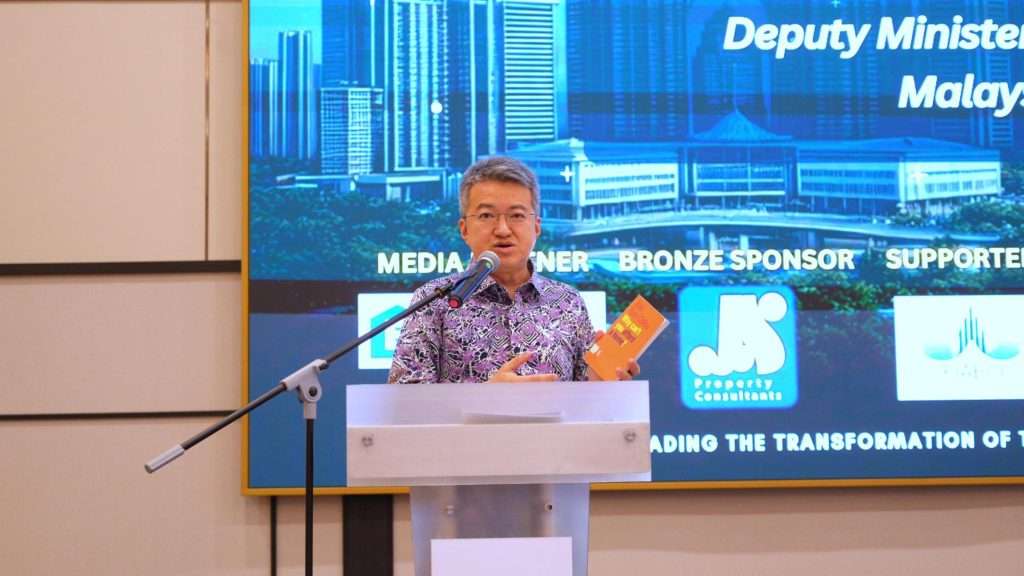
May I thank the Royal Institute of Surveyors Malaysia for inviting me to officiate the National Real Estate Convention and to share a few thoughts on what the property sector could do to support nation-building in the context of the rapidly changing global economic order.
Very often, people in the real estate sector think that the sector is the most important growth driver in an economy, as if the real estate sector is an end in itself, and everything else revolves around the sector. Sometimes they are right, for a while, until the bubbles burst.
I would like to convince you that the real estate sector is NOT the centre of the universe but an enabler in the economic development of the nation.
Economies that put the real estate sector at the centre of everything are often one crisis away from disaster. Japan’s bubble of the 1980s popped in 1990 and for more than 30 years Japan tried to come out from that crisis.
The exuberance in Southeast Asia including Malaysia in the early 1990s ended in tears in the Asian Financial Crisis in 1997. In many ways, Malaysia as a nation lost the confidence and aspirations of the early 1990s, and it is only now – 30 years later – that we see some possibilities of a second takeoff.
I was in Labuan two weeks ago, and I was briefed by some of the leaders who started the Labuan Financial Service Authority (Labuan FSA) back in 1996. In the 1990s, Malaysians were very ambitious. When the then Labuan Offshore Financial Services Authority (LOFSA) (now Labuan FSA) was set up, we were thinking of competing with Hong Kong. We have lost that ambition for the last two or three decades, but now we may have an opportunity to rise to the occasion, and to become a more important economy in the region, but we must be very clear that it must not end up as a property bubble.
And, as we speak, China is still dealing with the consequences of the property bubble, which saw huge property companies collapse, affecting the banks, and many ordinary citizens are heavily indebted with residential units that are worth only a fraction of the price when they bought them just several years ago. Consumption in China is suppressed largely because of this, and as domestic demand for China’s industrial output is low, China’s exports caused concerns overseas.
What we should aim at instead is to create an economy that is supported by the real estate sector, and not the other way around.
Contradiction
Before we venture further, let us look at some of the contradictions in the Malaysian society that we should have addressed but yet to do so.
First, residential units built in the inner city, especially in Kuala Lumpur, are meant to be sold to the rich, especially foreigners, whereas most young Malaysians are living far away in Kajang, Semenyih, Seremban, Shah Alam and Klang. The same patterns apply to Penang and Johor Bahru, as well as other cities. The middle class, who cannot afford to stay in the inner cities, have to commute to work, and most likely own and drive a car, and suffer massive congestion each day.
Second, Malaysian cities have the most highrise buildings per capita in Southeast Asia, and there are so many purpose-built office buildings in Kuala Lumpur which are now empty and unused.
Third, Malaysia, especially Kuala Lumpur, has the highest per capita square meter of shopping mall space in Southeast Asia. We keep on building malls despite knowing that with e-commerce, less people are going to malls nowadays.
Fourth, the discrepancy between median house prices and median wage is way too huge. According to Jabatan Penilaian dan Perkhidmatan Harta (JPPH), the median house price in 2010, when the information was collected, was RM158,000 while median wage was RM1,500. The median house price in 2025 was RM351,820 while the median wage was RM2,864. The median wage increased by 1.9 times while the median house price increased by 2.2 times.
In reality, it is almost impossible for most young people without the help of their parents to be able to get a loan to own a house.
Fifth, Malaysia’s household debts is at 84% of GDP, and mostly contributed by housing and car loans. Recently, I visited Lembaga Pembiayaan Perumahan Sektor Awam (LPPSA) to ask the Board that when they give loans to the civil servants to fulfil the dream of house ownership, in the current environment of high housing prices, are they actually inevitably causing high household debts for civil servants.
The developers and everyone else in the regulatory sphere have to be very careful that constant high household debts in a relatively low wage environment is problematic, to say the least.
Sixth, in the context of the current global energy crunch, we as a nation will have to accept that the idea of everyone driving a car and most people living far away in the suburbs and commuting many miles to get to work by private passenger cars is becoming a national vulnerability.
I would like to say that this crisis is not going to end soon, and even if the war ends tomorrow, this energy crunch could go on for 12, 18 or 24 months. When we look back in the 1970s, the war between the Arab states and Israel lasted for one month, but the energy crunch lasted for more than two years, depending on the locations. And back in the 1970s, only 5% of the energy was taken away from the market, but today, it is 25%. We will have to be prepared for a longer energy crunch than we now anticipate.
For every litre of petrol used on the road, the Government is currently subsidising more than RM2 per litre via the BUDI95 programme, and more importantly, we are very concerned about the level of supply beyond July.
Our model of housing development in the last fifty years does not seem to serve the nation’s needs anymore. We have overcapacity in high rise offices and shopping malls, as well as a glut in the high end segment which developers are trying very hard to sell to foreigners. Yet we have many young families having to stay far away from the cities and commuting daily to work, and we now face a once-in-a-lifetime and the worst-ever oil crunch.
And, the idea of house ownership is not going to work for most Malaysians for the foreseeable future unless wages rise in a dramatic manner or house prices plunge in a big way. We will have to find a balance and some trade-off in between.
Pivots
I would like to take this opportunity to recommend a book – Josh Ryan-Collins’ Why can’t you afford a home?
Many in Malaysia think that the idea of everyone should own a house, or some would call “house-owning democracy” is a must. This is not true. The idea of seeing housing as financial assets only became very prominent globally and domestically in the last fifty odd years, especially since Thatcherism and the rise of neoliberalism.
The author made a very pertinent point: “To understand today’s housing crisis, we must go beyond just looking at the supply of housing and examine demand, in particular the demand for housing as a financial asset and land as a form of collateral.”
Clearly, Malaysia needs a pivot. I call on the thought leadership of this audience and the collective expertise of yours to bring transformative change to the wellbeing of Malaysians for the years and decades to come.
First, we should revive our inner cities, repurpose unused office buildings, and create housing stocks in the inner cities that do not require ownership (and can come in the form of rental or rent-to-own).
Quite a few Malaysian developers are also developing residential units in Melbourne inner city. In 1985, there were less than 700 residential units in the inner city of Melbourne but now the area houses 70,000 units. If the once-hollow Melbourne could bring the population back to the inner city, we could do so here in Malaysia too.
Second, Malaysian developers are building social housing in London where the Employees Provident Fund (EPF) and the Canadian Pension Fund own parts of these buildings. One way or another, it is time for Malaysia to make social housing as an asset class a serious business so that EPF or other pension funds could also invest here in such asset classes.
Third, we are not lacking in housing for the poor. What the market has failed to provide is homes for those in the middle, especially the young ones in our cities.
What we need to do as a nation is to create housing stocks for the middle that do not require strict individual ownership. Once there are sufficient housing stocks in the middle, the housing stock for the poor will be freed up significantly as those stuck in the middle and forced to take up residences in low cost housing would not compete for such places.
Fourth, Malaysia wants to be a technology nation and we have the once-in-a-generation opportunity, thanks to the global shifts in supply chain and the US-China great power competition.
Why do I say so? If you look at Penang and Kulim, it is really a revival with so much new capacity being put into the ecosystem. If you ever have a chance to visit some of the semiconductor factories – some are Malaysian companies – you will be surprised at their level of sophistication and complexity. This is really a once-in-a-generation opportunity for Malaysia.
But, as it is, we do have a talent issue: we need more engineers but most Malaysian engineers are working in Singapore because Malaysian employers either refused to pay better or it’s really because they are yet to capture sufficient technological rents or profits to pay more.
Here I think the developers from Penang should see themselves as providers of housing in support of the technological sectors rather than just thinking of building houses to sell to the foreigners.
Instead of building hostels for foreign workers, Malaysian developers should start building residential housing for young engineers so that they could partake in Malaysia’s next technological pivot. This applies not only to Penang but also throughout the country.
I would say that we now have the best opportunity in 30 years since the Asian Financial Crisis in 1997 to see Malaysia rise to become an important technology nation and a significant economic power in ASEAN and Asia. I look to the real estate sector leaders who gather here today to find innovative and transformative solutions to support nation-building and Malaysia’s second economic takeoff.
Data Centres
Before I end, let me say a few words about data centres.
Data centres are hotels for data. When we think about the actual hotels, we do not see them as an end in itself. We know that hotels are built to promote and facilitate tourism. So we must get our perspective right, the hotels for data are built to promote and facilitate digital transformation of our society and the world.
Therefore, when we think about data centres, we want to ensure that data centres bring sufficient spillovers into our economy. For instance, we want to see more locally sourced supplies of equipment and a lot more commitments from the end-users to do more to proliferate AI and digital transformation in Malaysia.
We are also wary of overbuilt or under-utilisation of capacity in the data centre sector. Unlike hotels when the occupancy rate is low, it is only the owner that actually suffers. In the case of data centres, the utilities, especially Tenaga Nasional would have to invest into capex in accordance with the demand required by the data centres. If there is phantom demand, it would mean huge losses to the utilities.
As more and more data centres are sourcing funding from the domestic banks and the capital market, the authorities will keep a watchful eye on the development of the sector.
Again, I call on the thought leadership of this audience to see the larger purposes of nation building and work together to ensure Malaysian people and Malaysian companies, and Malaysia as a whole benefit from our collective efforts.
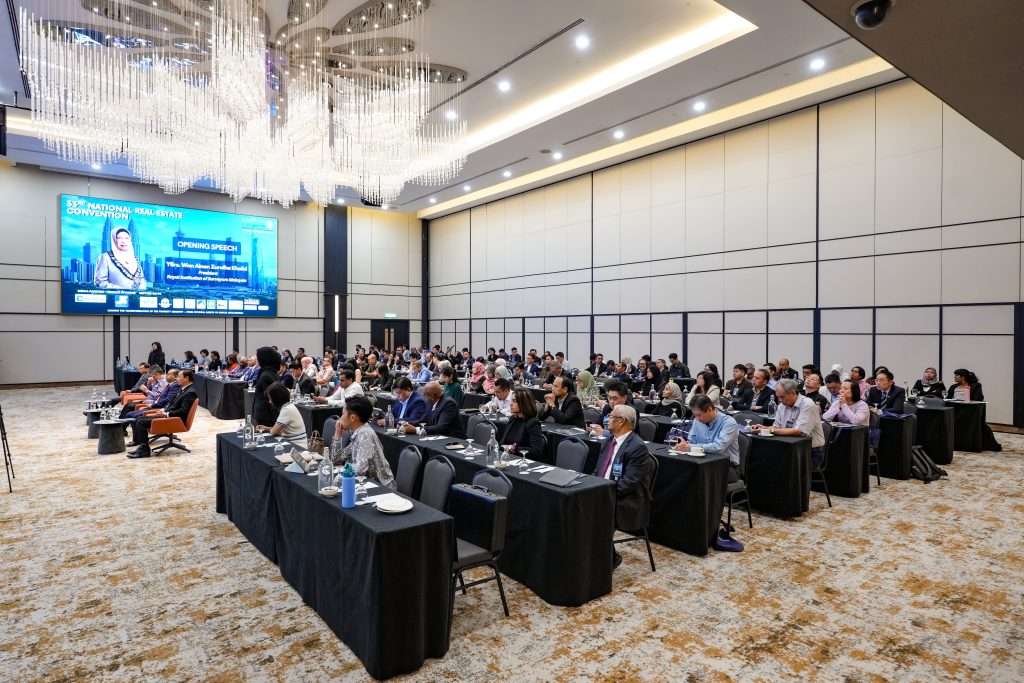
Thank you very much and I hereby officiate the 33rd National Real Estate Convention.
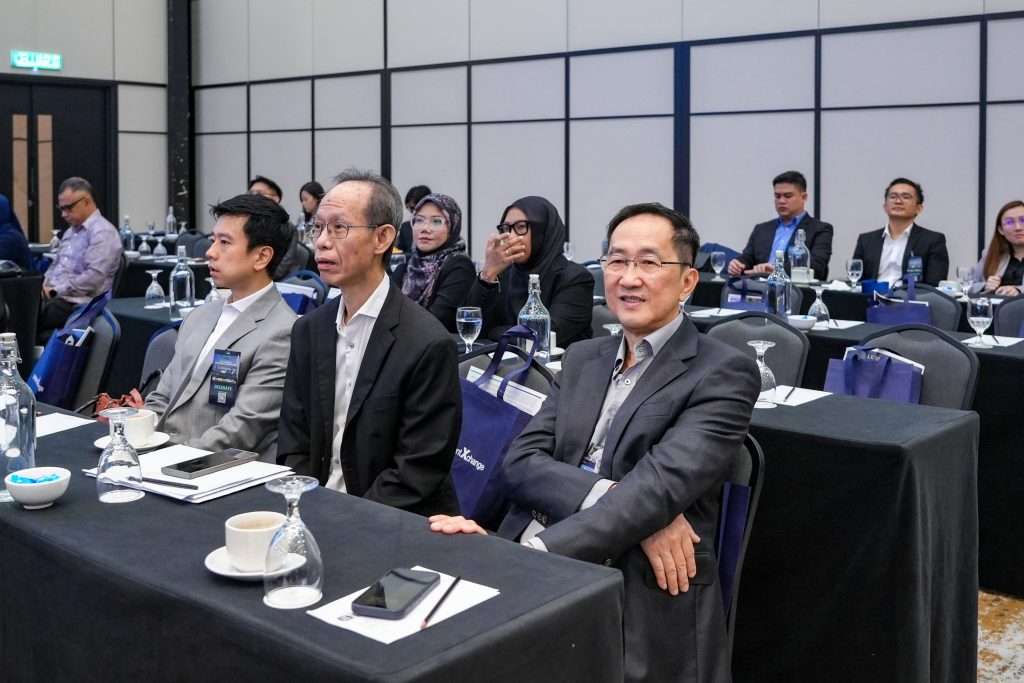
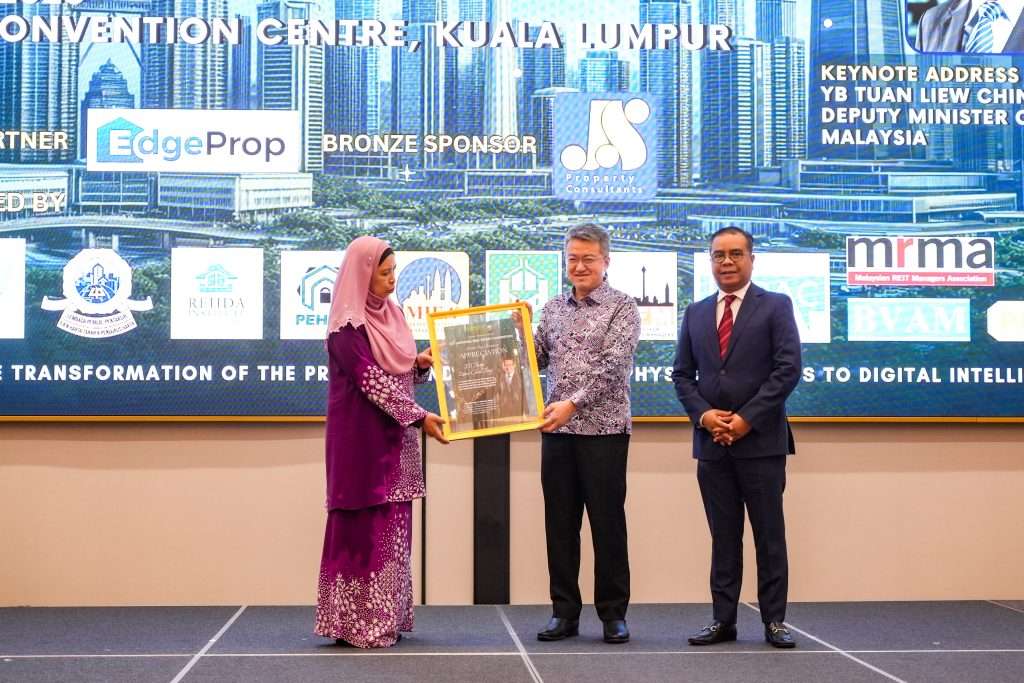
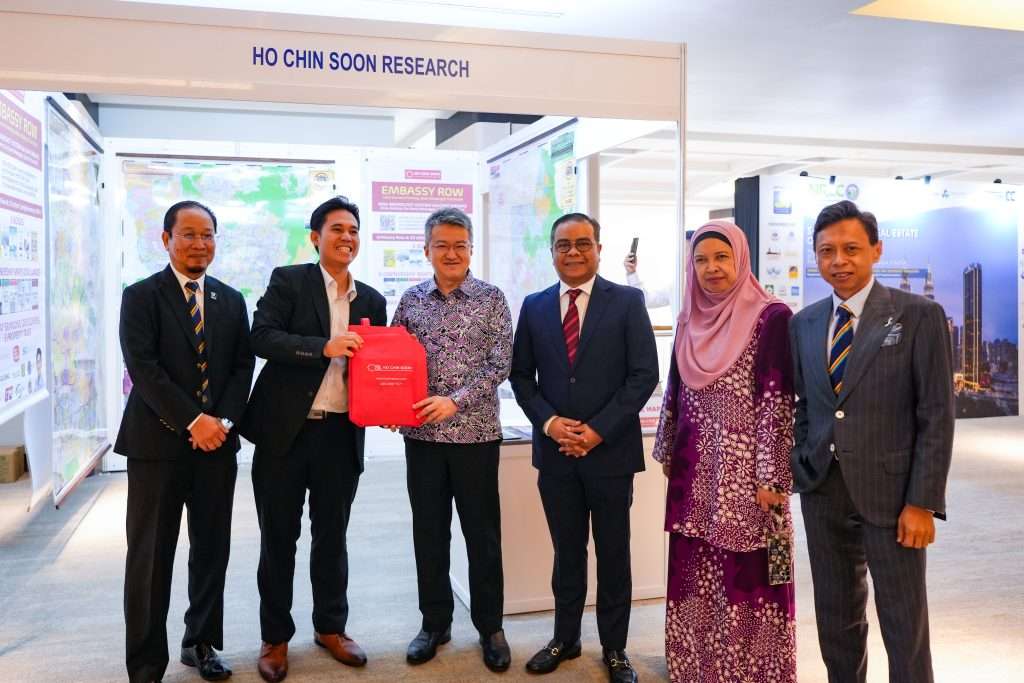
This is my speech delivered to officiate the 33rd National Real Estate Convention on Tuesday, 21 April 2026 at the KLGCC Convention Centre.

