
The Social Exchange: Strengthening Malaysia’s Social Finance Ecosystem
The Social Exchange is a great initiative by the Securities Commission Malaysia (SC). It is not just an initiative, but a statement that we are not just thinking about the…

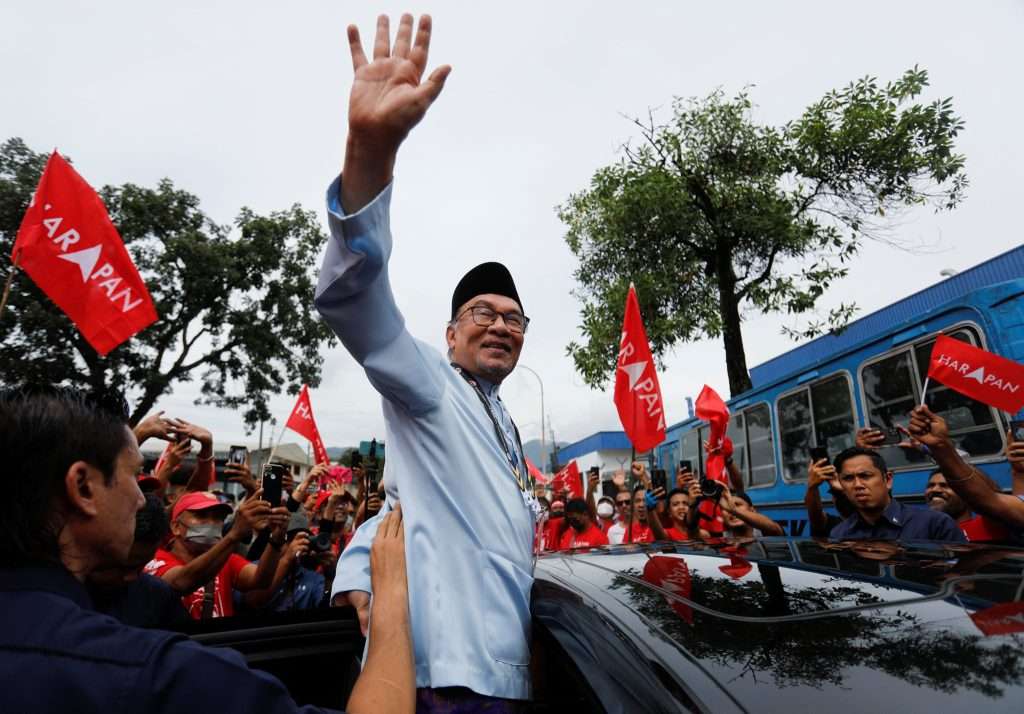
To win GE16 convincingly, the Unity ticket must get at least half of the Malay votes as well as maintaining the level of support among non-Malays, convincing them that voting for Perikatan Nasional is not a viable option.
To envisage such a winning coalition of voters, under the Unity ticket, Pakatan Harapan-Barisan Nasional needs to articulate a “Malaysian nationalism” that brings together more than half of the Malays and an overwhelming proportion of voters from all other ethnic groups. I define Malaysian nationalism as having a common goal of building the nation together, prospering together, regardless of one’s background. It is the idea of a true Bangsa Malaysia.
A note of caution on the discourse of ethnic voting. I wrote a thesis on PAS’ internal politics between 1999 and 2004 during my time at the Australian National University. The first thing my supervisor Dr John Funston, who himself wrote extensively on Malay politics, cautioned me was to never assume the Malay voters as a singular monolith: every election since 1955, PAS would often gain up to 30% of Malay support however popular and dominant UMNO was. And PAS would win a lot more when there was widespread discontent against UMNO.
A vote for PN can never be assumed as a vote for what PN stands for. Just as a vote for PH or UMNO cannot be assumed as necessarily a vote for the ideas they represent. It could just be a negative vote against the other options.
Recently, I put forward the theory of “peak Perikatan Nasional”, explaining that the result of the 6-state elections is as far as PN could go if it stays on the course of manufacturing and manipulating Malay-only anger. The tide will ebb and the Unity ticket would win GE16 by default if PN doesn’t change its game.
But if PN is able to convince more than 30% of ethnic Chinese and Indians while maintaining the same level of Malay support across the board, PN would have a go at federal power. Yet the moment PN attempts to court non-Malay support seriously, it will have no choice but to tone down its mobilisation of Malay anger.
Pakatan gained traction in the elections between 2008 and 2022 essentially based on anger against corruption and abuses of powers, as well as reacting to UMNO turning right-wing since Datuk Seri Hishammuddin Hussein waved the keris in 2005. UMNO was defending its turf during this period by riling up negative emotions against the non-Malays, especially against its DAP bogeyman.
With UMNO as part of the Unity Government now, PN has appropriated the anti-corruption platform as well as taken over the role of whipping up sentiments against the non-Malays.
For the longest time, at least since the 2008 election, elections were fought almost solely on negative emotion. To vote for a party is to fight against someone or something else. No one seems to believe that voters would respond positively to positive campaigning.
To put it plainly, PH supporters cannot forever hope for another 1MDB scandal so that they can have a common enemy to fight against. UMNO supporters do not know how to react when their previous bogeyman DAP is now an ally. PN needs to realise it cannot play up Malay sentiments forever against UMNO and DAP to win. These are harsh realities for all parties.
Elections have never just been about rational choices. It’s about emotion, but not just negative emotion. Hope, for example, is a positive emotion. To move forward, the Unity ticket should no longer think it could win by defining itself against PN alone. The Unity ticket needs to win by being embraced positively by as many Malaysians as possible.
Rallying Malaysians emotionally to a Malaysian nationalism is as much as building a winning coalition of voters for the Unity ticket. To win GE16, the Unity Government has to position itself as the nation-builder.
If we look to history, of the 15 general elections held, the ruling coalition won with a landslide in 1964, 1974, 1982, 1995 and 2004. In each of these elections, the ruling coalition of the Alliance and later BN was able to convince more than 50% of voters from every ethnic group to vote in its favour.
In 1964, the Konfrontasi launched by Indonesia and the chaotic Cold War geopolitics rallied Malaysians around the flag and handed the ruling coalition a handsome victory. In 1974, in the aftermath of the May 13 incident and at the heels of the consolidation of most political parties under BN, the government of the day won a landslide victory. In 1982 and 2004, a new Prime Minister respectively entered the scene and promised to start a brand new era. And, in 1995, after years of prosperity and rosy ethnic relations as the idea of Bangsa Malaysia was promoted, BN won 65% of popular votes, the highest it ever obtained.
The Unity ticket led by Prime Minister Datuk Seri Anwar Ibrahim is uniquely positioned to assume the nation-builder mantle. Anwar’s personal story and sufferings in the past 25 years was dramatic and coincided with Malaysia’s decline from a rapidly growing economy in the 1990s to a sluggish one. The serendipitous coming together of former archrivals of PH and BN, together with Sarawak’s GPS and Sabah’s GRS, to form the Unity ticket, is a great story potentially with mythical appeal.
Ultimately, the Unity Government should tap into Malaysians’ desire for a better future for themselves and their children, and the aspiration to see greatness in Malaysia. A winning coalition of voters needs a Bangsa Malaysia discourse as well as an economic agenda that resonates with those who are likely to vote for the Unity ticket.

