
The Social Exchange: Strengthening Malaysia’s Social Finance Ecosystem
The Social Exchange is a great initiative by the Securities Commission Malaysia (SC). It is not just an initiative, but a statement that we are not just thinking about the…

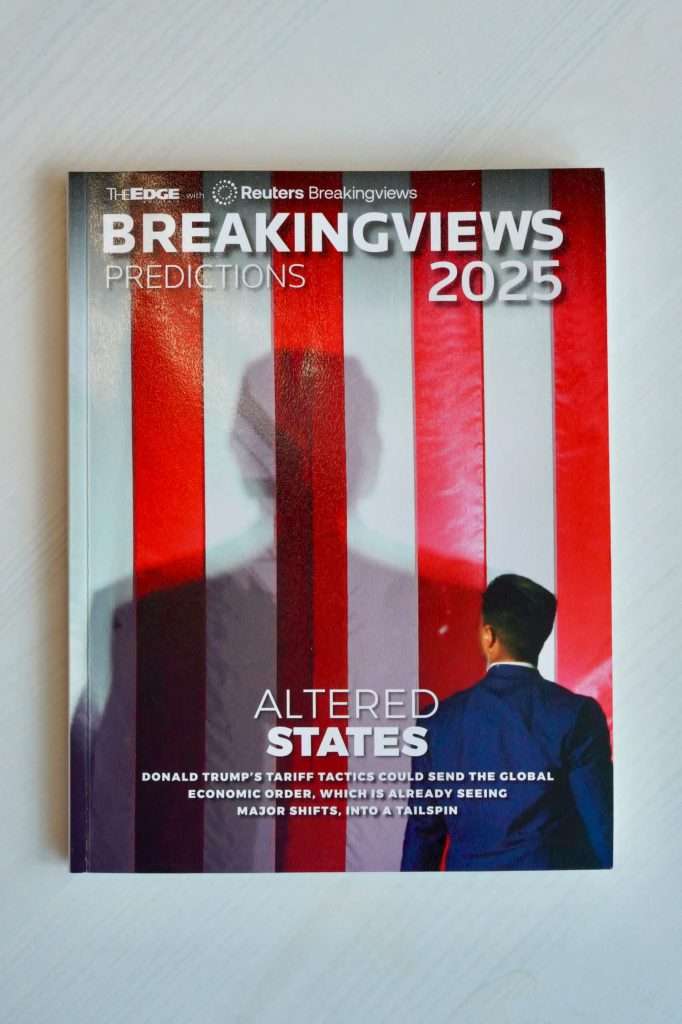
Malaysia has a once-in-a-generation opportunity to see a second take-off. But to experience transformative growth, the country needs a national consensus to reappraise its capacities, capabilities, potential and position in relation to the world.
Prime Minister Datuk Seri Anwar Ibrahim has managed to “raise the ceiling” over the past two years, especially in attracting unprecedentedly high foreign and domestic investments. Now Malaysia is in the international news for the right reason for the first time, at least in a decade.
Globally, the assumptions and institutions that underpin the running of the world since the end of World War II are now in doubt. The export-oriented industrialisation that brought prosperity to Asian nations in recent decades, including China, by presupposing the US as the final destination for export, is ending too. The China economic machine, which produced one-third of the world’s industrial output and absorbed a significant amount of commodities from around the world, is also facing structural challenges.
Malaysia, as a comparatively smaller economy, will not find it easy to navigate the world. One thing is for sure: doing more of the same won’t help, even if it is not insanity.
For Malaysia to thrive, not only do we need to do things differently but we must also see ourselves differently. What does this entail?
First, reframing Malaysia from a ‘trading nation’ to a ‘technology nation’
When we tell ourselves that Malaysia is a trading nation, it usually means our policymakers and businesses are not giving priority to research, design, and making and promoting technologies.
During the first economic take-off between 1988 and 1997, the country’s level of technological sophistication was just below the US, Europe, Japan, South Korea and Taiwan.
While our semiconductor industry fell short in terms of the speed of technological catch-up compared with South Korea, Taiwan and now China, the capabilities of Malaysian firms still exceeded those of other developing countries.
In the decades to come, Malaysia’s rightful place in the global technology hierarchy should be above all other developing countries as we catch up with the more advanced economies.
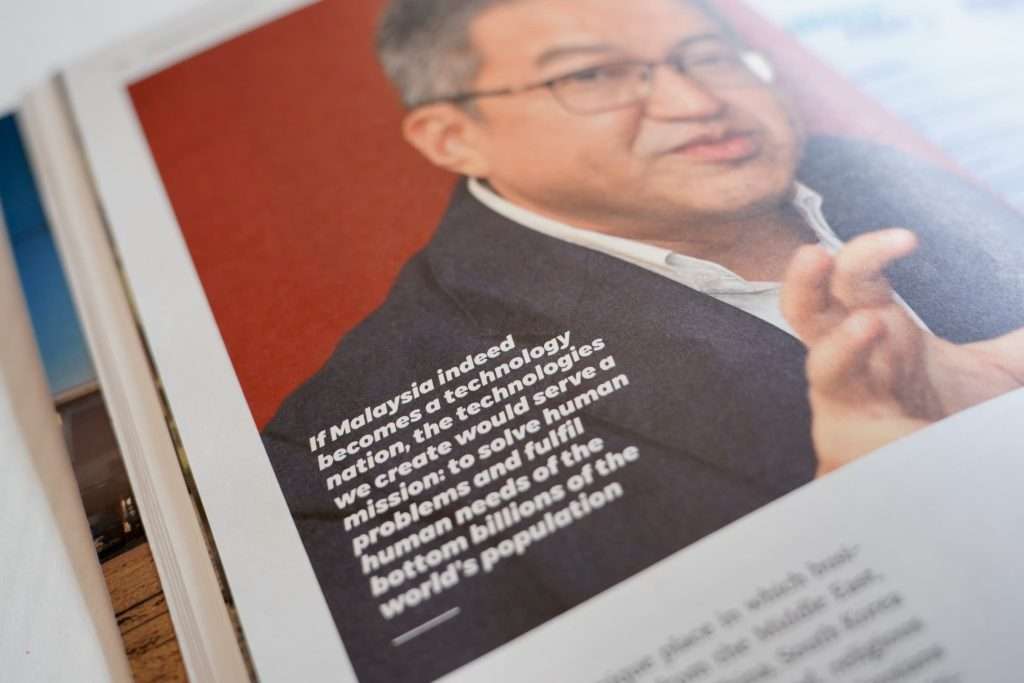
Such positioning allows us to be the “indispensable middle” in the global quest for technological advancement. If Malaysia indeed becomes a technology nation, the technologies we create would serve a mission: to solve human problems and fulfil human needs of the bottom billions of the world’s population.
The semiconductor industry in Malaysia is vertically linked to global firms but rarely horizontally integrated with other industries such as automotive, defence, agriculture and medical devices. We can and should aspire to produce technology for the bottom billions in all these areas.
Malaysia should also lead other developing countries in terms of massive adoption of green technology and renewable energy.
Second, Malaysia doesn’t have a talent problem
Another crucial point in the collective psyche when Malaysians talk and think about the economy is that our nation lacks talent. This is not true; we have talents. What we must deal with is a pay problem or, more comprehensively, a fresh labour market reform to sustain the country’s quest to be a technology nation.
Malaysia has to accept that its labour market and hence, talent pool, is pegged to that of Singapore. We will have to drastically reduce the number of unskilled foreign labour that suppresses wages, push wages up and, at the same time, give Malaysian businesses a helping hand, whether in the form of incentives or cheaper and easier financing, to adopt and eventually invent technology.
Transformative labour market reforms will be required to use a lot more technology in production and less unskilled labour. Once this happens, many among the Malaysian diaspora will find the country palatable both in terms of pay and in unleashing their life potential.
Third, Malaysia as a hub for the new world order
As a multicultural society, our difficult cultural co-existence sometimes creates useful coping mechanisms that later find global relevance. Malaysia initiated halal certification and pioneered Islamic finance, both of which are now globally sought after.
Malaysia is a unique place in which businesspeople or visitors from the Middle East, South Asia, Southeast Asia, China, South Korea or Japan can all find familiar food, religious practices and culture. In general, Malaysians adapt comfortably to multicultural and multinational settings.
A generation earlier, Malaysia was also actively engaging elites and students from African nations. Some of the current leaders of African nations are graduates of the International Islamic University and some other universities and colleges here.
As the world sees less dominance by the West and a much richer Global South, Malaysia, with its unique multicultural milieu, should position itself as a hub for the new world order.
To make our nation the hub for the changing global economy, Malaysia should resume the role as an inspiration to other developing countries by building technology for the bottom billions and transformative labour market reform. Now is the time for our second take-off.
This is my piece first published on The Edge’s Breaking Views 2025.

