
The Social Exchange: Strengthening Malaysia’s Social Finance Ecosystem
The Social Exchange is a great initiative by the Securities Commission Malaysia (SC). It is not just an initiative, but a statement that we are not just thinking about the…

For about 50 years, the idea of shareholder economy dominated the Anglo-Saxon world, which suggests that corporations have no other role apart from ensuring that they deliver shareholders’ value. The promoters of shareholder capitalism, particularly economist Milton Friedman, believe that corporations have no obligation towards the environment, the workers or the society at large.
The consequences of shareholder capitalism are expected – societies broke down, nations collapsed, and the environment was damaged.
Now people are talking about stakeholder capitalism. The Business Roundtable talks about stakeholder economy. The World Economic Forum talks about the stakeholder economy at the turn of 2020.
This also happened at once when we had to deal with Covid-19. We now have to deal with an increasingly volatile geopolitical situation, which includes wars in places that we never expected. So in such a global environment, the idea of the corporations having more to do than just making profit is increasingly important and increasingly accepted – that the corporations are responsible not just to the shareholders but also to other stakeholders – the workers, the environment, and the society at large.
This is the context of why we are talking about ESG. Despite US President Donald Trump not wanting anything to do with ESG, the debate and the idea of ESG will continue to dominate what we do in the years to come because the whole world has to deal with the consequences of inaction.
In the context of Malaysia, the World Bank Technical Note covers areas that include the idea of having green jobs and skills so that we create a workforce that can benefit from ESG and also to be able to deal with the green transition. These are very important points that we somehow have not thought through and we have not articulated fully how we can create a new type of jobs that serve the transition in energy and other forms of green transition.
The technical note links green transition to the role of semiconductors – that Malaysia plays a very important role. The role of E&E in green transition. For example, in solar panels and in many parts of green transition, semiconductors and the E&E industry play a very important role. Some of these industries are already in existence in Malaysia. Not many people know that Malaysia very often ranks either the third or fourth largest exporter of solar panels after the US, China, and depending on which year, some other countries. So we do have a supply chain that is already in existence. Some of them are not necessarily owned by Malaysians, but they are companies which have been in Malaysia for the last decade, and there are opportunities we can work on.
There is a need for us to deal with the questions of green investment. Green transition requires money. Green transition is an opportunity, but it also requires a lot of financing. The technical note mentioned specifically that Malaysia is well positioned because of the Islamic banking infrastructure, which is a critical element and we have an opportunity and we should really look at pairing the “twin green” – Islamic financing and green transition.
Recently, there have been quite a lot of discussions about the ASEAN Power Grid. It is now given a framework in the ASEAN meeting that we had two weeks ago, and there will be further work in the October summit. But the ASEAN Power Grid cannot just remain as a piece of paper, as an agreement – money needs to be put where our mouths are. We will have to start thinking of a financial model that can draw upon the capital market in the region, blended financing, and more funding from the region in order to make this transition happen.
Malaysia is well positioned, but we do need to work with others so that we can make the ASEAN Power Grid a reality. The role of the World Bank, Asian Development Bank, Asian Infrastructure Investment Bank and all other multilateral banks are very important in creating that financial framework that will crowd the capital market in the region in order to make the ASEAN Power Grid a reality.
The technical note also mentions Eco Industrial Park. Part of the problem in this country is that industrial park operators are usually thinking of selling lands, so they are basically treating industrial parks as part of the real estate speculation and not part of industrial development.
I am not sure how much we can change that, but we have an opportunity given that the world has shifted from one single global supply chain – or the idea of one single global supply chain – to now accepting the idea that it is no longer “just-in-time,” it is “just-in-case.” Therefore, there is a need to think of a more consolidated regional supply chain.
And this regional supply chain is often underpinned by geopolitical tension. In that context, I hope we can push for this idea and we can popularise this idea that industrial parks should not be about real estate speculation. They should be about building a resilient supply chain in Malaysia and in ASEAN so that we can withstand the challenges in the years to come.
One staggering figure from the technical note is the question of floods. As mentioned earlier, that inaction could cost 4.1% to the GDP in cases of one-in-20-year climate events. Well, in recent times we have already seen several one-in-100-years events in various places, including in my constituencies of Iskandar Puteri and Perling. We are worried, and I think a lot more climate actions have to happen.
Finally, it comes back to the question of ESG. “E” is easier to measure, despite disputes about how to quantify it. At least there are multiple measurements, we just have to eventually come to a consensus on how to measure it.
“S”, I think, is not clear enough to most people. And when we attend different conferences in Malaysia on ESG, it is more often that not that the talk is about “E” but not the “S”. But as I mentioned, the ESG has a lot to do with stakeholder economy. Therefore, there is a need to really think through how we deal with workers, it is not just about gender equality, it is also about how we deal with workers in general, how we see workers in a stakeholder economy, and how we see workers as part of the economy.
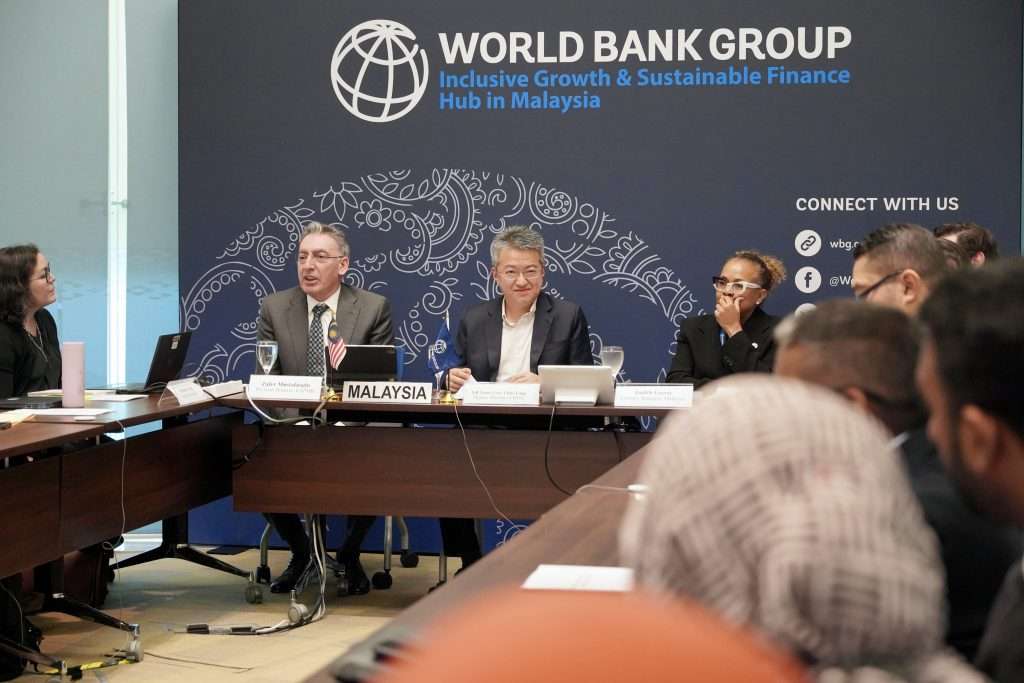
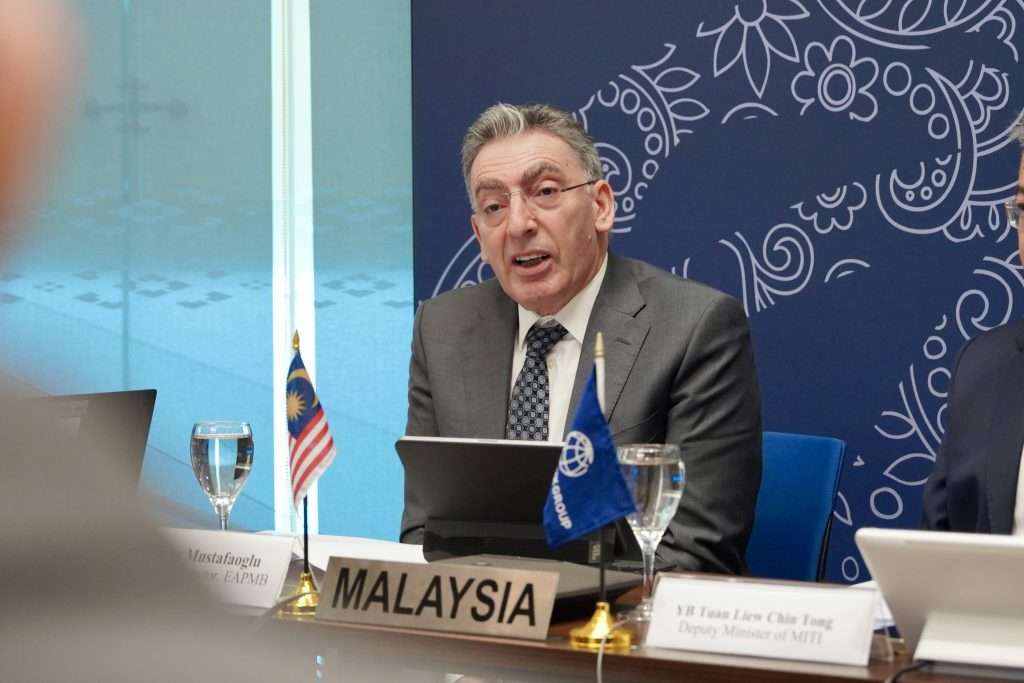
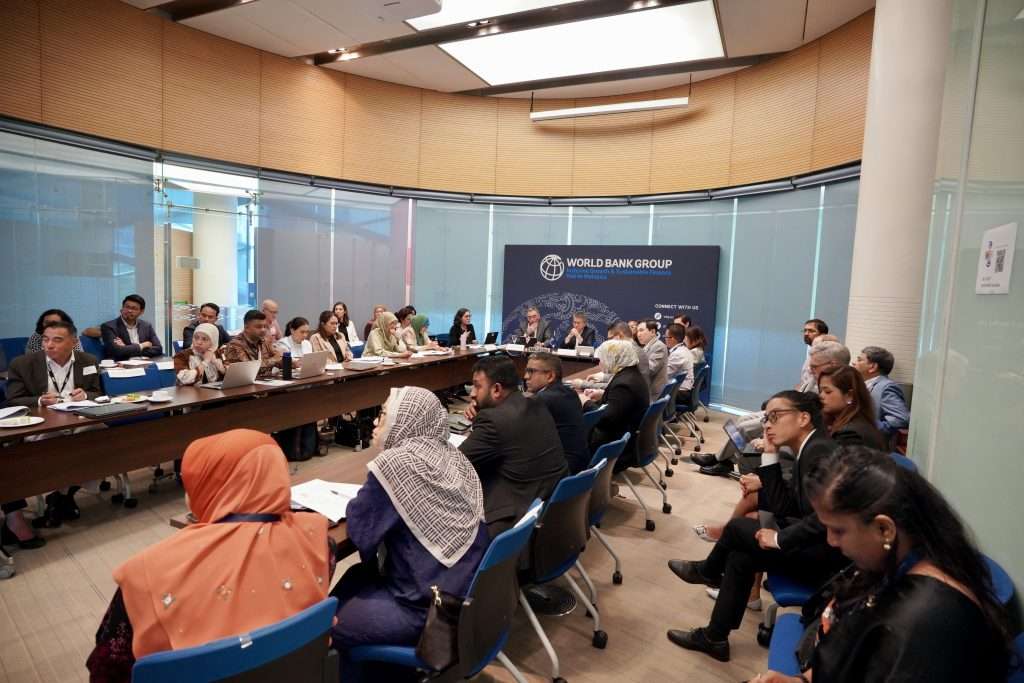
This is my opening remarks delivered at the Stakeholder Engagement Session for World Bank’s “Technical Note – Sustainable Shifts: Driving Malaysia’s Private Sector Forward” held on 13 June 2025 at Sasana Kijang, Kuala Lumpur.

