
The Social Exchange: Strengthening Malaysia’s Social Finance Ecosystem
The Social Exchange is a great initiative by the Securities Commission Malaysia (SC). It is not just an initiative, but a statement that we are not just thinking about the…

I would like to make four points today.
First, by 2045, where do we see ASEAN?
This is a very important question, and I would like to see ASEAN becoming a middle-class society. This means ASEAN should not just be a production site. ASEAN should be a middle-class society with a sizable consumer population.
In this case, China is a good example. When China joined the World Trade Organisation in 2001, China had only about 100 million of its population considered middle-class. Today, by any measurement, most experts would agree that China has at least 400 to 500 million people living a middle-class life. That happened in the span of 20 years.
This inspires us to think about the following question: can we be ambitious that ASEAN becomes a middle-class society? We have a population of 680 million now. By 2045, we will probably have about 800 million population. Can we be ambitious that 300 to 400 million ASEAN citizens live a middle-class life?
Now, if this is our goal, then we will have to work backwards. We will have to start paying people more. We will have to create ASEAN companies that will actually extract more technological rents. And this is where US companies have to start thinking: are US companies prepared to lead the way to advocate higher pay and higher standards, in order to build a middle-class population in ASEAN?
The second point I would like to make is that I support Tan Sri Nazir Razak’s call for the creation of ASEAN Business Entity (ABE). He has been a strong proponent of this concept.
I want to extend this idea of ABE to the next level. We may have to start thinking about creating ASEAN MNCs.
Of course, we are talking to US MNCs today, but it is time for US companies to recognise that ASEAN companies have a lot of capabilities. To see more ASEAN MNCs emerging is good for US companies, is good for the world, and particularly good for ASEAN.
It is important that we start imagining that ASEAN has its own MNCs — in Indonesia, Malaysia, Singapore — that are not just dependent on a FDI-driven industrialisation.
We will have to rethink our dependence on an FDI-driven industrialisation with the aim of exporting to the US. The original thinking that governed Asian societies over the past 80 years is to export to the US, and through which we grew rich over the past 80 years.
But times have changed. The US is limiting imports into the United States. How do we square the circle?
We have to start thinking and perhaps start accepting that export-led industrialisation may not necessarily be the right strategy for ASEAN countries in the future. And this may not necessarily be a strategy that the United States accepts, or the United States administration — whether Democrat or Republican — will accept.
How can US companies play a role in helping us to navigate this difficult situation and find a new framework into the future?
I think the way out is to collectively create more ASEAN MNCs. So it’s not just ASEAN business entities but ASEAN MNCs, so that they can actually emerge regionally and also globally, with good relationship with US companies.
The third point I would like to make is about the ASEAN Power Grid.
ASEAN collectively have many ideas, we have an agreement, we have a declaration, but we may not necessarily have the funding.
We may not put money where our mouth is. And this is where US companies, and those in ASEAN particularly, we will have to start thinking about bringing in the funding in order to make this happen.
The ASEAN Power Grid is one example. We need to create blended financing. It cannot just be private-sector driven.It cannot just be entirely driven by government as well. Some form of blended financing is needed.
We will need the cooperation of multilateral agencies and multilateral banks. We need everyone to come together to think about how to put money on the table in order to make things happen.
And once we make things happen, it is not just about making things happen for the corporations, but it is also for the citizens of ASEAN.
What do we do?
The ASEAN Power Grid must also try to ensure equity, to bring electricity to the people of ASEAN, so that the whole region can grow together as a middle-class society.
My final point is about ASEAN organising beyond the current structure.
Yesterday, Prime Minister Datuk Seri Anwar Ibrahim said at the opening ceremony of the ASEAN Foreign Ministers’ meeting that “foreign and economic ministers must move in concert because the challenges we face do not observe bureaucratic fiefdoms. Nor can our responses”.
Recently, we set up an ASEAN Geoeconomics Task Force. I’m the co-chair with my Indonesian counterpart. Yesterday, our team led by the former Trade Minister of Indonesia Ibu Mari Pangestu and former MITI Secretary-General Tan Sri Rebecca Sta Maria presented to the Foreign Ministers on what we think is our collective economic response to the current situation, which includes the Trump tariff and also second-order effects arising from the Trump tariff, and how ASEAN should integrate among ourselves as much as possible and as soon as possible.
These are all very new, because ASEAN used to see itself in different pillars. We have the political-security pillar, economic pillar, and socio-cultural pillar.
And within the economic pillar, you have the economics track, you have the finance track — and sometimes these tracks work in silo.
But as Prime Minister mentioned in his speech, we have to go beyond that to formulate collective responses.
The years to come will be very challenging. We therefore need ASEAN to act in concert. We need ASEAN to go beyond silos. We need ASEAN to create more MNCs. We need ASEAN to create a middle class.
And I hope, with this report, the ideas that are presented in the report, and with all of us working together, we can find the path into the next 20 years.
And the role of US companies, which are already here in the region, plays a very important role. And I hope, together, we can shape an ASEAN that is globally relevant, an ASEAN that is prosperous, and an ASEAN that is cohesive.
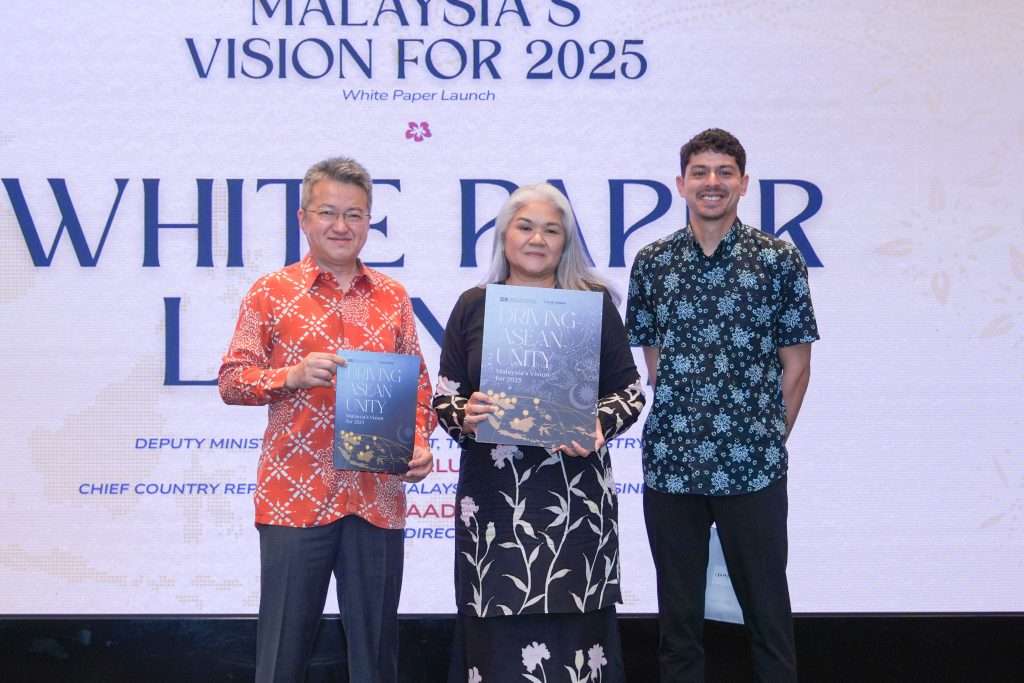
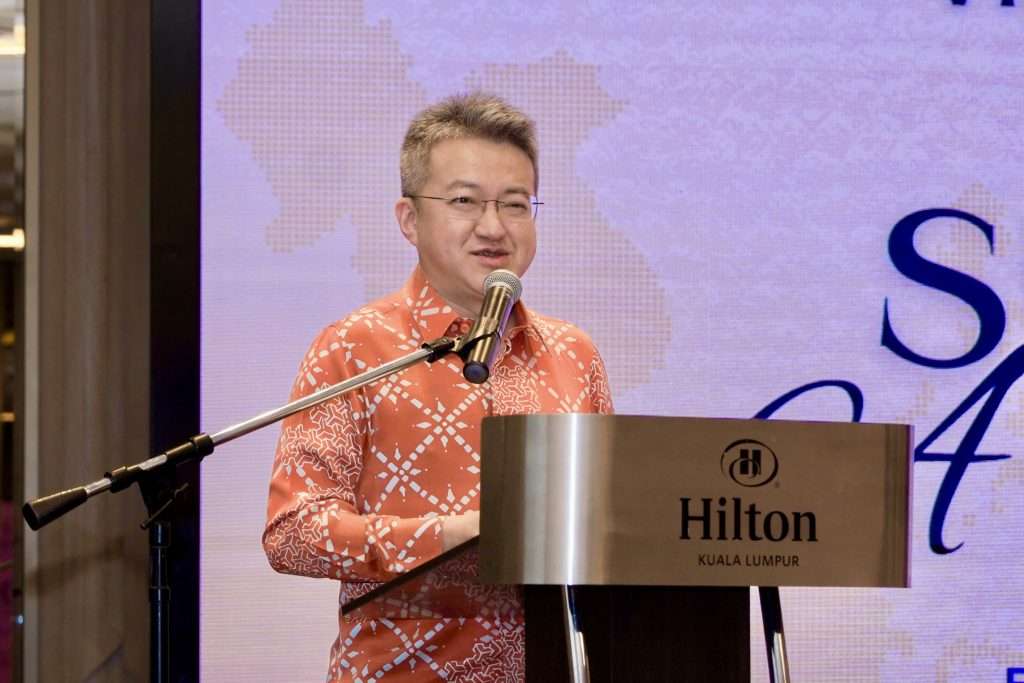
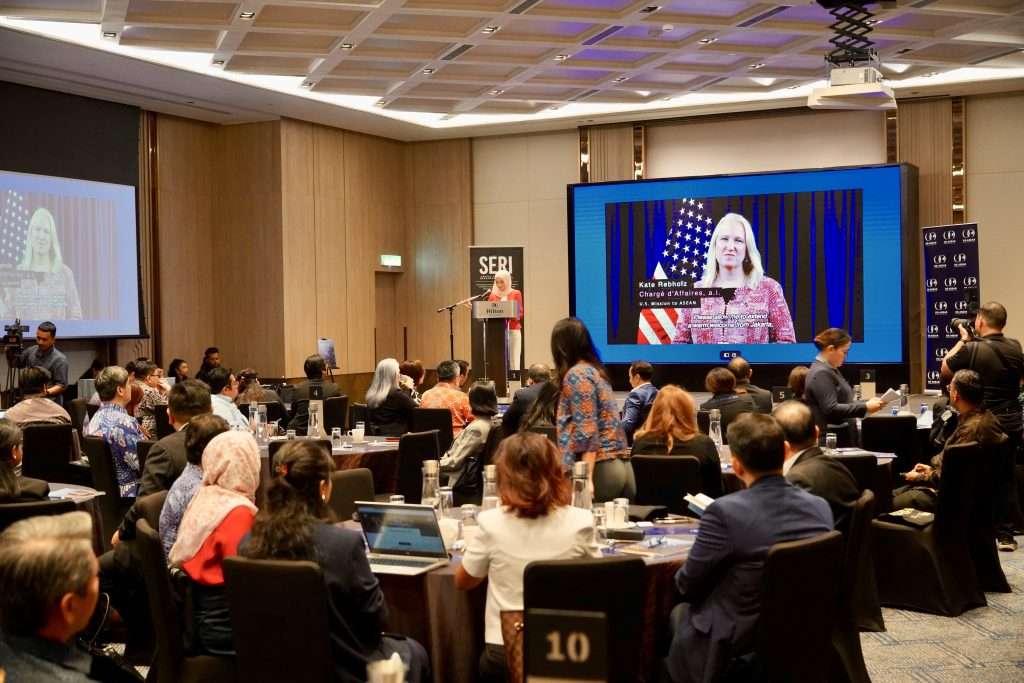
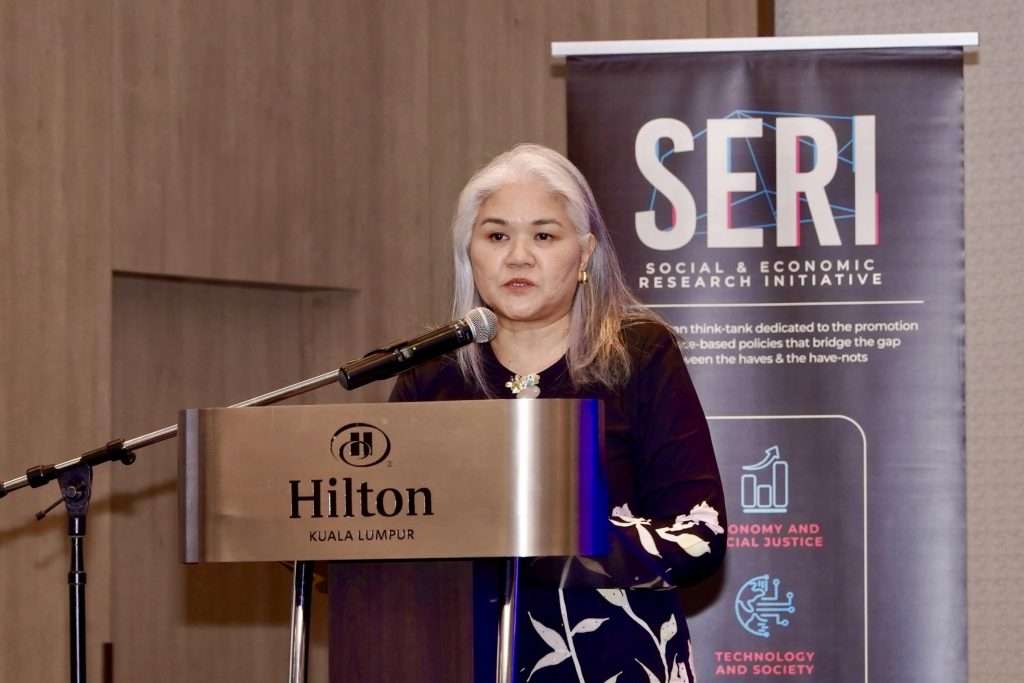
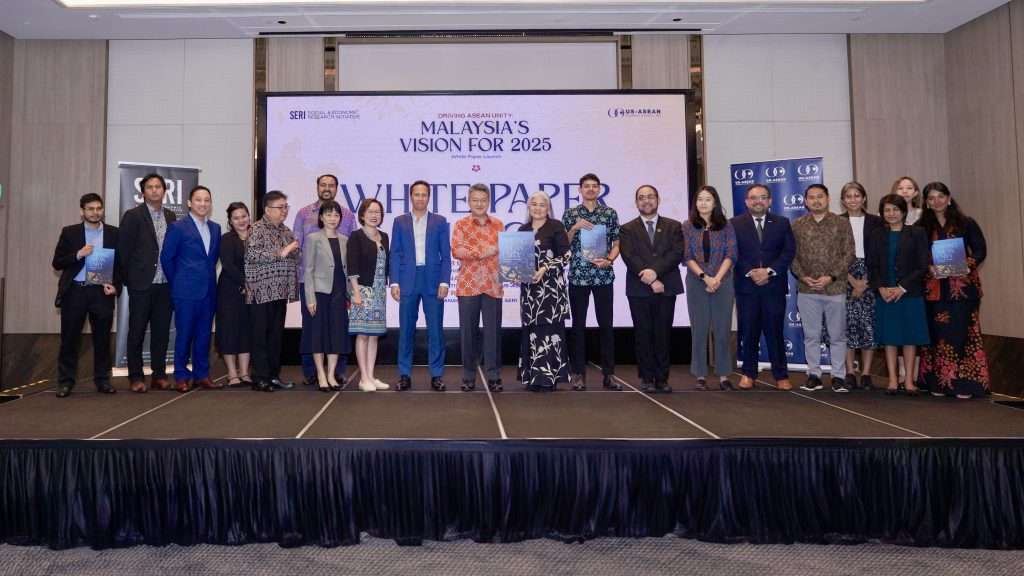
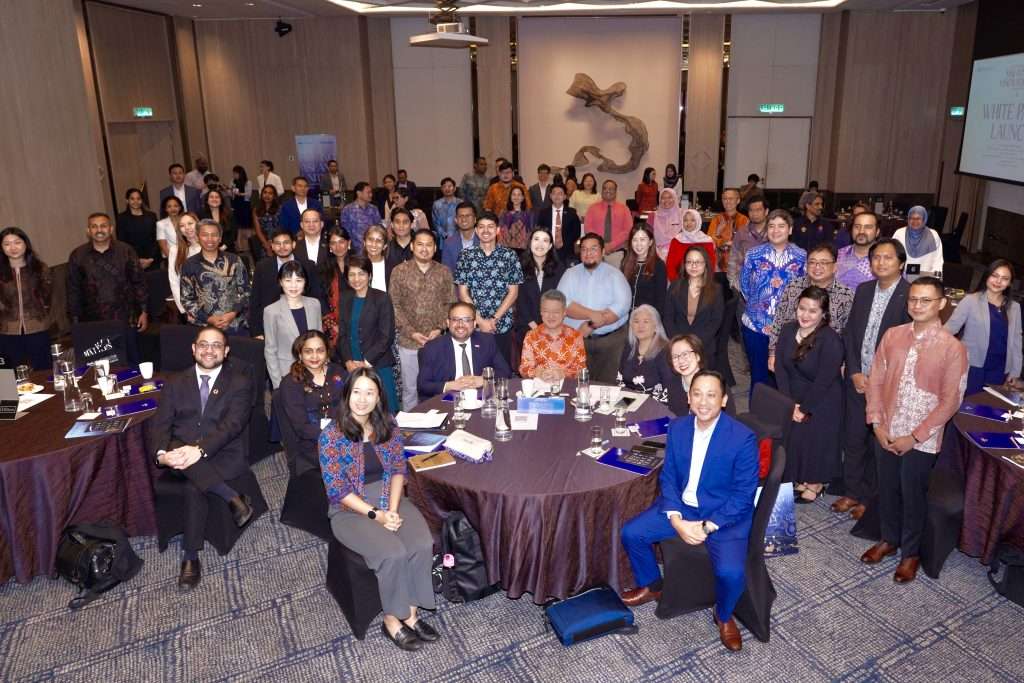
This is my speech delivered at the Launch of the US-ASEAN Business Council White Paper “Driving ASEAN Unity: Malaysia’s Vision for 2025” held on 10 July 2025 at Hilton Kuala Lumpur

