
The Social Exchange: Strengthening Malaysia’s Social Finance Ecosystem
The Social Exchange is a great initiative by the Securities Commission Malaysia (SC). It is not just an initiative, but a statement that we are not just thinking about the…

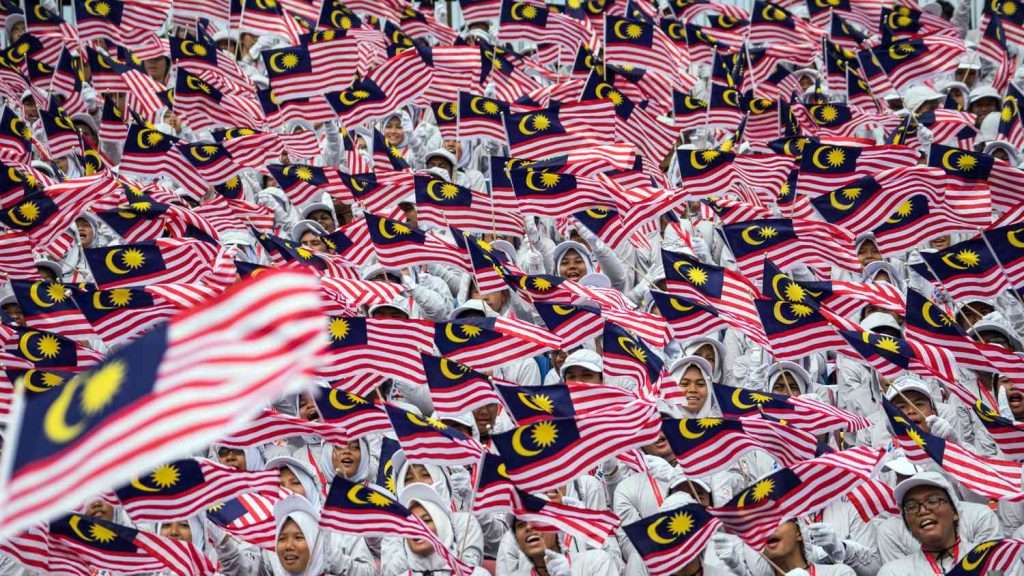
Is an inclusive, unifying, and all embracing Malaysian nationalism possible?
As someone who grew up in the 1990s when Vision 2020, Bangsa Malaysia, and Malaysia Boleh were buzzwords, my answer is “yes”. For me, even back then, those were not mere catchphrases but real hope that fired up my generation’s imagination.
I say “yes” because we know from history that nations are not formed since time immemorial but “imagined” in recent times through shared experiences with a strong sense of solidarity.
Origins of modern nationalism
While nations try to find historic instances to trace its roots to hundreds if not thousands of years ago, the phenomenon of nationalism in Europe has only been around for slightly more than two centuries.
The idea that a state has a sovereign boundary only came about in the Peace of Westphalia in 1648, and the idea of a nation within a sovereign boundary grew only in the 18th century. While nationalism can foster unity, in the first half of the 20th century, tens of millions of people died for nationalism in the two world wars.
Benedict Anderson in his seminal book Imagined Communities: Reflections on the Origin and Spread of Nationalism wrote about nationalism that “it is imagined because the members of even the smallest nation will never know most of their fellow-members, meet them, or even hear of them, yet in the minds of each lives the image of their communion.”
Anderson started out as a scholar of Indonesian modern history, especially during the revolutionary period (1945-49). The case of Indonesia is illustrative.
The many peoples of the Indonesian archipelago had no connection with each other other than being ruled by the Dutch. By the time steamships became accessible, young elites from these colonies were sent for studies in the Netherlands. That was when they got to know each other for the first time, especially during the era of fervent nationalisms of Europe of the late 19th century and early 20th century, in what Anderson called “cramped pilgrimage”.
When the peoples in the Dutch East Indies rose against their colonial masters, they vowed to build an Indonesian nationalism with a diverse group of peoples within the sovereign boundary of Dutch East Indies, which was actually determined and defined in the Anglo-Dutch Treaty of 1824, without the participation of the local population.
Consequently, the Malaysian boundary is also the result of the same treaty, i.e. the former British colonies of Peninsula Malaya, North Borneo (Sabah) and Sarawak, with the exception of Singapore, which gained Independence after separating from Malaysia in 1965.
Within this sovereign boundary with a diverse group of peoples from various parts of Malaysia as well as descendants of peoples brought to these colonies by the British colonial government and merchants, a nation was to be formed.
Four versions of Malaysia’s nation-of-intent
In the book Asian Forms of the Nation edited by Stein Tonnesson and Hans Antlov, a chapter by Professor Shamsul A.B. explains the difficulties faced by Malaysia.
There is an official version of what the Malaysian identity should be, and three other alternative versions of “nation-of-intent”. The official version has Bumiputera (Malay) identity as its “core” while recognising the existence of others. The non-Malays preferred a more pluralised national identity in which their existence is embraced more. On the other hand, the Islamists wanted some forms of an Islamic state, and the peoples of Sabah and Sarawak, many of them non-Muslim Bumiputera, desired a nation to feel more included and respected.
The 1963 Malaysia project was a compromise among the four versions of nations. But will there ever be a nationalism in which all Malaysians will have a strong sense of belonging, regardless of race, religion, or language, that all will passionately build, defend, and fight for?
The initial Merdeka period was idealistic but the solidarity was mostly among the elites, and not extended to ordinary people. While the May 13 incident is usually interpreted as a racial clash, there were also problems of class and demography.
The “baby boomers” who were born after the Second World War had just attained adulthood by the mid-1960s. They needed jobs and hoped for upward mobility in that era of scarcity. When these young people perceived the multiethnic establishment elites as being out of touch with reality, many of these elites, from all races, were voted out during the May 1969 election.
Two decades later, the 1990s was an idealistic time, too. The Cold War had ended with the fall of the Berlin Wall and the collapse of the Soviet Union. The then Prime Minister Tun Dr Mahathir Mohamad, in February 1991, launched a forward movement of Vision 2020 and Bangsa Malaysia, which inspired many, especially those who are now in their 40s and 50s, including me. Winning the badminton Thomas Cup in 1992 featured hugely in the memory of that era.
Datuk Seri Anwar Ibrahim’s role in promoting Islam-Confucianism Dialogue in 1995 and articulating The Asian Renaissance in 1996 were high points, too. When the Asian Financial Crisis crashed the Asian dream, and when Anwar was sacked, tried, and jailed, the movement against the establishment did not take the form of racial rivalries but premised upon justice and solidarity.
The subsequent two decades saw the old political order fading yet the new order failed to emerge.
A rare opportunity
Malaysia under the Unity Government now has the rare opportunity to build a nationalism that could unite the peoples in a time of global crisis and upheavals.
The Anwar-led Unity Government has passed the litmus test of winning elections (several by-elections and the 6-state elections), and governing together. It’s now time to chart the more ambitious mission: to build our nation and a nationalism that is embraced by a large number of peoples at their “everyday social existence”, to quote Dr Shamsul A.B..
During the Covid-19 pandemic, “kita jaga kita” (we take care of each other) was a spontaneous and popular catch phrase emerging from a disdain towards the establishment and against the practice of “antara dua darjat” (between the people and the elites).
The articulation of a refreshed Malaysian nationalism will have to address the question of how to bring the contesting nations-of-intent into a forward looking collective mission, with assurance of dignity and solidarity for all through a democratic framework.
In a society like Malaysia that too often looks at individuals as numbers for group identities, it is important to remember that each citizen is a voter, a worthy human being, and a dignified person who does not want to be trampled on.
The sense of solidarity is crucial. Scandinavian social democratic states were coherent for many decades due to the existence of the welfare state, and the polarisation of many European societies as we see today also has a lot to do with the end of the welfare state. A welfare state provides a “floor” to ensure the social well-being of citizens, which in turn ensures the dignity of the people.
In the case of Malaysia, the elites across ethnic lines should care more about ordinary people, including providing quality jobs with better pay. If they fail to do it, our citizens are forced to work as cheap labour in Singapore. When ordinary Malaysians see the employers doing well by hiring unskilled foreign workers to displace them, or if Malaysian companies feel that foreign companies have unfair advantages over them, the sense of resentment will brew.
To reach a new deal in a refreshed Malaysian nationalism and give it a new impetus, democratic framework and aspirations of the people should be accepted as the final arbiter so that no leader would resort to authoritarian means which they justify in nationalistic terms. Yes, while nationalism can foster unity, if misused and abused, it can lead to conflict and discrimination.
Malaysia can be a positive contribution to the world as a successful multicultural nation with democracy, solidarity, and dignity as its core. We now have this rare chance in history to build an inclusive, unifying, and all encompassing Malaysian nationalism.
Happy Merdeka!

