
The Social Exchange: Strengthening Malaysia’s Social Finance Ecosystem
The Social Exchange is a great initiative by the Securities Commission Malaysia (SC). It is not just an initiative, but a statement that we are not just thinking about the…

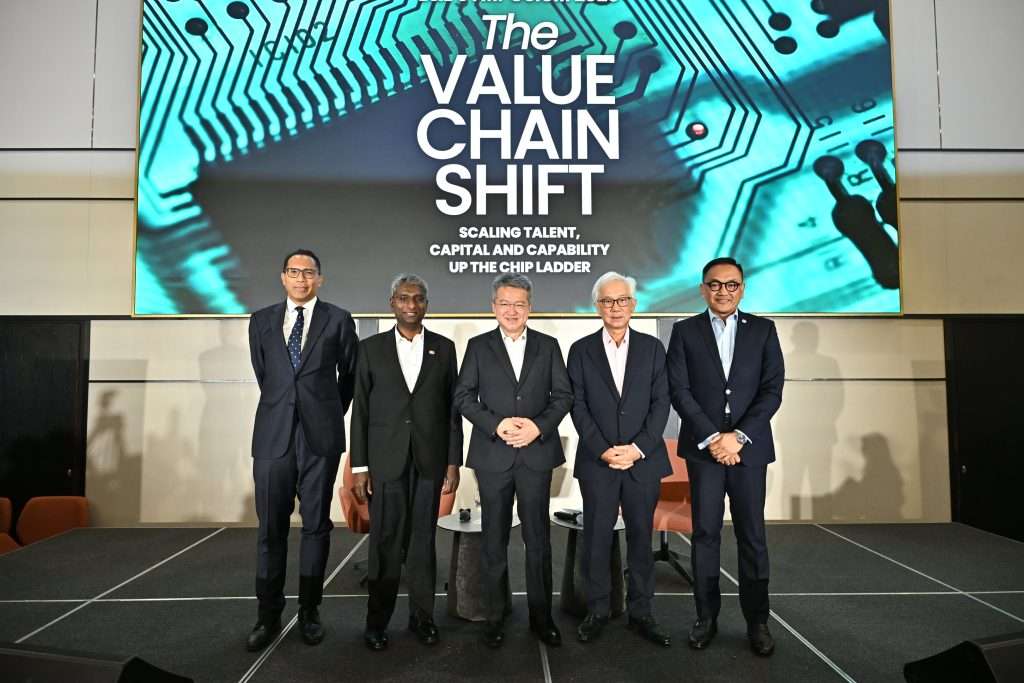
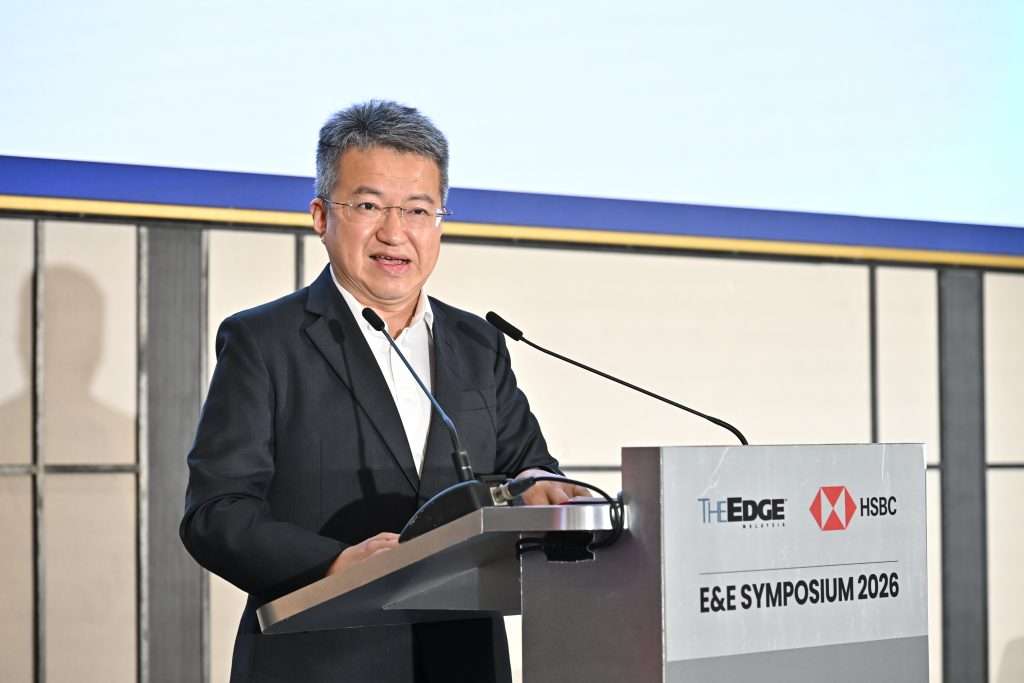
I would like to thank The Edge and HSBC for inviting me to deliver the Keynote Address at this important E&E Symposium 2026. The theme, “The Value Chain Shift”, reflects one of the most consequential questions today, and I intend to take the theme quite literally this morning: to consider together what is shifting, who must shift it, and what it will take.
Let me begin with a journey. Consider, as one example, the chip inside your smartphone. It carries architecture and intellectual property developed across the United States, the United Kingdom — and increasingly, in Malaysia’s own custom-IP houses. Its front end design was shaped by engineers from several countries, and, more and more, by engineers here at home but with foreign MNCs. The machine that printed its circuits was built in the Netherlands. Its wafer was sliced from a silicon ingot grown in Japan; fabricated in Taiwan; and verified by teams in India. Then, at roughly the tenth stop on a twelve-stop journey around the world, it came to Malaysia, where our people assembled, packaged and tested it. A single chip is the product of a journey around the globe and Malaysia’s fingerprints now appear at more stops on that journey than most people realise.
The journey began for us more than fifty years ago, when the first semiconductor plants arrived in Penang in the early 1970s. Malaysia has now become an indispensable part of the value chain and this is not merely self-assessment. I visited Detroit in 2023, and US Commerce Secretary, Gina Raimondo, who said that when Malaysia shut down its factories during the Covid-19 pandemic, Detroit had to shut down as quite a few of the critical components whose shortage was disrupting supply chains worldwide came from Malaysia. The world knows how much it needs us; the task is to build on it.
A great deal of high value work is already done in Malaysia — Malaysian teams inside the multinationals here have been developing world class designs and intellectual property for decades. But the value created by Malaysian hands is very often captured elsewhere such as IP that is registered abroad, owned abroad and monetised abroad. The problem was never our capability; it is how little the value our capability creates is kept by Malaysian companies, shareholders and workers. My argument is that Malaysian capital must now go to work changing that, and that this is one of the clearest investment theses in our market today.
For more than fifty years, Malaysia succeeded by doing exactly what the global supply chain needed from us: the world’s masters of “copy exact”, trusted for IP protection, quality, reliability and lower cost. But the world has evolved, Taiwan has redefined the technology frontier; China has moved from “Made in China” to “Designed in China” and, increasingly, “Invented in China”. However, Malaysia, and Singapore as well, does not have our own TSMC, or Samsung, or Huawei, despite years of being deeply embedded in the global semiconductor supply chain.
And the technology leaders now want something different from a partner: innovation, speed, capacity readiness, low-exposure experimentation, complex problem-solving. “Copy exact” is no longer enough. What we have yet to make is the shift in culture and business model: from doing for others to doing for ourselves; from “tell me what you want and I will build it” to knowing the customer well enough to offer the solution first; from developing IP for someone else to owning it on our own. That shift — to product ownership — is what this era rewards, and what the capital in this room can and should finance.
Four numbers describe Malaysia’s position with some precision. First, about 40% of our national exports come from E&E products, the largest of any category. Second, apart from China and Taiwan, around 13% of global semiconductor assembly and testing is carried out in Malaysia. Third, however, the E&E industry contributes only around 6 to 7% of Malaysia’s GDP, because our activity is concentrated in the lowest value-adding segment of the chain, and is driven largely by multinationals rather than Malaysian firms. And fourth, our listed semiconductor companies represent only about 1.7% of Bursa Malaysia’s total market capitalisation.
Each number is smaller than the last, and the sequence of layers tells a single story: the deeper one looks into what Malaysia actually retains from this industry, in value, in profit, in ownership, the thinner it becomes. The value chain shift is, in essence, the project of reversing that sequence.
It is time for everyone in the capital market to think about Malaysia as a technology nation and not just a trading nation, and look at tech stocks more seriously than real estate counters or those with less technology contents.
Why does such a large industry leave so little behind? The semiconductor value chain can be drawn as a smile — a convex curve with high value at both ends and lowest value at the trough or stationary point. At the top left sits research, design and intellectual property. At the top right sit the product owners — the brands and system integrators. And at the bottom of the smile sits manufacturing, assembly, packaging and test. Malaysia, for fifty years, has sat at the bottom of the smile. Measured by value add design commands roughly 50% of all value-add; fabrication about 24%; assembly, test and packaging, the segment we lead, captures around 6%.
There are two ways to rise. One is to move along the curve into design and brand ownership (like D&O Green Technologies Bhd, one of the world’s top 5 automotive LED-makers). The other is to shift the whole curve upwards, to raise the value of the segment one is already strong in (such as Malaysia’s Advanced Packaging Consortium). And the classic smile is being redrawn where the manufacturers supposedly at its “bottom”, now hold real chokepoints and pricing power as the world’s leading AI chips cannot ship without one foundry’s proprietary process. IP and margin can be built at every point of the curve. We must not forget the strength of our equipment makers, who have recently formed a cluster under the guidance of InvestPenang to further strengthen its R&D and global position in the supply chain. The lesson of the smile is not that Malaysia must abandon manufacturing but we must own more of the technology within it.
The point is not where our excellent operator sits, but it is how much of the value they own and create where they sit. And it is, I believe, the heart of the thesis for any investor here: it explains why Malaysia must move. The firms that move to own and improve their technology, their products and their customers will be the ones rewarded.
The market, in its patient way, has been keeping score. Since 2015, the leading American semiconductor index has compounded at roughly 30% a year; Taiwan’s semiconductor stocks at about 24%; Korea’s at 21%; and Malaysia’s E&E names at about 19%. For years those lines moved broadly together. Then came the generative-AI boom at the end of 2022, and they parted ways — because Malaysia’s industries had not stepped up sufficiently to participate in the AI supply chain. Our companies are capable; but not enough to ride the AI wave.
Liquidity tells a related story. The world’s leading chip designer, NVIDIA, trades over 30 billion US dollars of its shares in a single day, while our own strongest names trade a few million dollars a day. The encouraging part is that deep, liquid, trusted markets rest on two things well within our power to strengthen: consistent regulation, and the sustained performance of our listed companies.
Time is not entirely on our side, and standing still is costly. The world is undergoing once-in-a-generation reconfiguration of its own supply chain. From below, our traditional position is being contested: India is building an eleven-billion-dollar fabrication plant, with engineering costs roughly 35% below ours; Vietnam has attracted over six billion dollars from global players, with engineers some 47% more affordable; and the global back-end market is set to double to about ninety billion dollars by 2032, with determined competitors seeking their share.
From above, however, a window has opened. In this later stage of the trade tensions, the supply chain’s organising question is no longer simply who is cheapest, but who owns the technology and who can be trusted — competition on trust, reliability, security and technology, less so price. Here Malaysia is fortunate: trusted across divides, non-aligned, with fifty years of proven capability.
There is a glass ceiling for “the middle income trap” between economies that host industry under foreign guidance, which is us, and those that master it in their own right, like South Korea and Taiwan. History’s lesson is consistent: the nations that broke through that glass ceiling built national champions of their own. Building global semiconductor champions requires capital of a scale in a class of its own. The pressure from below tells us we cannot stand still; the window above tells us we do not have to. What lies between the two is financing.
This brings me to a finding that genuinely surprised me. One might assume our semiconductor companies are stretched and starved of financing capacity. The data suggests the opposite
Our listed semiconductor firms are among the most conservatively financed in the global industry — with debt-to-EBITDA of around 0.07 times in design, 0.25 in manufacturing, and 0.15x in manufacturing equipment, against a serviceability threshold of up to six times global giants. In plain terms, our leading semiconductor firms could reasonably take on a few full turns of additional leverage to cash flows as demonstrated by foreign global champions who borrow considerably more.
The balance-sheet capacity to fund a meaningful part of the climb, in other words, already exists but largely untapped within our own listed companies. This is not a story of firms that cannot borrow. It is, I would suggest, the story of a credit market and an industry that have not yet properly sat down together: companies that have understandably preferred the reliable dividend than reinvestment in tomorrow’s technology, and lenders who have not yet built the sector expertise to structure and price debt for this sector. The money and the technology, in short, are not yet talking to each other.
Why not? Let me offer three reasons. First, risk and the shape of the money. Designing one leading-edge chip now costs around half a billion US dollars; a new advanced foundry takes four years to come online; and industry sales swing from peak to dip in roughly twenty-three months. Financing this industry means breathing with that rhythm, and staying the course through the down-leg. Its risks are also unfamiliar and varied, from the asset-light chip design segment that is valued on IP and talent, to capital intensive manufacturing with building and equipment value at the other end, including various permutations within the supply chain. A vital missing link in this ecosystem are competent and trusted deeptech valuers that enable informed balance sheet pricing. Our rating infrastructure shares this gap: relatively few of our technology companies are rated at all, and an unrated sector is, to much of the debt market, a hard-to-see and high risk sector.
Second, a knowledge gap. Many of our domestic funds are generalist and finance first, lacking the deep industry experience required to leverage capital to build commercial, deep-tech driven businesses. Meanwhile semiconductor specialised investors – smart capital – are spearheaded by principals with years of industry and finance experience, backed by deep industry networks – precisely those able to add value beyond the cheque. The problem is that the latter is in scarce supply.
Third, geography and ecosystem. Our technology heartland is in the N; our financial capital sits in Kuala Lumpur; and clusters, as we know, are made of proximity. To understand the true potential of geography, consider Silicon Valley in the US, Hsinchu in Taiwan and Brainport Eindhoven in the Netherlands. These regions share a common blueprint where their deep-tech ecosystem is ingrained in its research infrastructure, talent readiness, and deep pools of capital. Our ambition is for Penang and its neighbouring Kulim to take their place alongside Silicon Valley, Hsinchu, and Brainport as a premier global tech cluster. The firms and talent are already clustered there. The missing link is the geographical presence of capital.
Malaysia’s fifty-year industry has produced a deep bench of people who understand both the engineering and the balance sheet — veterans who have carried profit-and-loss responsibility inside world-class operations. That talent, fluent in silicon and finance at once, is exactly what an investment team needs to underwrite this sector with conviction. I would strongly encourage more cross fertilisation and meaningful inclusion of our latent industry assets which I hear are in high demand globally, with the domestic finance industry.
I would like to further propose that Malaysia offers a one-stop centre for semiconductor or deep-tech financing. An integrated financing solutions centre in the heart of Malaysia’s technology cluster, turning it into Malaysia’s true Silicon Valley – bridging the gap between deep-tech and capital by design. It could support themes, not only single names — inviting investors to back a well-governed national story, resting on trust in our rules, which is how confidence is patiently built. I would like to invite the audience, especially our industry and capital market players and regulators to share your thoughts on this.
We are not starting from zero and Malaysia has precedents of semiconductor success stories. To understand what happens when we successfully move up the value chain, we only need to look at a pioneer like ViTrox. Born in Penang, its compounded growth and value creation over the last two decades have mirrored the kind of explosive trajectory like Apple — transforming from a small startup into a multi billion ringgit, R&D driven titan.
And this year, SkyeChip, a Penang company designing advanced AI and high-bandwidth-memory chips, sitting at the high-value, IP-rich end of the smile, listed on Bursa Malaysia’s Main Market. Its offering was oversubscribed by around ninety-five times, raising some RM352 million, with the majority earmarked for research and development. Here, in these companies, is the argument of this morning made real: a firm that moved upstream into design, and a capital market that rose to meet it. The value chain shift is not merely a hope. It now has a share price.
The Government, for its part, is building the machinery to help many more follow. The launch of SemiconStart, a pilot programme to help early-stage semiconductor firms become investable and closing the readiness gap between the founders and the investment community. Bank Pembangunan Malaysia Berhad is providing an interest-rate subsidy on lending to the semiconductor industry, including for research-and-development projects that commercial banks are typically unable to finance. And under the New Industrial Master Plan 2030, the co-investment facility matches private fundraising with government funding, through both loans and equity, so that capital is multiplied, rather than crowded out.
The philosophy is simple: the Government will de-risk, match and convene, and let the market lead.
Finally, let me say why all of this matters beyond the market. There are many other companies that predated SkyeChip and Vitrox. Yet, we are where we are today. The challenge is not only to list, but ensure that listing is the means to an even bigger destination, instead of the penultimate goal in itself. An industry at the bottom of the smile can, by simple arithmetic, only sustain bottom-of-the-smile wages. A firm earning 6% of the chain’s value cannot pay like one earning 50%. If we wish to see Malaysian wages rise sustainably, Malaysian firms must operate where the margins can carry those wages. Companies need margin to raise pay; and a culture predicated on technology-driven innovation instead of competing on costs creates margin; and what we need is smart capital that rewards companies for taking the right risks. That is the causal chain of the move along and upward shift of the smiley curve, and it ends with a generation of talented Malaysians who need not go abroad to be paid what they are worth.
Ours is still a young nation, but we are ageing, and we must help our future generations to grow rich before we grow old. The window in which to build a high income, high wage economy will not stay open forever. Moving up the value chain requires technology, talent and capital and today a big gap is capital.
My ask, therefore, is a warm invitation. To the banks and funds: build the sector expertise, welcome the veterans who speak both the technology and business, and design the products that allow our conservatively financed champions to put their balance sheets to work. To the venture and private capital community: come upstream and onwards with us, into design and intellectual property, where the greatest value is created. To our market institutions: help deepen liquidity, extend ratings coverage, and fuel the growth of this sector. And to everyone present: help us shape, and improve, the one-stop centre for semiconductor financing I have proposed today.
The likes of SkyeChip, Vitrox, Inari and Kelington have shown that the journey can be run. The question the value chain shift asks of us is a hopeful one: how many of a chip’s early, valuable stops might one day carry not only a Malaysian address, but more critically Malaysian technology ownership? Much of the answer rests with the capital represented in this room and I have every confidence in what we can build together.
I am confident that this symposium will spark meaningful discussion and collaboration between our capital market and our technology community.
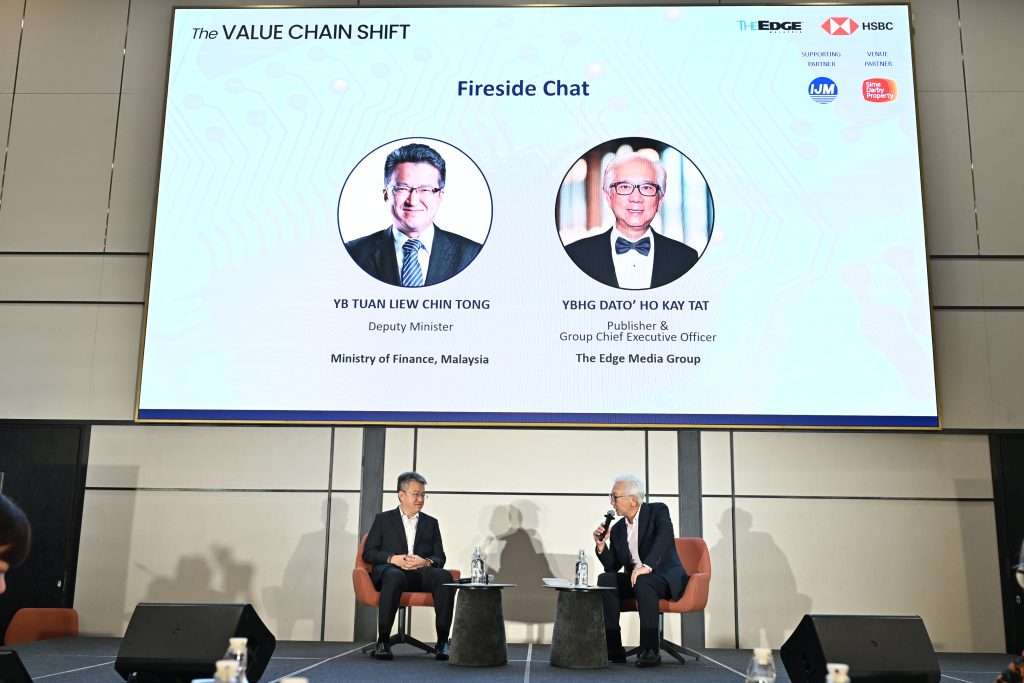
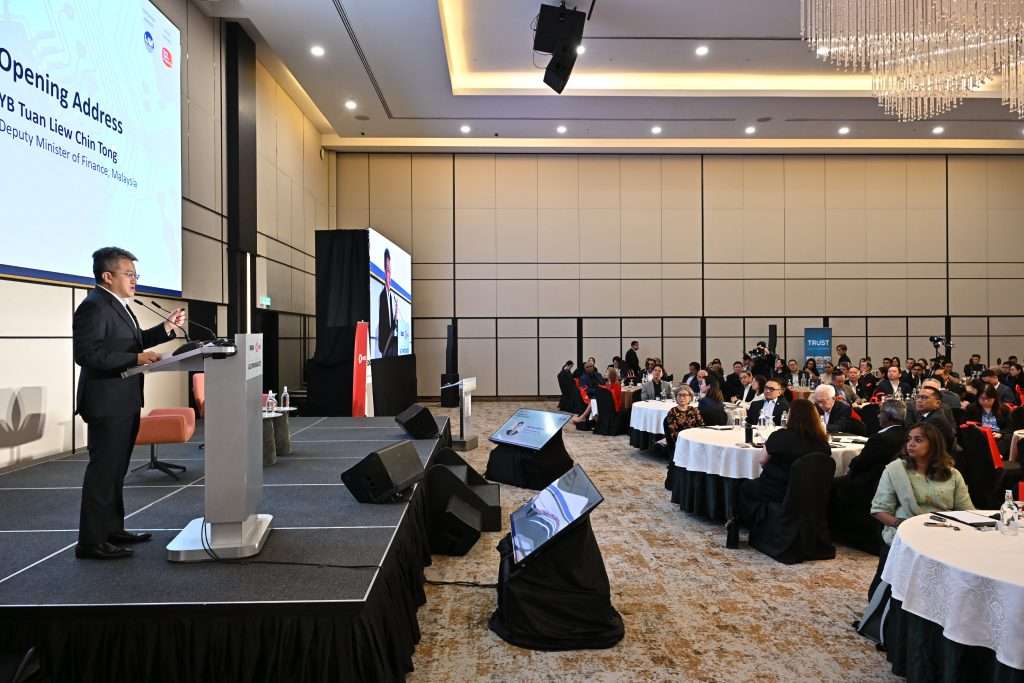
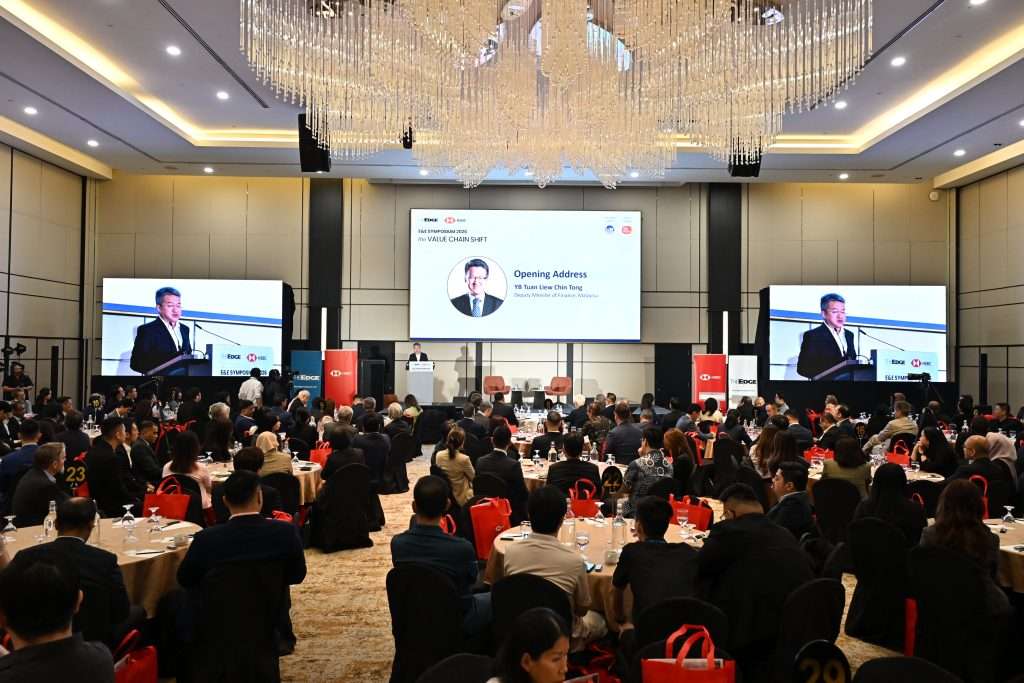
This is my opening address delivered at The Edge-HSBC E&E Symposium 2026: The Value Chain Shift on Monday, 13 July 2026 at the KLGCC Convention Centre, Kuala Lumpur.

