
The Social Exchange: Strengthening Malaysia’s Social Finance Ecosystem
The Social Exchange is a great initiative by the Securities Commission Malaysia (SC). It is not just an initiative, but a statement that we are not just thinking about the…

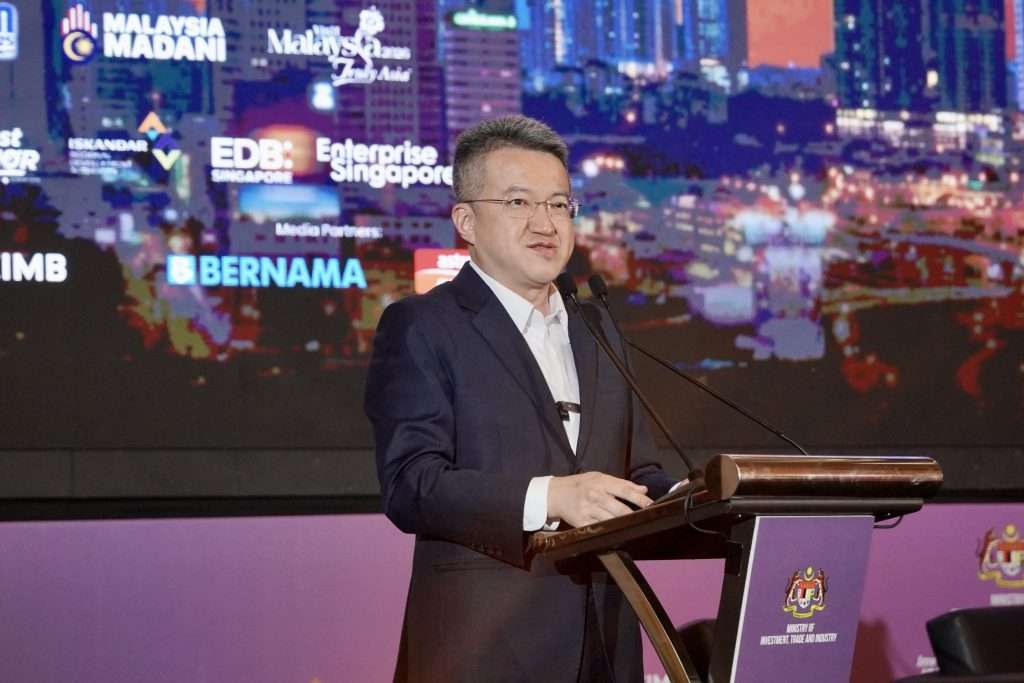
This is a great gathering. It is very timely, especially under the context that we are now having to deal with a global headwind. We recognise the fact that what we are dealing with now is not just a short-term effect, but probably a major shift in the global trading system.
I would like to reflect on the economic relationship between Johor and Singapore. Many ask me if the Johor-Singapore Special Economic Zone (JS-SEZ) will succeed, given that this is not the first time we are trying to integrate the Johor and Singapore economies. This is our third major attempt to do so since 1965 (after Singapore’s independence).
In 1989, the then Deputy Prime Minister of Singapore Goh Chok Tong, who later became Prime Minister, proposed the idea of SIJORI (Singapore-Johor-Riau Growth Triangle) to strengthen the economic links between Singapore, Malaysia (Johor) and Indonesia (Riau Islands). This did not go very far because by 1994, Singapore had already ventured into the Suzhou Industrial Park in China, with the China theme becoming increasingly important to Singapore. The SIJORI idea faded away gradually.
In 2006, Malaysia proposed the Iskandar Development Region under the premiership of the late Tun Abdullah Badawi. It started off as a promising initiative but not long after, it became a property play and focused on leisure activity with the aim of attracting Singaporean big spenders to spend in Johor. There was neither integration of supply chains nor of the workforce.
However, this time is different. It is different because both sides recognise that the world has changed in a way that is not seen in at least a generation. The world has changed from prioritising “just-in-time” efficiency or having just one single global supply chain, to one that is now focusing on “just-in-case” security.
We are dealing with risks. Efficiency is no longer the only priority, as risk is also a very major concern for corporations.The world is moving away from the idea of a single global supply chain to now thinking of multiple regional supply chains. The idea that you can move container boxes anywhere and everywhere in the world without hindrance, is no longer the case.
On top of that, there is geopolitics.
Geopolitics is at the centre of global trade. It is unavoidable and we will have to deal with it. Therefore, the integration of the Johor and Singapore economies not only become very important but also beneficial to both sides. This is why I think this time it is different. This time, if we do it well, if we can successfully integrate the Johor and Singapore economies, we will be able to create something meaningful for both Johor and Singapore, for Malaysia and Singapore, and for ASEAN, which perhaps might add to the global change.
I look at our economy and I think we can probably divide it into the following phases.
For the longest time, up until probably the 1970s, the Malaysia-Singapore economy was essentially a mercantile or resource-based trading economy. We were doing trading based on resources, which included tin, rubber, and later on, palm oil.
That moved to a more outsourced manufacturing economy with Singapore leading the way in the early 1960s, and Malaysia soon following suit in the 1970s. We became the outsourced manufacturing hubs for the West, especially the US. Eventually, that role was taken over by China in the 2000s. Singapore became a financial hub.
This is the time for us to think of a “3.0”. A “3.0” for the Malaysia and Singapore economies and perhaps for the world economy, given the context as I have outlined earlier.
A “3.0” is not just about “Made in Malaysia”.
While the first phase of our economy was the colonial mercantile trading system, the second phase was about “Made in Malaysia” and “Made in Singapore”, as well as “Made for the United States” and “Made for the global market”.
We are now entering into a potential third phase. It is about “Made by Malaysia” and “Made by Malaysians”, by creating our own intellectual properties and innovation. I think Singapore shares the same aspiration to create its own technology. It is no longer just about being a user but also a creator.
If we imagine that Johor and Singapore can become a very strong cluster, with the financial capital and financial capabilities of Singapore combined with the capabilities of Johor to create innovation and new technologies here, we will be a very important region.
We have to shift the way we think. We have always been thinking about exporting to the United States. The US is seen as the consumer of the last resort and in many instances the consumer of the first resort. But it is time for us to think about creating technology for ASEAN, India, Bangladesh, Brazil, for the bottom billions of the world. There are many potential markets around the world.
We can imagine that with Malaysia and Singapore combined, we can create technology giants. We can create technological companies that will provide not necessarily high tech, but middle tech. This will allow us to be in a very interesting position where we occupy the indispensable middle. For Malaysia and Singapore’s economy to succeed in this new era, it is important that we always keep in mind that combined, Malaysia and Singapore can help power transformative growth in ASEAN.
The world is shifting and ASEAN is an interesting work in progress. If we can strengthen ASEAN as a strong and coherent unit, it will benefit everyone. To make ASEAN a very strong unit, we need to be able to create a middle class in ASEAN. We need to see the Indonesians being rich, we need to see the Cambodians being a middle-class society.
What do I mean by middle class? It means having enough people with disposable income to have discretionary power when it comes to spending. Currently, there are actually very few middle-class societies in ASEAN.
So, imagine that in 20 years’ time – by 2045 – we can create an ASEAN middle class, which means ASEAN will have consumers and become a consumer base. We will no longer see ourselves just as producers or manufacturers but also as consumers, and we will be able to create more two-way and three-way trades with other regions.
When the time arrives, we will see consumer markets beyond the United States, European Union, China and India. ASEAN can be a strong consumer market. Africa, South America and the Middle East too have the potential. The world structure will be transformed.
I see the importance of what we are doing now via the JS-SEZ initiative. It is not just about Johor and Singapore, it also has a wider implication in creating a better world.
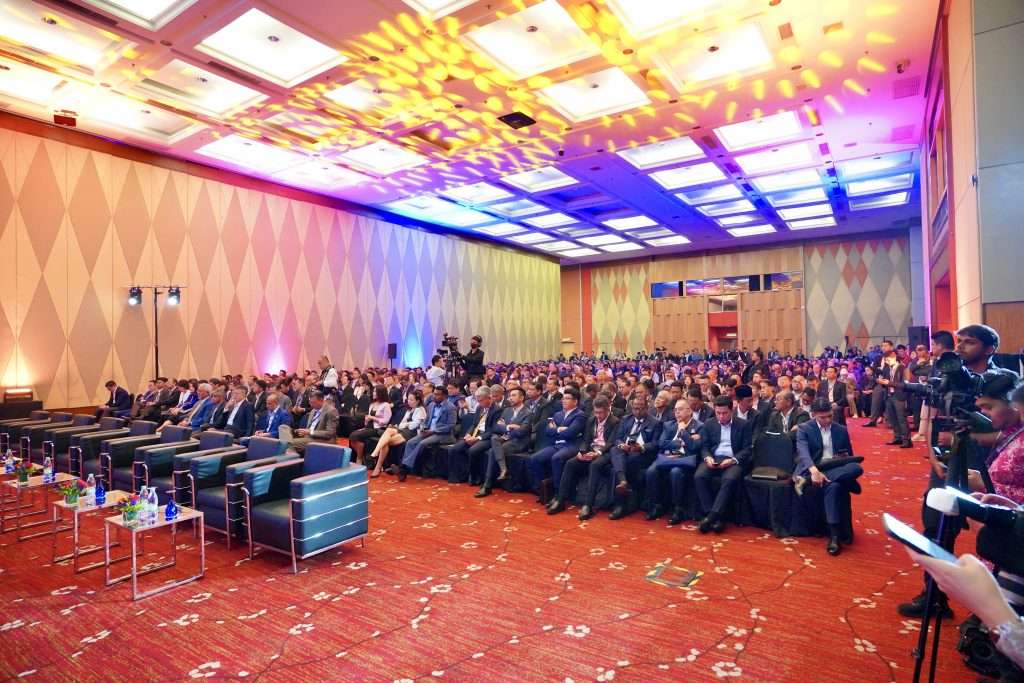
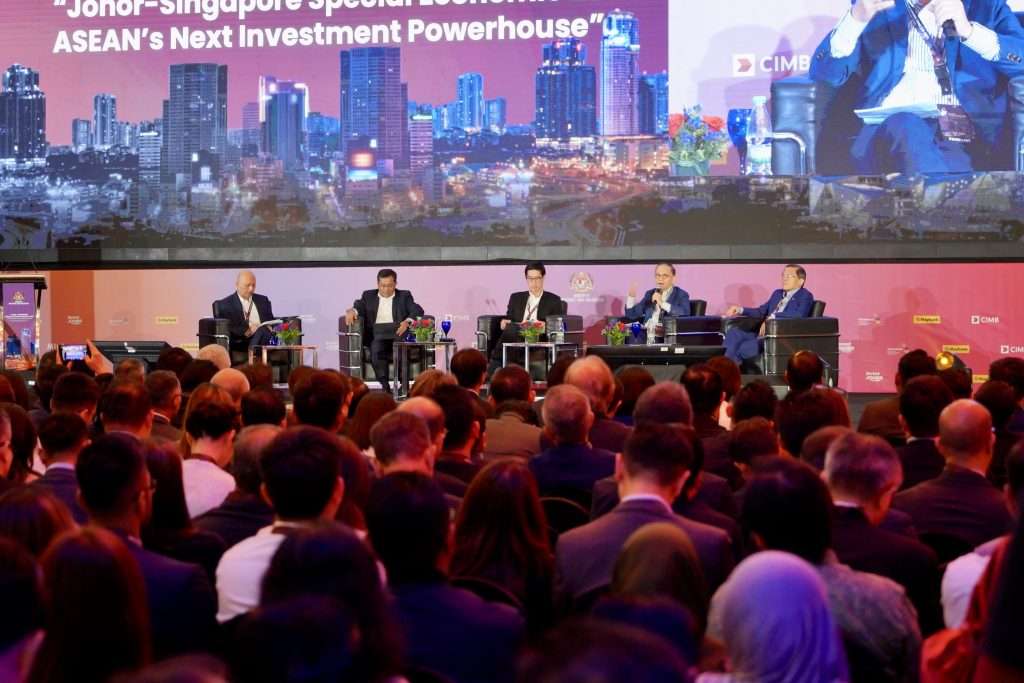
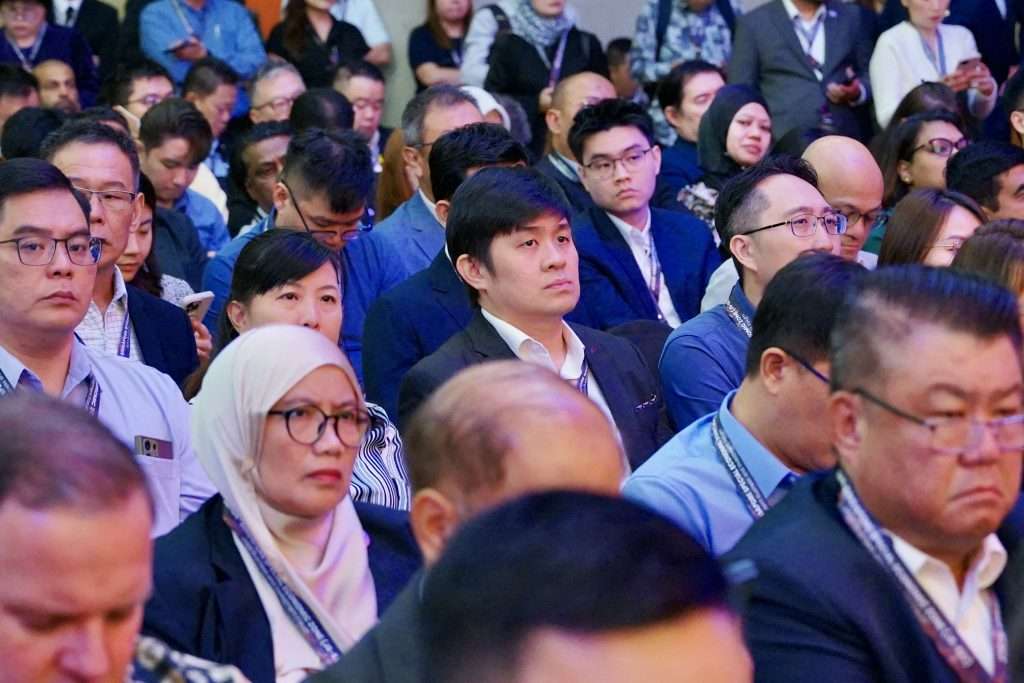
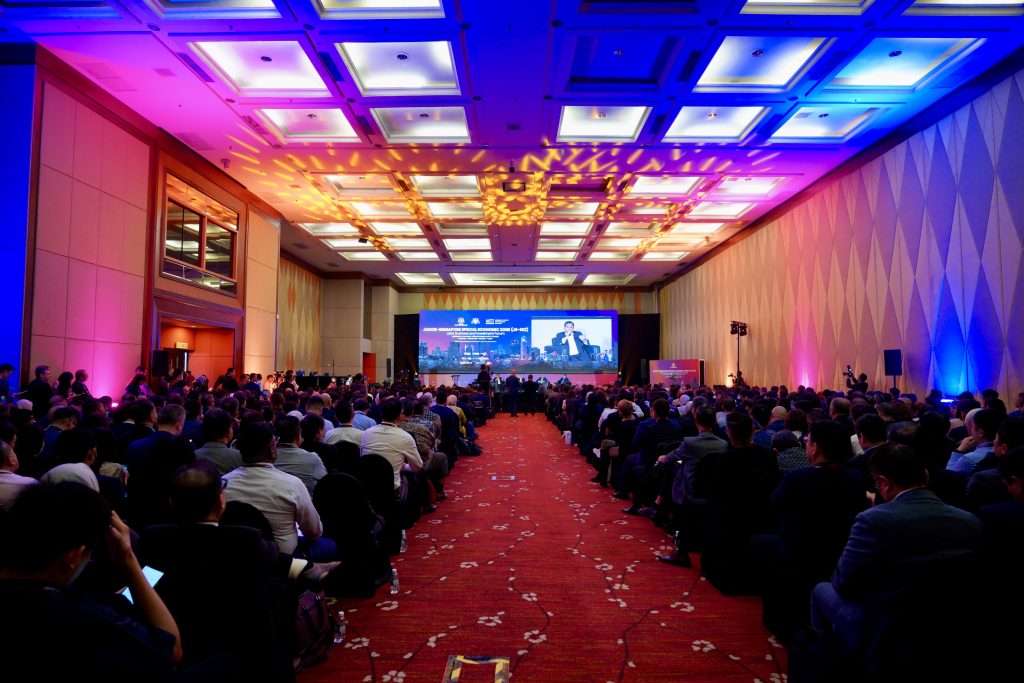
This is my opening speech delivered at the Johor-Singapore Special Economic Zone Joint Business and Investment Forum, held on 21 April 2025 at Persada Johor International Conference Centre, Johor Bahru.

