
The Social Exchange: Strengthening Malaysia’s Social Finance Ecosystem
The Social Exchange is a great initiative by the Securities Commission Malaysia (SC). It is not just an initiative, but a statement that we are not just thinking about the…

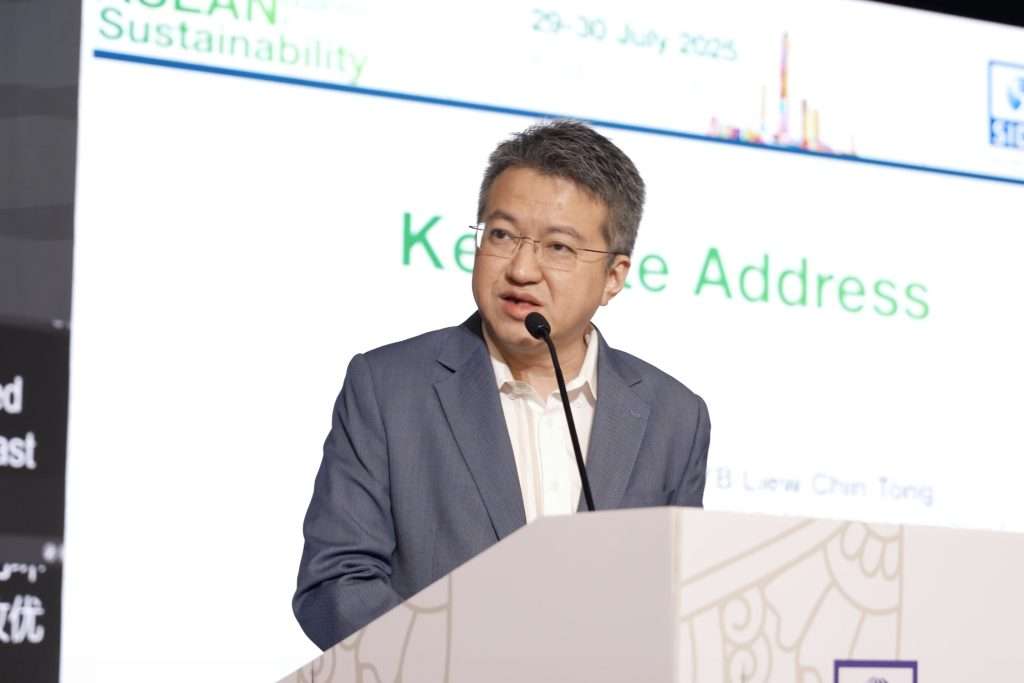
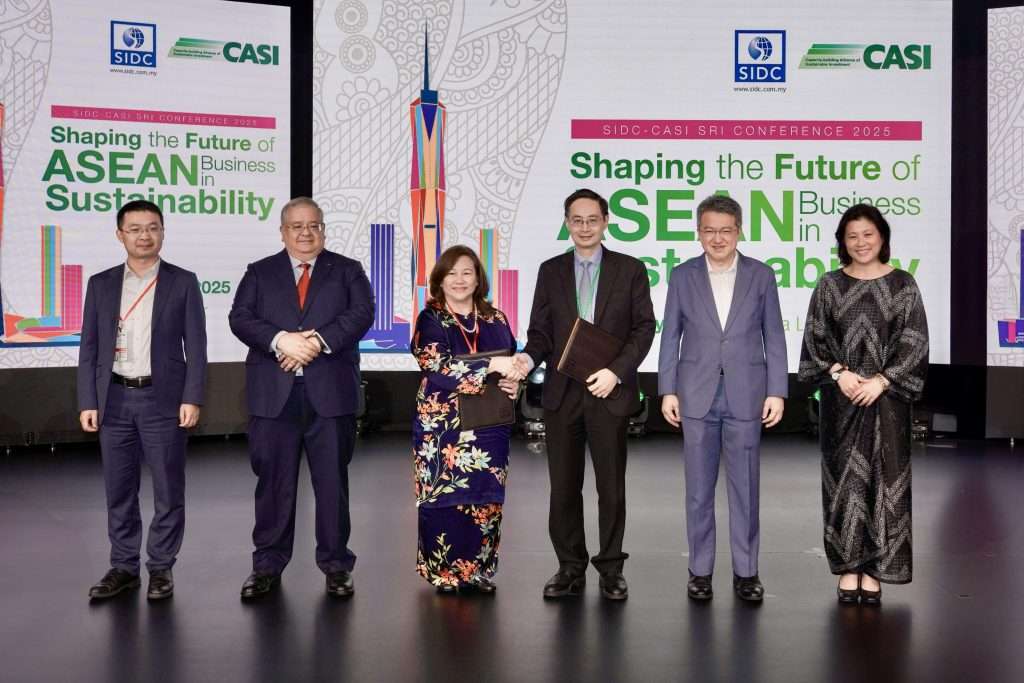
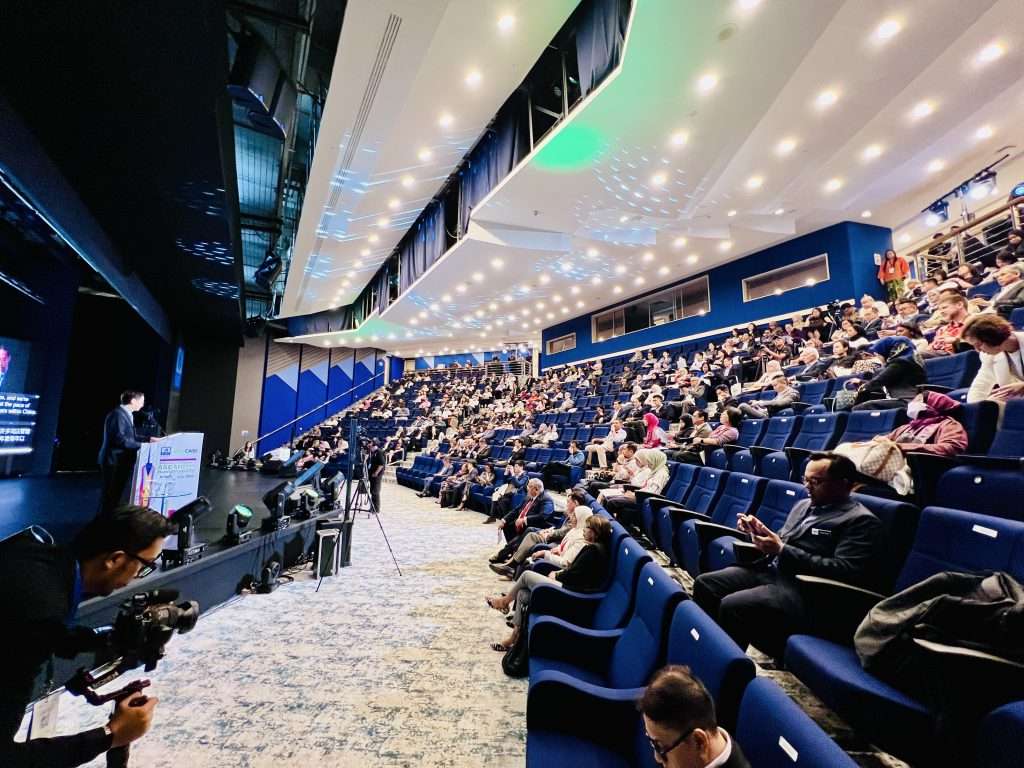
I would like to thank Securities Industry Development Corporation (SIDC) and Securities Commission for inviting me to deliver the Keynote Address at this important Sustainable and Responsible Investment Conference 2025, held in collaboration with the Capacity-building Alliance of Sustainable Investment (CASI).
The theme, ‘Shaping the Future of ASEAN Business in Sustainability’, reflects Malaysia’s commitment to advancing sustainable and responsible investment while promoting inclusive and long-term growth across the region.
The conference is important to the Malaysian capital market as it addresses issues in sustainable and responsible investment.
Two years ago, on 27 July 2023, Prime Minister Datuk Seri Anwar Ibrahim launched the Madani Economy Framework at the Securities Commission. The two core ideas in the framework are to “raise the ceiling” and to “raise the floor” at once. It is a set of balances the Prime Minister tries to strike. The same set of equilibrium is what responsible investors and the capital market try to achieve: we have to grow the cake to share it, and share it as equitable as possible.
For too long, many believe in the trickle down theory. They think that growth will automatically take care of the question of distribution, without us having to lift a finger. And, worse still, some have fallen for the idea that capitalism’s only purpose is to serve the interests of shareholders, not stakeholders. For 50 years, the Anglo-Saxon world bought into Milton Friedman’s idea that the only purpose of a corporation is to increase the returns for shareholders.
The end of export-led industrialisation strategy
But we have to rethink all these because the world is a very different place now, compared to just a couple of years ago. From the time the Soviet Union collapsed until the Covid-19 pandemic, the world was in a hyperglobalisation hype which assumed that history had ended, the world was flat, and a single global supply chain was possible.
If we take an even longer horizon, Asian societies grew rich by exporting to the United States ever since the end of the Second World War, from Japan in the 1950s, the four dragons – Singapore, Hong Kong, Taiwan, and South Korea – in the 1960s and 1970s, the four tiger cubs – Malaysia, Indonesia, the Philippines and Thailand, and later Vietnam and China. The “East Asia” formula was essentially an export-led industrialisation strategy maximising the demographic dividends of the then very young populations across Asia.
The export-led industrialisation strategy, apart from requiring a young population, presupposes the United States as the consumer of the first resort, and also presupposes a race to the bottom among exporting countries to compete to destroy the environment, to suppress wages, and to offer lucrative tax incentives to foreign investors, at the expense of the state’s capacity to ensure the social wellbeing of its citizenry.
That strategy will continue as long as the United States is prepared to be the consumer of the last resort or first resort. Yet, over the past decade, the United States is clearly not prepared to continue to receive so much imports from Asia. The Trump tariff is the manifestation of such bipartisan sentiments in the United States.
We have to confront the new reality that we can’t just export our way to prosperity. To continue to prosper, our societies – Malaysian and ASEAN – will now have to create the market by ensuring that our own citizens and our own region has a dynamic middle class. Only with a large middle class that our people would be able to spend and sustain our industries.
Madani: Building a middle class and a sustainable society
When we look back into history, 2001 was a watershed year with September 11 and the responses of the United States shaping the geopolitical scenario for two decades, and the other equally consequential event was China joining the World Trade Organisation that year.
When we look back in 20 years’ time, we may say that this would be the watershed year when all previous calculus and assumptions were thrown out of the window, and new ones being adopted. Malaysia and ASEAN must not be mere bystanders but to be an active participant in shaping the new order of our nation, our region and the world.
We now know what we have to deal with.
When we speak about Madani and its objectives to raise the ceiling and floor at once, it is really about dealing with the challenges of our time and to build a compassionate economy not just because it is ethically desirable but also economically sound.
Raising the ceiling: creating ASEAN technologies and ASEAN MNCs
Together with my Indonesian counterpart, I am co-chairing the ASEAN Geoeconomic Task Force to look at three challenges:
What can the capital market do to bring forth a prosperous and sustainable ASEAN with a strong middle class? The key is to create ASEAN technologies and to create ASEAN MNCs.
Very often we are stuck in the old mindframe. We think that Malaysia and ASEAN have no technologies and therefore we could only depend on foreign technologies. That is not exactly true. If we invest sufficiently and if we channel the capital market into the direction of investing in technologies and not into creating more real estate bubbles, we will see the rise of ASEAN technologies. As Prime Minister Anwar said at the first anniversary of the National Semiconductor Strategy last week, Malaysia is the indispensable middle in the global technology landscape and because of Malaysia’s neutrality, Malaysia technology is meaningful to us and also to the competing superpowers. We should also see ourselves as creating technologies for the bottom billions of the world’s population.
We often also talk about helping SMEs but in actual practice we also help foreign MNCs. Yet there is a gap where we don’t fill: we are not doing enough to create Malaysian and ASEAN technology-based MNCs. The capital market may need to think about the future of Malaysian companies and their roles very differently. We need to see more Malaysian companies with technologies growing to become ASEAN MNCs and eventually with some global footprints. In the next 20 years, ASEAN should have a mini-Samsung or a mini-Huawei or a mini-TSMC.
We live in a different phase in global history and it’s time for us to be bold to shape the capital market and the region if not the world with new ideas, ideas that will create sustainable economies and societies where people are prosperous and fulfilled – some forms of a Madani society.
Conclusion
I am confident the SIDC–CASI SRI Conference 2025 today will spark discussions and facilitate the exchange of ideas among capital market stakeholders and the larger business community. I hope it will result in greater collaboration in investment communities, especially in areas that could preserve our planet for the sake of our future generations.
Together, let us chart a path towards a sustainable, vibrant and resilient future for Malaysia.
I wish you a fruitful conference. Thank you.
This is my speech delivered at the SIDC-CASI Sustainable and Responsible Investment Conference 2025 held on 29 July 2025 at Securities Commission, Kuala Lumpur

