
The Social Exchange: Strengthening Malaysia’s Social Finance Ecosystem
The Social Exchange is a great initiative by the Securities Commission Malaysia (SC). It is not just an initiative, but a statement that we are not just thinking about the…


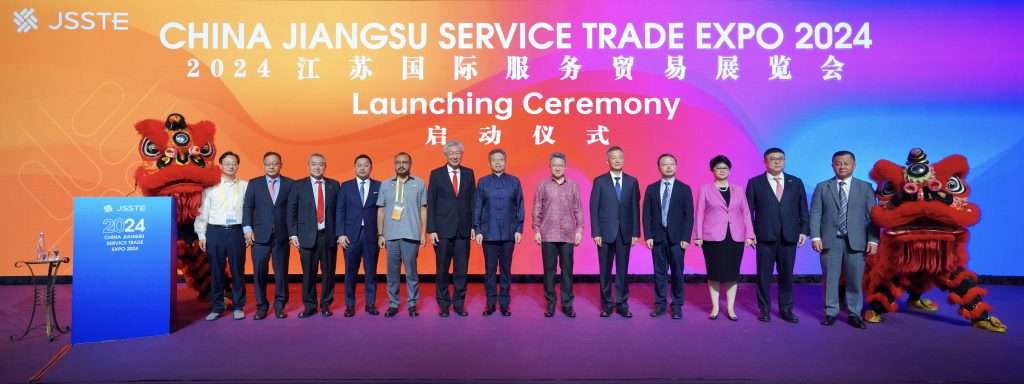
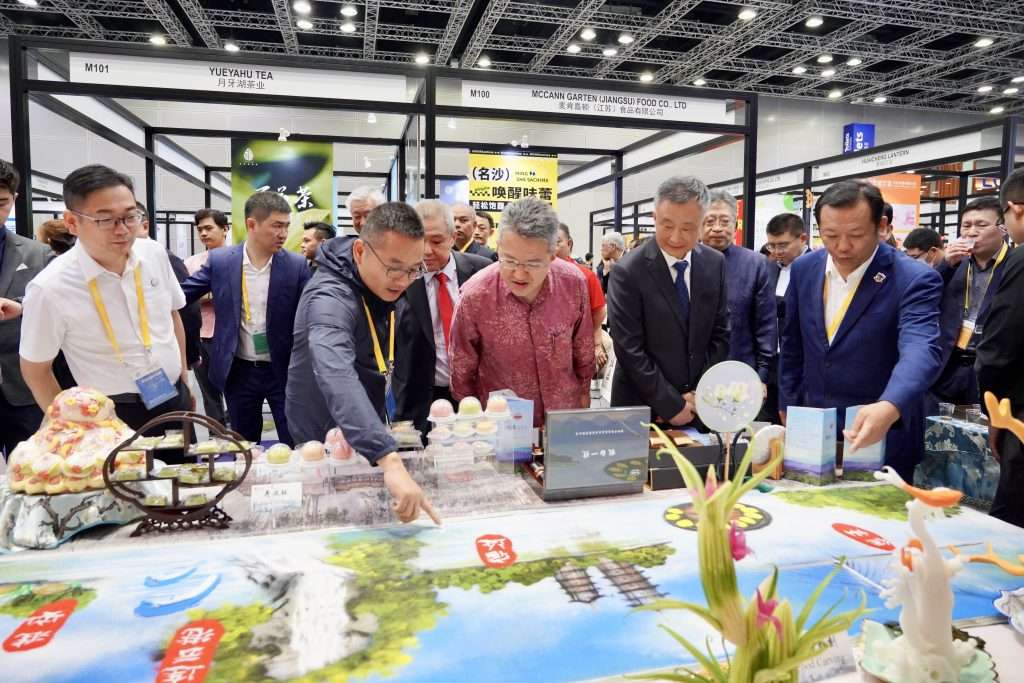
Today, we are here to meet our friends from Jiangsu, China. Why is it important for us to engage with Chinese businesses at the provincial level? It is because some of these Chinese provinces are huge in both economic size and geographical size. For instance, Jiangsu’s GDP is USD 1.8 trillion, while Malaysia’s GDP is about USD 400 billion. This means Jiangsu’s GDP is about 4.5 times the size of Malaysia’s economy.
These are important mindframes that we need to have. We are not only working on economic cooperation at the national level, but we are also establishing relationships with Chinese provinces at the provincial level.
In our usual conversations about Malaysia-China economic relations, we often focus on investment and trade. Indeed, my ministry is called the Ministry of Investment, Trade, and Industry (MITI). However, we may need a new way of looking at things. We are not just talking about trade for its own sake, or investment for its own sake, but we should put all these under the umbrella of economic cooperation.
When we see things from the perspective of economic cooperation, we will be less transactional and more likely to take a longer view. Through economic cooperation, we aim to solve societal problems through investment and trade, and we strive to create better societies for each other. Therefore, we urgently need a new paradigm and a new way of looking at trade and investment.
We are entering a new phase in the global economy. Whatever we were accustomed to in the last 30 years, during the era of hyperglobalisation, may no longer be relevant. We are dealing with a situation where China and other Asian countries have developed technology at a rapid pace and made significant technological gains over the last couple of decades.
We have reached a stage where we are technologically advanced, but we are also facing new challenges. For many decades since the Second World War, the United States was treated as the importer of last resort or the final destination for Asian exports. However, with a shrinking middle class in the United States, that may no longer be sustainable.
Therefore, we must work together to make Southeast Asia, and particularly Malaysia, a much richer region. We need to create a strong middle class in Malaysia and other ASEAN countries. This will be the future of China’s economic cooperation with Southeast Asia.
With all these words, I thank you very much.
This is my speech delivered at the China Jiangsu Service Trade Expo 2024 on August 9, 2024.

