
The Social Exchange: Strengthening Malaysia’s Social Finance Ecosystem
The Social Exchange is a great initiative by the Securities Commission Malaysia (SC). It is not just an initiative, but a statement that we are not just thinking about the…


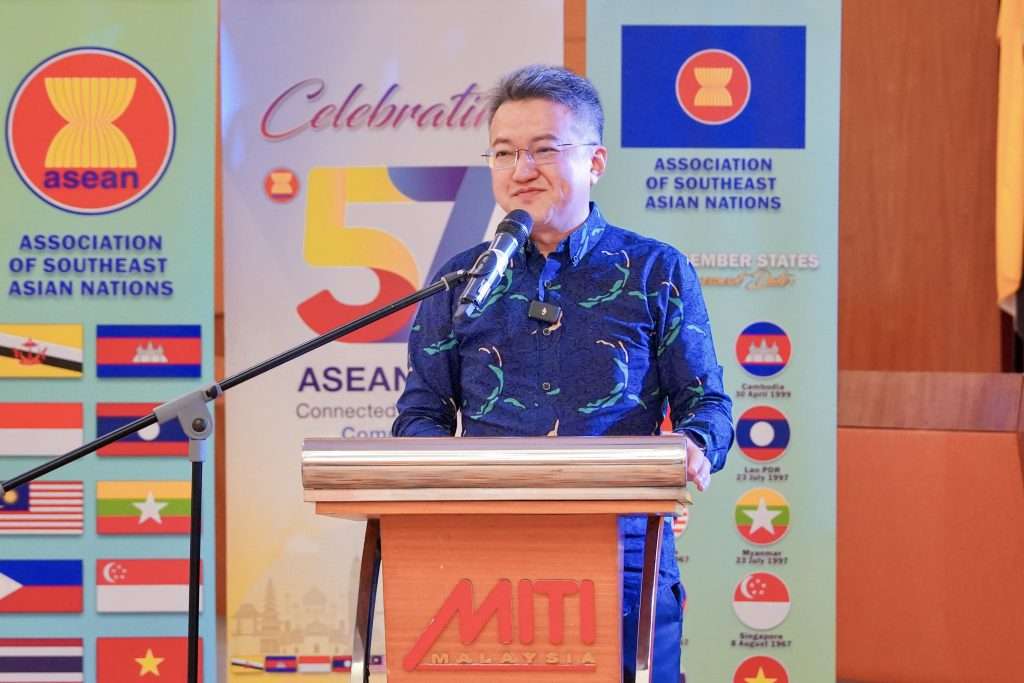
I am pleased to be officiating the forum today, which is also held in conjunction with the 57th ASEAN Day, since its inception on 8 August 1967. This occasion serves as a vital platform for ASEAN Member States to emphasise the significance of regional collaboration in addressing shared challenges and fostering economic growth and cultural understanding.
This forum is also a continuation of MITI’s multi-stakeholder engagement on ASEAN and in furtherance to the ongoing initiatives to enhance public-private consultations. Earlier this week on 6 August 2024, I was also involved in the “Vision 2045 – Age of ASEAN” Conference co-organised by MITI, ASEAN Business Advisory Council (ASEAN-BAC) Malaysia and Boston Consulting Group (BCG).
ASEAN in the current geopolitical context
We live in an increasingly complicated and difficult world. ASEAN does not intend to choose sides. In order to not to choose a side, it is imperative for ASEAN to be strong, firm and rich. To be rich means ASEAN must create a middle class society where a majority of the population earn enough and live comfortably.
ASEAN is a global economic powerhouse. In 2022, ASEAN has a combined population of over 670 million with more than 30% of young and dynamic population and a collective GDP of almost USD3.67 trillion. Looking ahead, projections indicate that ASEAN’s GDP is poised to reach an estimated USD4.5 trillion.
ASEAN Trade in Goods increased by 14.9% reaching USD3.8 trillion in 2022, supported by increasing intra-ASEAN trade. ASEAN’s Trade in Services experienced a robust recovery, surging by 16.4% to reach USD933.6 billion in 2022, surpassing the pre-pandemic levels.
Foreign Direct Investment (FDI) inflows into ASEAN reached an all-time high of USD224 billion in 2022, whereas intra-ASEAN FDI continued to expand further to USD28 billion.
ASEAN Chairmanship
As we approach the upcoming Malaysia’s ASEAN Chairmanship in 2025, we are also at a critical juncture to develop the post-2025 architecture for the ASEAN economic integration agenda, in parallel with the ASEAN Community Vision 2045 aiming for a resilient, innovative, dynamic, and people-centred ASEAN, that had been noted by Leaders in September 2023. ASEAN’s Post-2025 Agenda will be incorporating a holistic ASEAN Community Vision 2045 and supporting ASEAN Economic Community (AEC) Strategic Plans, that are being strategically developed in 5-year cycles, in the 20-year period from 2025-2045.
While this is certainly a big task to complete, this is also a crucial opportunity for ASEAN to reset its economic integration priorities, with a 20-year projection that is being thoroughly consulted with global megatrends, which are multi-dimensional and varied. Alongside an in-depth analysis of our current position and future aspirations, these global megatrends spanning across various sectors, have also been taken into consideration in the development of Malaysia’s Priority Economic Deliverables (PEDs) for deliverables in 2025.
Malaysia’s PEDs will be framed around four key strategic thrusts, namely, 1) Enhancing Trade and Investment between ASEAN Member States; 2) Integrating and Connecting Economies; 3) Forging an Inclusive and Sustainable Future; and 4) Transforming for the Digital Future. These strategic thrusts reflect Malaysia’s desired outcomes for the ASEAN agenda during our Chairmanship in 2025, that will contribute towards the overarching aims of the AEC in developing ASEAN as a common market, a collaborative supply chain, a production and consumer base, and a resilient region with equitable economic development.
Beyond inter-governmental support from ASEAN member states, the success of Malaysia’s chairmanship in 2025 will require robust support from the private sector including business players and industry leaders, NGOs, Parliamentarians and all stakeholders.
I am also pleased to share that MITI is collaborating with the Laotian Ministry of Industry and Commerce to introduce the Malaysia-Laos Economic Cooperation Scholarship beginning the 2025 academic year. Malaysia, through our Chairmanship, looks forward to supporting and empowering the less-developed ASEAN member states to achieve collective growth.
The scholarship is offered in collaboration with the following tertiary institutions: Monash University Malaysia, Taylor’s University, Sunway University, UCSI University, INTI International University and HELP University. Each university aforementioned is offering two fully-funded scholarship positions to qualified Laotian students to continue their tertiary studies in Malaysia.
Finally, I hope to see closer multi-stakeholder collaboration with MITI when Malaysia becomes ASEAN Chair next year. We hope to foster partnerships among entrepreneurs, businesses, investors and other stakeholders in Malaysia and ASEAN.
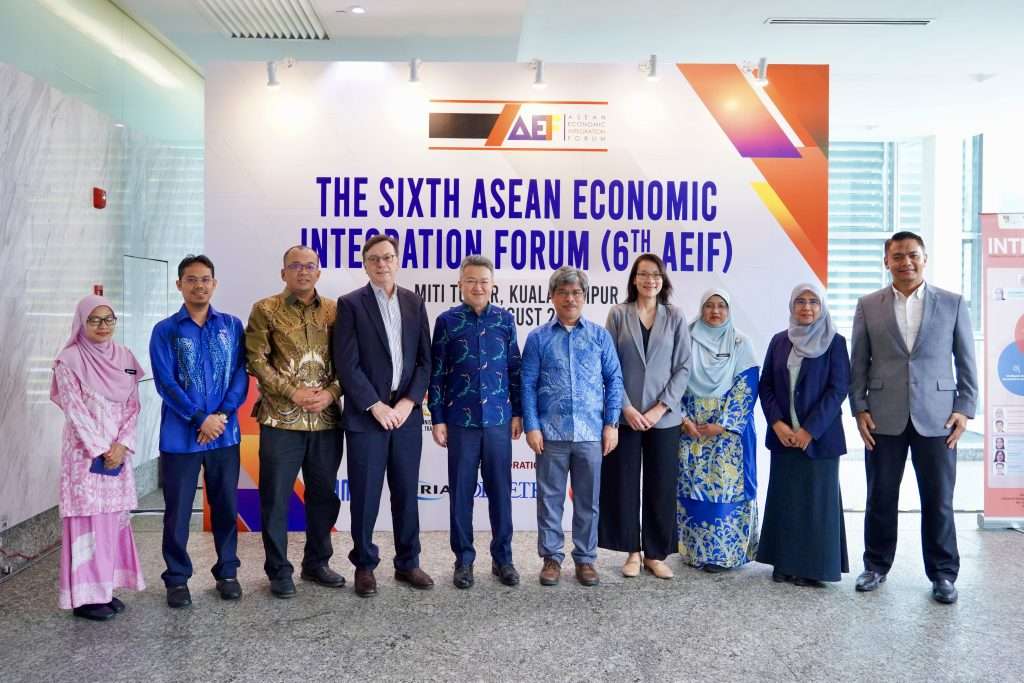
Once again, I welcome all of you to the 6th ASEAN Economic Integration Forum and I wish everyone a happy 57th ASEAN Day!

