
The Social Exchange: Strengthening Malaysia’s Social Finance Ecosystem
The Social Exchange is a great initiative by the Securities Commission Malaysia (SC). It is not just an initiative, but a statement that we are not just thinking about the…

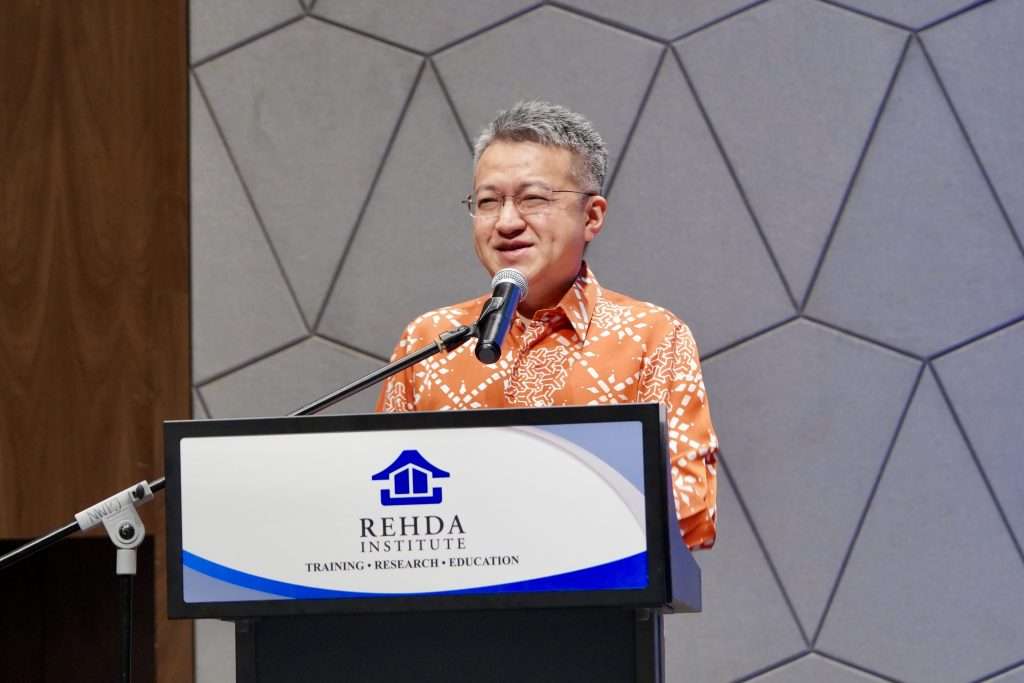
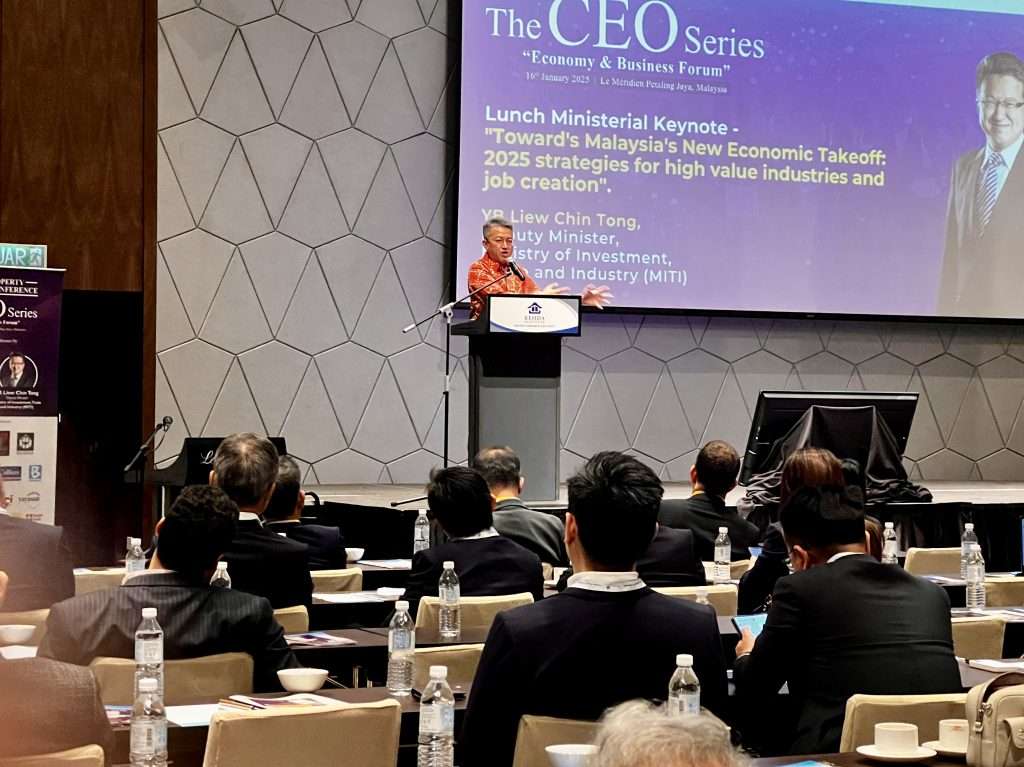
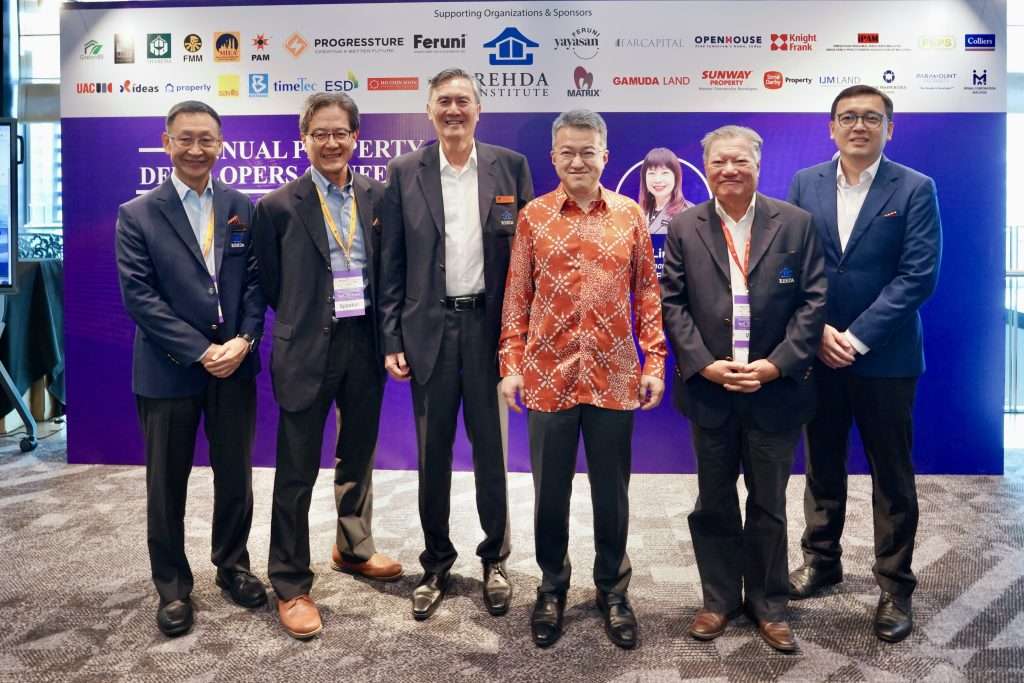
May I thank REHDA Institute for inviting me to speak at the CEO Series of your Annual Property Developers Conference. Last year, I told you about the possibility of a Second Takeoff which is increasingly evident and visible with many more new investments in the manufacturing sector, whether by foreign or domestic companies.
I also spoke about the need for developers to effect massive paradigm shifts in thinking about real estate development in the future.
Today, let me share some observations about the mindset shifts that are required of the developers in the years and decades to come.
The world will continue to face a poly-crisis of:
1) health crises such as Covid-19 but also some longer term challenges such as ageing and shrinking of population;
2) geopolitical crises and outright wars;
3) financial instability and financial insecurity which in turns fuel political upheavals and right-wing populism;
4) climate crises.
As the world learns to deal with multiple and seemingly permanent crises, the preference for economic efficiency and cheap supplies are giving way to the concerns about economic security and resilient supply chains.
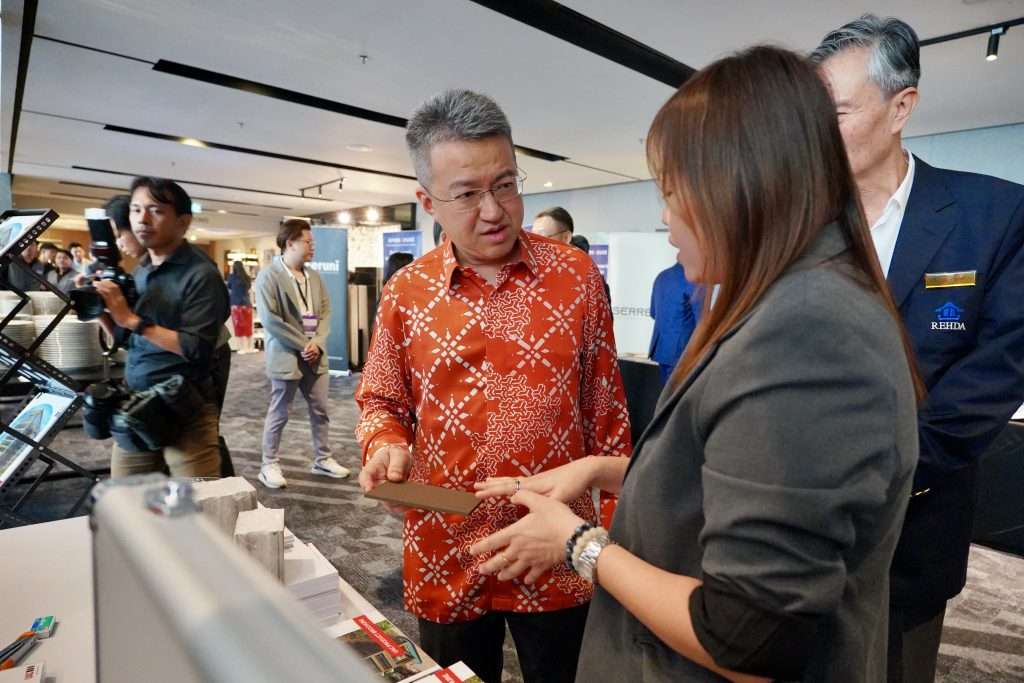
In such a new context, what are the implications for real estate developers in Malaysia? There are five set of mindset shifts which are relevant to Malaysian real estate developers:
Malaysian real estate developers have perfected the art of turning plantation estates into housing estates, making huge profits along the way. Along the way, local authorities, state
governments and the federal government, as well as the banking sector and many other economic actors benefited from the conversion of plantation land into housing estates.
Yet, sprawling the boundary of cities has proven to bring some negative effects. On the one hand, it is bad for the climate as a private passenger car dependent culture is the byproduct of sprawling cities, not to mention the exorbitant cost of putting up extensive infrastructure networks such as water, electricity and internet. As most Malaysians depend on private cars as the main mode of transport, removal of fuel subsidies becomes a major political challenge.
On the other hand, the inner cities are hollowed out. Over the past half a century since the pioneer of plantation estate to housing estate transformation – Subang Jaya – was developed, Kuala Lumpur has seen the depletion of inner city residents.
In the case of Melbourne, after decades of hollowing out, the trend is reversed gradually, through inner city universities and their students living in the vicinity initially, and then migrants, and the children of those who moved to the suburbs. Since the 1990s, we see inner city Melbourne thriving again.
Kuala Lumpur may now be at an inflection point. Rail transport in the inner city is now reasonably well connected, with massive new buildings like TRX and 118 up and running, the city is poised to attract more workers. Turning Kuala Lumpur from a 12-hour city to a 24-hour city, bringing universities and R&D centres, and creating rental housing in the inner city retrofitted from older buildings, could be transformative for Kuala Lumpur.
In carrying out my ministerial duties, whenever I meet foreigners, I tell them Kuala Lumpur is their next location for regional headquarters. They just have to think about Kuala Lumpur as a Singapore at a discount, it will all make sense.
Malaysians almost only know a single model of financing housing, i.e. the single ownership model. But in a typical European city, people who rent often constitute 70% and more of the population. Each time I bring up the topic, the expected response is that owning a house is in the DNA of Asians. Not exactly true. Half a century ago, most KL folks lived in the upper floor of shop houses while working downstairs, with zero carbon emission. They didn’t own the units, they rented. In the 1980s, only 35% of Malaysians lived in urban areas. Outside the cities, Malaysians of all ethnicities lived in villages, without having to spend 30 years of their lives paying for mortgage.
Most interestingly, many Malaysian government-linked investment companies (GLICs) or government-linked companies (GLCs) invest in European assets that have residents renting but these GLICs or GLCs rarely invest in rental housing assets in Malaysia. The Real Estate Investment Trust (REIT) deserves a new look. Perhaps this is another area in which transformative changes could be effected.
I spent half of September last year in Kluang to campaign for the Mahkota by-election. I was once the Member of Parliament for Kluang and am fairly familiar with the city.
With the Gemas-Johor Bahru double tracking project about to be completed, and with the Transport Minister announcing the Government’s intention to create a Johor Bahru-Kluang Komuter service, inner city Kluang will have a new lease of life. When it was established, Kluang was a railway town first connected by the railway before any other means of transport. Other secondary cities, for instance, Taiping, connected by railways may also see. Also, the East Coast Rail Link will be completed soon, and, which will provide the East Coast with new possibilities.
Malaysia was too centralised previously due to the rule of an authoritarian government which used to have a very strong presence in the parliament. Sultan Nazrin Shah, Perak Sultan, lamented in his new book Globalization: Perak’s Rise, Relative Decline, and Regeneration that Perak experienced a relative decline in the context of increased national prosperity, especially since the collapse of the tin market in the 1980s.
Malaysia is now a democracy and the decision making process is likely to be shaped by coalition governments. In the long run, I would predict that more powers and fiscal resources would have to be shared with the states, leading to a positive outcome, in which some regions may emerge as strong engines of growth, contributing to national growth. We should see the Greater Johor Bahru as Malaysia’s Melbourne or Busan or Osaka, ie. the second economic capital of the nation. We could also see Sarawak as Western Australia, namely the mining and resource-based industries hub. Penang and Kulim combined are already the technology capital of Malaysia.
If we could unleash the potentials of the secondary cities yet not sprawling each of them, this may well be another catalyst for growth.
Malaysia’s industrial parks have become too much of a real estate play which is not helpful for the nation. As the global supply chain has relocated over the past several years, it is evident that investors choose Malaysia not because we have many industrial parks but because we have a strong ecosystem.
Factories have been vertically linked globally but have very little connections or linkages domestically. For the interests of the investors and as well as for Malaysia, we now need to ensure the emergence of strong linkages domestically.
Malaysia must position itself as a secure and resilient supply chain. Therefore, industrial parks shouldn’t be about real estate play but about building supply chains and ecosystems.
When building industrial parks, we must change the mindset of separating workplaces from residences or places of living.
Over the last few years, Malaysian planners now accept that foreign workers can stay near the factories, thus we now have centralised labour quarters (CLQ). That is a paradigm shift of sorts.
But we don’t want an economy that hires foreign workers while our youth work in Singapore, Australia or South Korea as cheap labour. While hiring foreign workers becomes increasingly expensive, what can we offer to keep Malaysian talents in the country?
There is no talent problem in Malaysia, there is only a pay problem. As I always say, if you pay 2/3 of Singapore pay, most Malaysians would be happily coming back to work in Malaysia.
Industrial parks can play a constructive role to bridge the pay gap between Malaysia and Singapore. Instead of building CLQs for foreign workers, we want to see more decent housing for young Malaysian engineers. Malaysia will not be a great technology nation if we hire more foreign workers, but Malaysia will be an indispensable industrial nation if we have more young engineers.
Say we pay Malaysians 50 percent of Singapore pay but housing in industrial parks are very affordable, it is almost equal to 2/3 of Singapore pay too.
In the era of ESG and stakeholders’ economy, as opposed to shareholders’ greed as Milton Friedman espoused, I hope real estate developers see their roles as nation builders with a mission to build communities.
I hope the real estate industry is at the forefront of automation and using a lot more Industrial Building System so as to hire more Malaysians, paying much higher, and reducing dependence on unskilled foreign labour.
The communities we build from now on will have to take into account an ageing population and the need to keep the seniors living healthily and with dignity; as well as helping women to access childcare as easily as possible.
The biggest challenge for all of us in the years to come is to build to reduce emissions from all aspects. We will have to build communities that rely less on private cars, design our buildings to require less airconditionals thus less energy consumption.
In closing, the government and private sectors including property developers can work hand in hand to create a stronger economy, a Second Takeoff and a hopeful future for Malaysians.

