
The Social Exchange: Strengthening Malaysia’s Social Finance Ecosystem
The Social Exchange is a great initiative by the Securities Commission Malaysia (SC). It is not just an initiative, but a statement that we are not just thinking about the…

While the two-week ceasefire is a reprieve, the war is not over yet. The West Asia crisis – which only started less than two months ago on 28 February – is already moving towards a disruption as serious as the Covid-19 virus. The widely circulated idea of “Build Back Better” during the pandemic should be adapted to frame Malaysia’s responses to the crisis.
Malaysia has the opportunity, resources, and toolkits to design a policy framework that will allow us to emerge as a more resilient economy and a more secure nation when the crisis subsides.
There are three points I would like to make about shaping Malaysian responses to the crisis.
𝗥𝗲𝗹𝗮𝘁𝗶𝘃𝗲 𝘀𝘁𝗿𝗲𝗻𝗴𝘁𝗵
First, Malaysia entered this crisis in a position of relative strength. Malaysia has the “twin oils” of petroleum and palm oil, a reasonably strong and complex manufacturing supply chain, and has been receiving global and regional investments at a rate greater than most expected. The ringgit has strengthened significantly vis-a-vis the US dollars and other currencies.
An international analyst shared with me that “Malaysia is the only economy whose central bank is actually raising growth forecasts despite the war in Iran”. Bank Negara raised the growth projection for 2026 of 4% – 4.5% released by the Treasury in October 2025 based on data from the first and second quarters of 2025. Armed with data from third and fourth quarters of 2025, Bank Negara now opines that the economy may grow at 4% to 5% this year.
Prime Minister Dato’ Seri Anwar Ibrahim and his government took more than two years to deliberate on the best ways to handle fuel subsidies to ensure that most of our ordinary citizens would not be affected, otherwise domestic consumption – a key economic driver – would collapse at the first instance of the crisis.
Instead of taking the conventional views of institutions such as the World Bank which advocated floating fuel prices while giving cash handouts in exchange, BUDI95 was our solution.
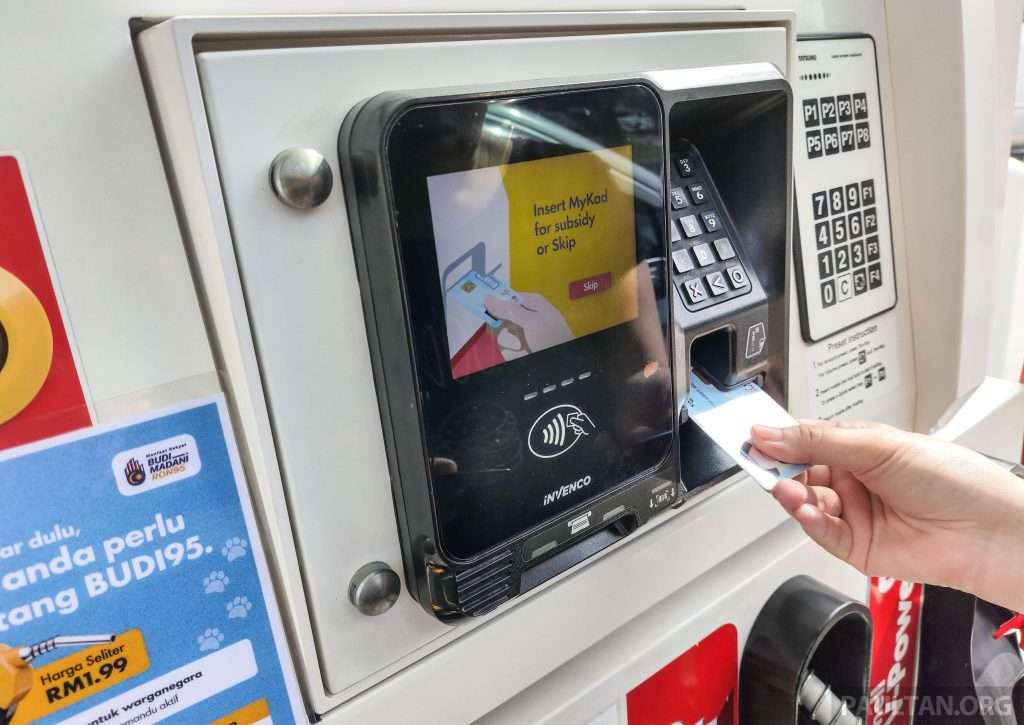
Through the technologies embedded in the BUDI95 system, Malaysian citizens enjoy a monthly quota of subsidised fuel. The system stops leakages and provides massive amounts of data for any recalibrations or adjustments to be made. And with the insights generated from these data, the government has reduced the quota from 300 litres to 200 in the face of the West Asia crisis, given that 90% of the population uses less than 200 litres of petrol.
However, this relative strength should not be squandered. We need to calibrate our responses and use whatever resources available to us in the most strategic manner.
𝗔𝗻𝘁𝗶𝗰𝗶𝗽𝗮𝘁𝗶𝗻𝗴 𝗮𝗻𝗱 𝗺𝗮𝗻𝗮𝗴𝗶𝗻𝗴 𝗰𝗿𝗶𝘀𝗶𝘀
Second, the West Asia crisis is more likely than not to be a disruption that would last longer and more difficult than what we are mentally prepared for.
Around 80% of the oil and 90% of the gas that usually pass through the Strait of Hormuz are bound for Asian markets. If the war is to last for two months or less, Malaysia will probably just have to deal with the spillover problems from the global economy such as stagnant growth, but be spared from a supply crunch.
The two-week ceasefire certainly raises hope for peace, but even when the war ends, the economic challenges would take time to subside.
The Yom Kippur War of 1973 between the Arab nations and Israel did not last long but the economic consequences on the world due the hike in oil price, such as stagflation, lasted for years.
𝗕𝘂𝗶𝗹𝗱 𝗕𝗮𝗰𝗸 𝗕𝗲𝘁𝘁𝗲𝗿
Third, Malaysia’s responses to the crisis should be framed with the idea of “Build Back Better” in mind.
I encourage you to read Azam Aris’s piece in The Edge Weekly (6th-12th April 2026, pg 41) “Lessons from the first oil crisis remain half-learnt” in which he credited Malaysia for passing the Petroleum Development Act 1974 and establishing Petronas in the same year, in response to the oil shock triggered by the 1973 war.
We should now ask ourselves tough questions about the energy structure we need, public versus private transport modal share, amount of renewable energy to be deployed, ways to add resilience to our supply chain, and how to design our cities.
𝗛𝗼𝘄 𝘀𝗵𝗼𝘂𝗹𝗱 𝘄𝗲 𝗮𝗽𝗽𝗿𝗼𝗮𝗰𝗵 𝘁𝗵𝗲 𝗰𝗿𝗶𝘀𝗶𝘀?
What is certain is that the heavy usage of petroleum to power the huge fleet of private cars will continue to be a national vulnerability of Malaysia in any future crisis. Therefore, when we design Malaysia’s responses, we should now ramp up investments into public transport, especially buses, as well as encouraging the use of more energy efficient vehicles, including all forms of electric vehicles.
It is perhaps the best time to forge a national consensus to end the sprawling of our cities and create housing stock in the inner cities with residents not having to own a private car.
As the crisis is not just about oil price, but actually the world’s worst supply shock ever, our policies must be designed to help facilitate demand management across various stakeholders. We must remember that whatever measures we take, it has to gear towards reducing the use of petroleum during and after the crisis.
As for the use of diesel for the various industries ranging from construction to fishing, with price arbitrage being so huge, the higher the subsidy for diesel, the more likely smuggling or illicit trade of fuels may happen. Therefore, to help the affected businesses, we will have to collectively search for “non-fuel second best options” when it comes to providing assistance to the various industries.
Take the construction sector as an example. No doubt the cost of diesel is going to impact profit margins and costs. But the way to help the industry may be to look for “second best options” by looking at other cost factors, such as examining whether there are monopolistic behaviors in the cement and concrete industry.
In some other sectors, such as deep sea fishing or farming, instead of asking the government to assist through fuel-related subsidies, assistance based on verifiable output would at least ensure that there will be output of essentials.
Businesses will also have to work with the government to think through carefully these questions: Are we asking for help just to protect profit margins or to protect jobs? (In a crisis, protecting jobs is important but protecting profits via government assistance will be morally hazardous). Are we looking for help to produce for export or helping the provision of essentials for domestic consumption? (The government has a duty to ensure essentials are available but subsidising export during a crisis is morally questionable).
This is also time for businesses and the government to rise to the challenge to help shape a resilient Malaysian economy and a secure supply chain now and after the crisis. Compared to many regional neighbours, Malaysia has a relatively sophisticated and complex supply chain, which could be strengthened further. We should examine the supply chain in minute detail so that we can address the glaring gaps.
Incentives and investments should be channeled to economic activities that will fill the gaps in this and in the future crises. For instance, there may be a shortage of imported plastic resin, but this may be the best time to scale the plastic recycling industry. Any other form of circular economy is good for the climate and good for supply chain resilience.
There will be many more items in which foreign imports will be in short supply but this may be a business opportunity for replacements to be developed domestically or within the ASEAN region. What has to happen is to look harder so as to build new industries that would solve the current challenges and solidify our supply chain post-crisis.
And, any economic activity that uses electricity more efficiently, or transition to more renewable energy, should be encouraged.
In conclusion, while we should not panic, there’s an urgent need to get everyone to think about shaping responses from the lenses of “Build Back Better” to ensure that Malaysia doesn’t squander our current advantage.

