𝗝𝗼𝗵𝗼𝗿 𝗮𝘀 𝘁𝗵𝗲 𝗞𝗶𝗻𝗴𝗺𝗮𝗸𝗲𝗿
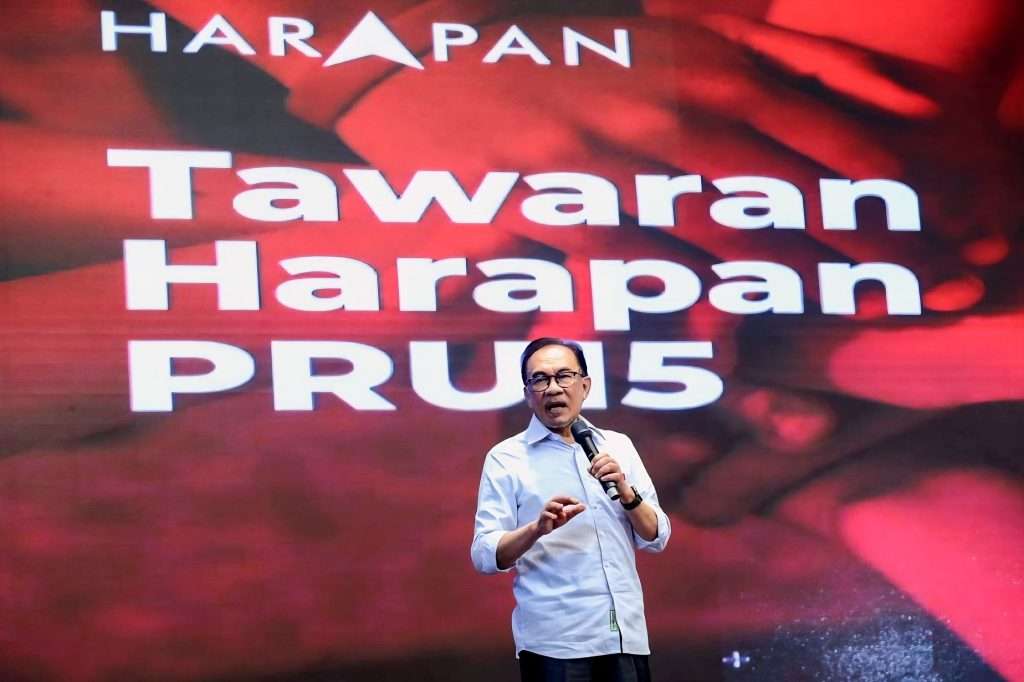
Pakatan Harapan held its convention in Johor Bahru on May 17 to set the tone and direction for the coming general election.
Here, we revisit the political journey we have gone through together that allowed us to arrive at this juncture. My previous article discussed the importance of the 2018 Pakatan Harapan convention.
UMNO was founded in Johor, or more specifically, in the Johor Palace on 11 May 1946. Johor was also Barisan Nasional’s bastion for a long time, with strong support from all three ethnic communities.
In the 1999 general election, after the sacking and imprisonment of Anwar Ibrahim, more than half of the Malay voters turned their back against Dr Mahathir Mohamad’s government. BN, however, still managed to retain its two-thirds majority thanks to the support of more than half of the Chinese voters.
Malaysia’s current parliamentary constituency boundaries are the result of the redelineation exercises carried out in 1993 and 2003. The 2018 redelineation merely adjusted constituency boundaries without adding new seats.
Post-1999, the Election Commission increased the number of mixed seats, and that added to BN’s advantage. At the time, the prevailing view was that PAS might have an edge in Malay-majority seats, while the DAP might gain inroads in overwhelmingly Chinese-majority seats. Mixed seats therefore appeared to be the “safer” option for BN. No one anticipated that one day the DAP and PKR together would wrestle these mixed seats from BN.
Anyway, Johor benefited greatly from the 2003 redelineation exercise. Sarawak became the state with the largest number of parliamentary seats nationwide, with 31 seats. In Peninsular Malaysia, Johor had the most constituencies with 26 seats, despite Selangor having the largest number of voters but only 22 seats.
Of Johor’s 26 parliamentary seats, DAP won only one seat in 2008. In 2013, with Lim Kit Siang leading the battle in Johor, the DAP and PKR together captured five seats. And in 2018, Pakatan Harapan would go on to win 18 of these 26 parliamentary seats, beyond BN’s wildest imagination.
Pakatan Harapan needed 112 out of 222 seats to form the federal government.
On the night of 9 May 2018, we secured 113 seats – of which 18 were in Johor – and just enough to achieve Malaysia’s historic change of government. Had Pakatan Harapan won fewer seats in Johor at the time, history might have turned out very differently.
The same was true in the 2022 general election. Pakatan Harapan (together with MUDA at the time) won 15 seats in Johor, while BN won 9 and Perikatan Nasional 2, once again proving the significance of Johor in Malaysian politics.
Will the Pakatan Harapan convention in Johor Bahru on 17 May 2026 have the same impact that the 2018 Pakatan Harapan convention in Shah Alam had on the future of Johor and Malaysia? Let’s wait and see.
See less