
The Social Exchange: Strengthening Malaysia’s Social Finance Ecosystem
The Social Exchange is a great initiative by the Securities Commission Malaysia (SC). It is not just an initiative, but a statement that we are not just thinking about the…


May I thank Khazanah Research Institute, particularly Mr. Yin Shao Loong, for inviting me to say a few words at this Common Action Forum 2024 which will be officiated by Prime Minister Datuk Seri Anwar Ibrahim later today.
The theme of the conference is aptly titled “Sovereignty and Fair Interdependence – The Global South and the Democratisation of Prosperity” while the topic for this session is “The emergence of a new development order”.
For these major shifts, i.e. the democratisation of prosperity and a new development order, to become a reality, we will need to address the challenges collectively and assert strategic leadership with courage.
American economist Stephen Roach wrote in Project Syndicate (26 November 2024) a scathing piece with the title “Asia in Denial”. He is of the view that China is yet to address the possibility of deflation while officials in other Asian economies believe that the Trump tariff threats are merely a bluff.
The world is actually at a crossroads. Here are four major challenges that Asia is facing:
First, how not to depend on the United States as the importer of the first and last resort?
Since the end of the Second World War, Asian economies grew rich by exporting to the United States, and we must acknowledge that most Asian economies are still heavily dependent on the United States as a market. Starting with Japan in the 1950s, followed by Korea and Taiwan, the dragons, the tigers, and eventually China, Asia has assumed the United States to be the main destination for exports.
Over the past year or so in my current portfolio, I have been advising many businesses from China not to invest in Malaysia if they were merely thinking of rebadging their products via Malaysia to avoid US tariffs. As we have witnessed in the solar panel sector, whether under a Democratic or Republican administration, the tariffs will catch up with them.
More importantly, two contradictory forces are at work: with a shrinking middle class in the United States due to decades of outsourcing manufacturing jobs to Asia, it struggles to consume as their consumers’ incomes shrink. Yet Asian economies are massively productive thanks to the rapid acquisition of technology, including artificial intelligence. The productive capacity is at an unprecedented level yet the market has shrunk.
Hence, the first major challenge is how not to depend on the United States as the almost sole consumer market for all the exports from Asia and beyond.
Second, how to create consumer markets? Or, more precisely, how to create and drive the middle class to consume?
The world is now dependent on the United States as the main market, with the European Union and China plus East Asia as the two other markets.
When China joined the World Trade Organisation in 2001, there were about 100 million Chinese living a middle class life. Today, at least 400 million Chinese are considered middle class.
ASEAN has a population of 670 million people. If we can imagine that by 2045, half of the about 800 million population are part of the middle class, we will have a consumer market as large as China’s today.
To create consumers is very much synonymous with the drive to create the middle class. According to The Economist (23 November 2024), Asia’s middle class is not growing as it once did. Between 1991 and 2014, the average annual growth rate in the number of Asian middle-class households was 6%. In the past decade, it has slowed to 2%. Excluding India where the middle class is still growing, Asia’s middle classes have stagnated.
For us to imagine a future in which Asian economies do not necessarily have to export most of their produce to the United States, we desperately need to have more consumers in ASEAN, in the Middle East and Africa, and in South America.
To reach there, Asian economies will need to create sufficient jobs with adequate and decent pay for a middle class to emerge.
Yet over the past many decades, even when Asian economies grew rich, it was achieved by suppressing wages and depriving workers’ rights in order to attract foreign investments which would in turn export to the United States mostly.
We now have to rewire our brains to accept that Asia will only continue to grow if workers have sufficient incomes to consume as part of the middle class. And, as the experience of Europe and the United States have shown, a shrinking middle class means both a shrinking market, and worse still, a fertile ground for right-wing populism.
Thirdly, more innovation but not killing jobs
Due to the way export-oriented economy is organised, more often than not, productions are vertically integrated globally with the firms’ own supply chain but innovation and technologies do not spill over into the society to propel horizontal linkages with other parts of the economy.
Malaysia is a case in point. Quite a few of Malaysia’s semiconductor firms are producing automotive chips yet the FDI-driven semiconductor industry has very little linkage with the automotive industry in Malaysia.
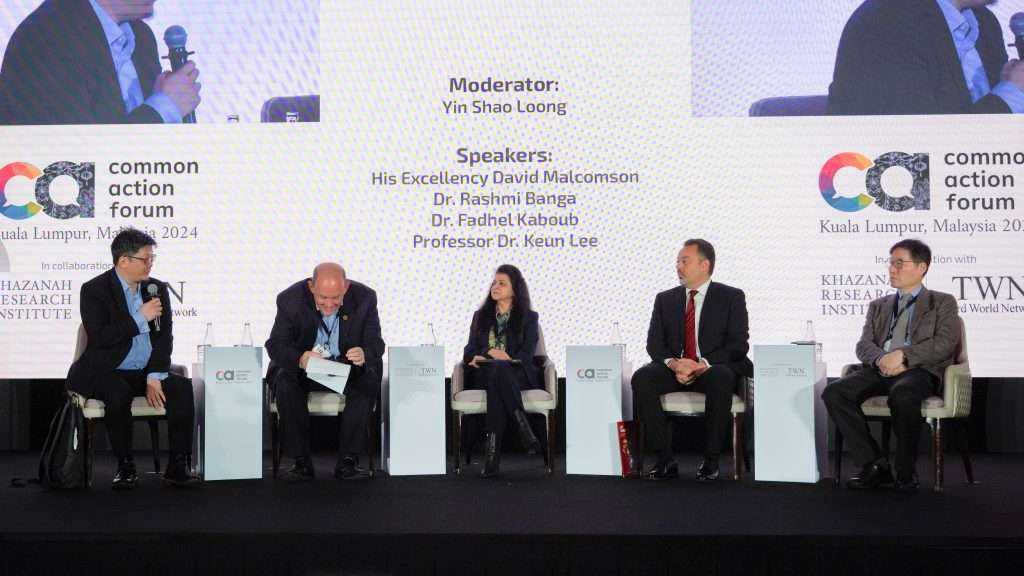
As South Korea’s Professor Keun Lee said over tea time in Johor yesterday, efforts by the state and societies are needed, otherwise a purely FDI-driven production is unlikely to yield much innovation. Dr Keun Lee has shown that while Penang embarked on the semiconductor industry in 1972, unlike Taipei and Shenzhen which pursued a more robust approach of acquiring knowledge and know-hows, Penang did not have its TSMC or Huawei equivalents.
Over the weekend, I had a chat with someone working for a big tech company on cybersecurity, providing AI training. Yet she believes that her job will soon be replaced by AI.
In April this year, I visited a very important technology company in Shenzhen and was shown a 120-procedure factory line. I was told that five years ago, the line needed 80 workers. Now, only 14 workers are needed.
Therefore, we do need to watch out for job redundancies caused by application of technology. We need to create jobs that pay adequate wages to build a middle class as envisioned.
Fourth, Asia needs care economy and it should be funded by taxes
Care economy is an area where decent jobs could be created as many of the care jobs are not easy to be replaced by robots. But care economy needs progressive taxation to sustain.
Apart from suppressing wages to grow exports, Asia grew rich in part thanks to a reasonably well-educated young workforce. Another American economist Nicholas Eberstadt explains in his piece “The Age of Depopulation” in Foreign Affairs that except for sub-Saharan Africa, the rest of the world is set to see depopulation if it has yet experienced so.
Asia is in general growing older at a rapid pace without necessarily growing richer.
Part of China’s economic challenge now is that consumer demand has shrunk at an unprecedented level due to the lack of confidence in the future, the savings being tied up with the property sector which saw across-the-board decline in value, and the worries about caring for themselves as they age due to the lack of social security and the insufficient or costly provision of various care services.
In short, the consumers won’t spend if they don’t feel economically secure and if they have no positive feeling or confidence about the future.
Asian economies will have to build and fund a more robust care economy to cater for the need for healthcare, aged care, and childcare, which will not only provide a strong sense of economic security but also good for female labour participation in the economy, as well as helping to encourage fertility to address the population challenge.
But to fund a robust care economy, taxes will have to be imposed. Over the decades, Asian economies have been competing to lower taxes for the rich and offering tax holidays for multinationals.
To build a stronger future together, businesses will have to work with governments to exchange tax cuts for economic security for the wider group of the citizens and a more secured business environment for everyone.
Democratising prosperity nationally and internationally
I have outlined the four major challenges facing Asian economies that require us to rise to the occasion to craft a New Deal for Asia.
As we are now grappling with a more hostile global trade environment, Japan, South Korea and China – the former latecomers in industrialisation and now the leading technology owners and FDI investors themselves, may have to be clear-eyed and not engage in what the South Korean economist Ha-Joon Chang called “kicking away the ladder”.
I am sometimes concerned about negotiations of free trade agreements. Mostly they were transactional. I hope the former latecomers-turned-technology owners, namely Japan, South Korea and China, would realise that a more equitable trade relationship in Asia, with extensive sharing of knowledge and joint R&D, would build supply chain resilience for the benefit of all.
Likewise, upper middle income countries like Malaysia would do well if we think more strategically about how to prosper-thy-neighbours. Instead of just thinking strictly about investment and trade in a transactional manner, we should broaden our conversations to a wide range of “economic cooperations”.
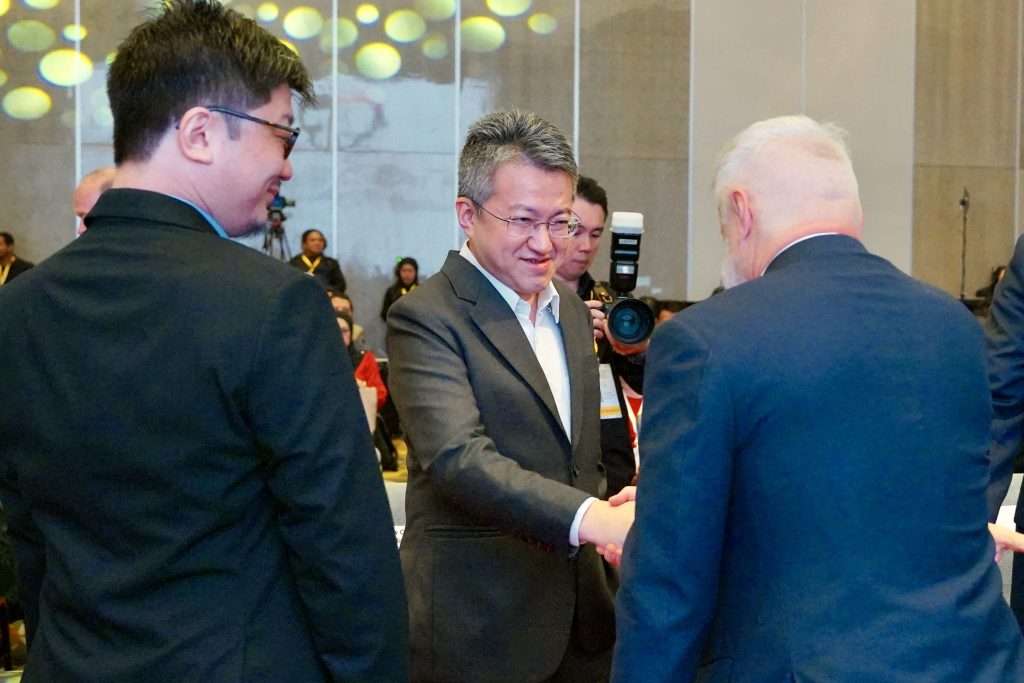
I witnessed the conversation between Prime Minister Anwar and Brazilian Foreign Affairs Minister Mauro Vieira, and I am deeply touched by the shared understanding of the need to do things differently, and to make the Malaysia-Brazil economic cooperation a shining example of Global South cooperation.
I would like more ASEAN member-states having a clear commitment to work with the less developed countries within ASEAN, such as Laos, Cambodia and Timor-Leste, so that ASEAN is not just a platform for meetings but one that really brings actual outcomes and benefits for ordinary people. It is my hope that Malaysia’s 2025 chairmanship of ASEAN could herald a new era of economic cooperation with the aim of turning ASEAN into a middle class society by 2045, with no one left behind.
As Bangladesh turns the page after deposing its former dictator, Malaysia should seriously consider not to see Bangladesh as a source for the importation of cheap labour but to invest in Bangladesh to allow for lower-end economic activities to happen there. It will also enable Malaysia to move into more innovation-intensive endeavours with less unskilled foreign labour.
This at the same time will bring development to Bangladesh and allow Asia to grow together to achieve a New Deal for Asia.
If we were to succeed in what we have discussed, we will have to confront the ideas of neoliberalism such as to understand the adverse effects of austerity and the shrinking of the state. We will have to see that the state has an important role in sustaining aggregate demand in times of downturns, as John Maynard Keynes taught us, and investing in public goods to ensure economic security as well as growth. The state also has a role to play in investing in innovation, as suggested by Mariana Mazzucato.
Former British prime minister Margaret Thatcher, a leading promoter of neoliberalism, said “there is no such thing as society”. Yet, for Asia to face all the challenges outlined earlier, there are indeed societies at the domestic level, and more importantly, it is for us to shape an international agenda to keep nations working together as a community for prosperity, democracy and a new development order.
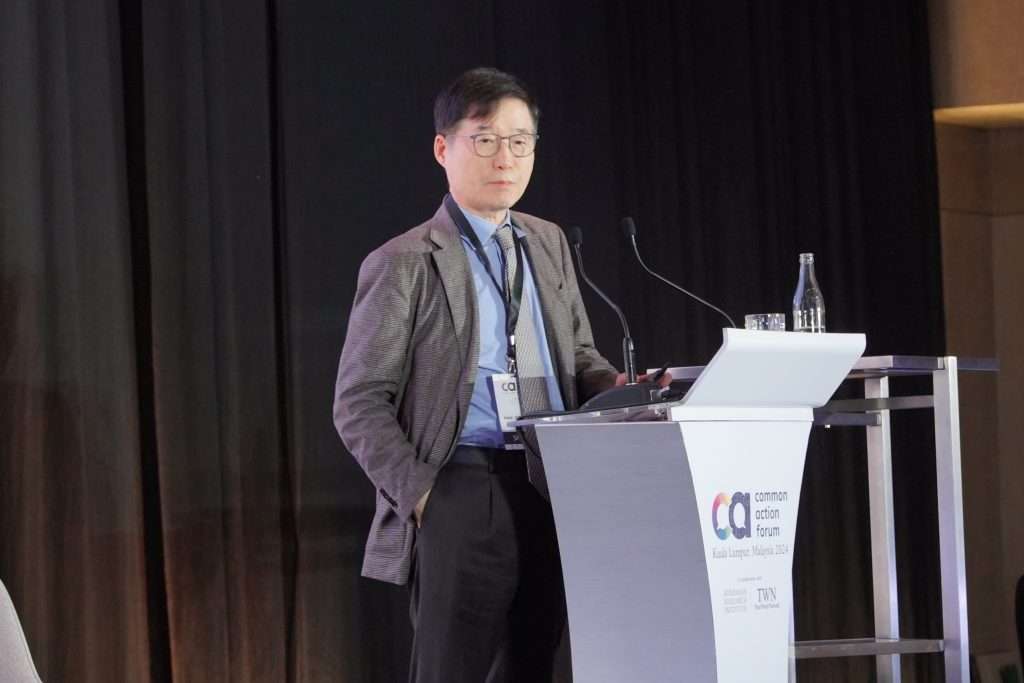
This is my speech delivered at the Common Action Forum 2024 on December 2, 2024.

