
The Social Exchange: Strengthening Malaysia’s Social Finance Ecosystem
The Social Exchange is a great initiative by the Securities Commission Malaysia (SC). It is not just an initiative, but a statement that we are not just thinking about the…

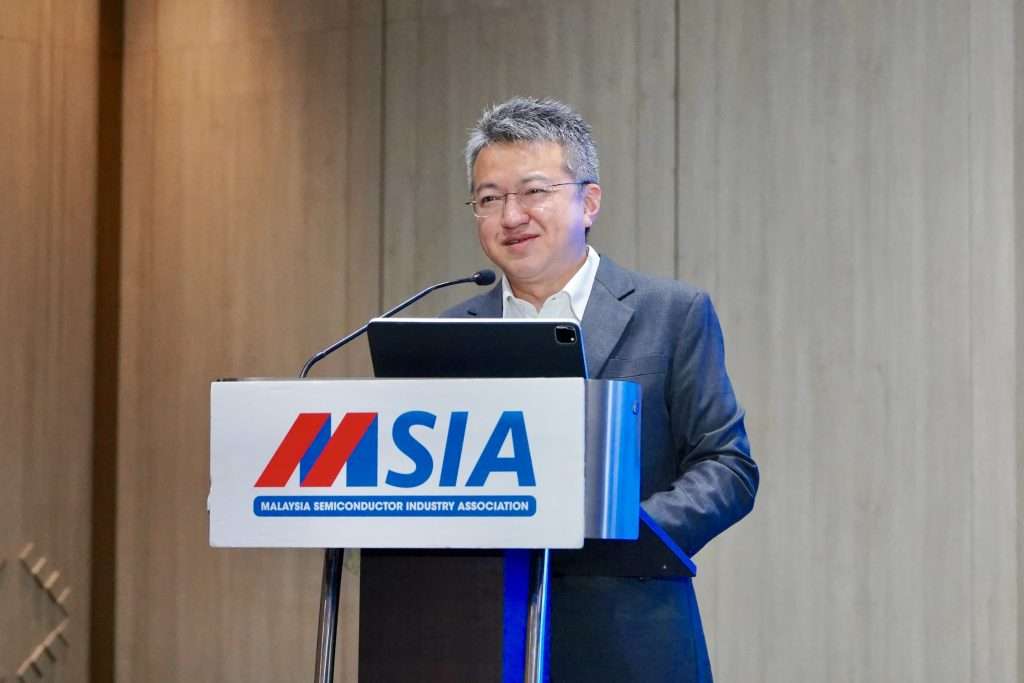
I will touch upon the semiconductor industry a lot, but at the same time, I am fully aware that it is the full gamut of E&E capabilities including EMS, equipment, and even metal fabrication that makes Malaysia such a strong supply chain.
Semiconductors are going to be more important following the AI boom and the increased use of chips in automotive, medical devices and practically everything else that matters in our daily lives.
We gather here as the year of 2024 is nearing an end to celebrate a great year for the Malaysian semiconductor industry. MSIA was in the Netherlands a while ago, and then in Brazil recently with Prime Minister Datuk Seri Anwar Ibrahim. Both occasions were to promote deeper collaboration in the semiconductor and related industries with as many partner countries as possible.
Becoming an indispensable technology innovator
Today, we gather here to ponder a much more difficult global environment to navigate, with the semiconductor industry at the centre of a technology war among major advanced economies.
The Economist weekly wrote that Donald Trump is the most consequential American President since Franklin D Roosevelt, and that “he has defined a new political era, for America and the world.”
We are entering into a different era with a new set of operating assumptions, and be ready to adjust, adapt and even reset.
The semiconductor sector offers huge opportunities for Malaysia, though the geopolitical risks are a double-edged sword.
In the first place, the current wave of massive investments in the semiconductor industry in Malaysia was initially prompted by the relocation of the supply chain away from China due to US-China geopolitical competition. The competition opened up a window of opportunity for Malaysia.
However, if Malaysia continues to stay as an outsourced manufacturing site and not move up the value chain to be involved in more sophisticated processes – time and tide wait for no man – in no time we will lose relevance, either because the supply chain is home-shored to the United States and the like, or the manufacturing work is outsourced to other cheaper cost locations.
Malaysia, especially the Malaysian semiconductor industry, will be caught in the middle again if we don’t rise to the occasion to create Malaysian technology.
As you are by now familiar with my book Second Takeoff, the first Takeoff did not last in part because Corporate Malaysia was more interested in stock market play and real estate bubbles, it was also because when China joined the World Trade Organisation in 2001, Malaysia – the middle tech nation – was bypassed.
As Korean Professor Keun Lee made clear to us, while Penang started the semiconductor industry way back in 1972, much earlier than Taiwan in the 1980s, and Shenzhen in the late 1990s, Malaysia does not have a Samsung, TSMC nor Huawei to speak about. In other words, Malaysia did not grow our own technology.
Building the 10+100 Malaysian champions
This time, with a progressive federal government, we want to build local capabilities and Malaysian technology, and through this process, create our own regional or even global semiconductor giants.
Prime Minister Dato’ Seri Anwar Ibrahim said when he announced the National Semiconductor Strategy that his ambition was to see the creation of 10 Malaysian technology companies with US 1 billion revenue and 100 similar companies with RM 1 billion revenue annually. The government is committed to creating an innovative Malaysian semiconductor scene with all initiatives supporting this goal.
In fact, Malaysia already has a strong semiconductor equipment industry as a result of the mature ecosystem in the northern states of Penang and Kedah. We should aim for these equipment makers to venture into horizontal innovations, like what ViTrox, a semiconductor company which focuses mainly on visual inspection, is now using their technologies to make robots for the agriculture sector. Technology and innovation should centre around solving the daily problems or challenges of society.
We need to change the way we see industrial policy. Now that industrial policy is seen as legitimate even in the United States and European Union, we will have to look at the toolbox of industrial policy and find what suits Malaysia. We may not have much fiscal space for subsidies and cash grants, but if we combined industrial policy with investments from public and private sources, we could still put together something very vibrant.
We need to explore ways to effectively link public and private funds. It is crucial that investments are not solely grant-based, as relying heavily on grants risks fostering a culture of “grantrepreneurs.” Instead, we should identify mechanisms for collaboration where both private and government funds can co-invest strategically to drive growth and innovation.
Prime Minister had in August announced that he had requested the Finance Ministry to work on a GEAR-Up programme, which aims to channel RM 120 billion over a period of 5 years, to drive growth for Malaysian technologies. MITI is also collaborating with the Securities Commission via the CoSIF fund under New Industrial Master Plan 2030 (NIMP 2030) to tap into the capital market to boost local manufacturing activities.
Building the middle ground to avoid bifurcation
It is unfortunate that the geopolitical rivalry of the United States and China will result in some forms of bifurcation of the supply chain.
Malaysia will need to engage with likeminded partners to keep the middle ground intact as much as possible. It is in the interest of partners such as Brazil, India, ASEAN Member States, and even European Union, United Kingdom, Japan and Korea, to ensure that there will still be a middle ground and the world doesn’t bifurcate.
Prime Minister is keenly aware of the need to build the middle ground, especially in the context of the semiconductor industry. In Prime Minister’s and Malaysia’s engagements with Brazil, India, South Korea, the Netherlands and etc, semiconductor diplomacy features prominently. Even more will have to be done on this front to keep the supply chain open.
Finally, Malaysia should aim to become a hub for global semiconductor businesses and innovation that holds the world together. Beyond “US for US” and “China for China”, there will be room for “Malaysia and ASEAN for the region and potentially for the rest of the world.” Building that space is more urgent than anytime prior to this.
I hope the MSIA, the semiconductor industry and the whole E&E industry can help Malaysia to prosper, to have a second economic takeoff, and to navigate and thrive in this difficult global environment.
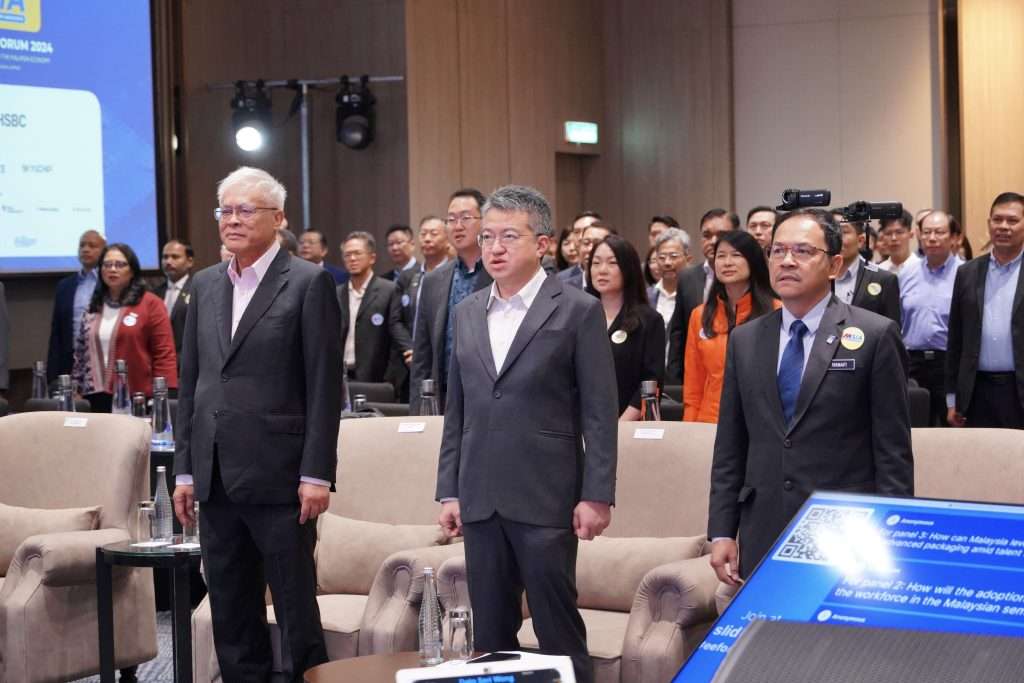
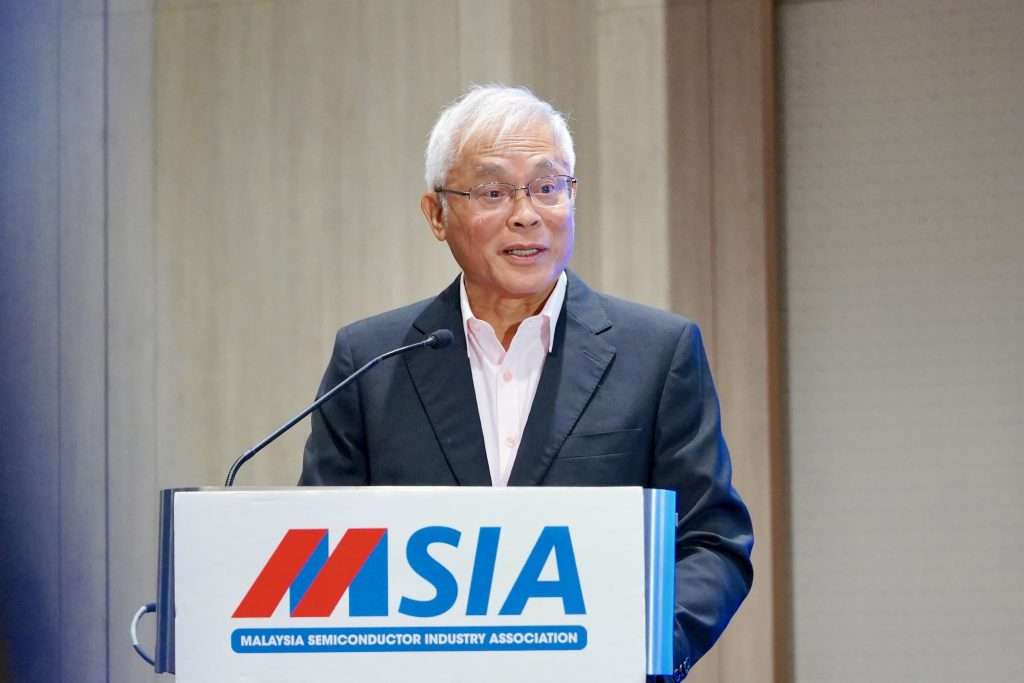
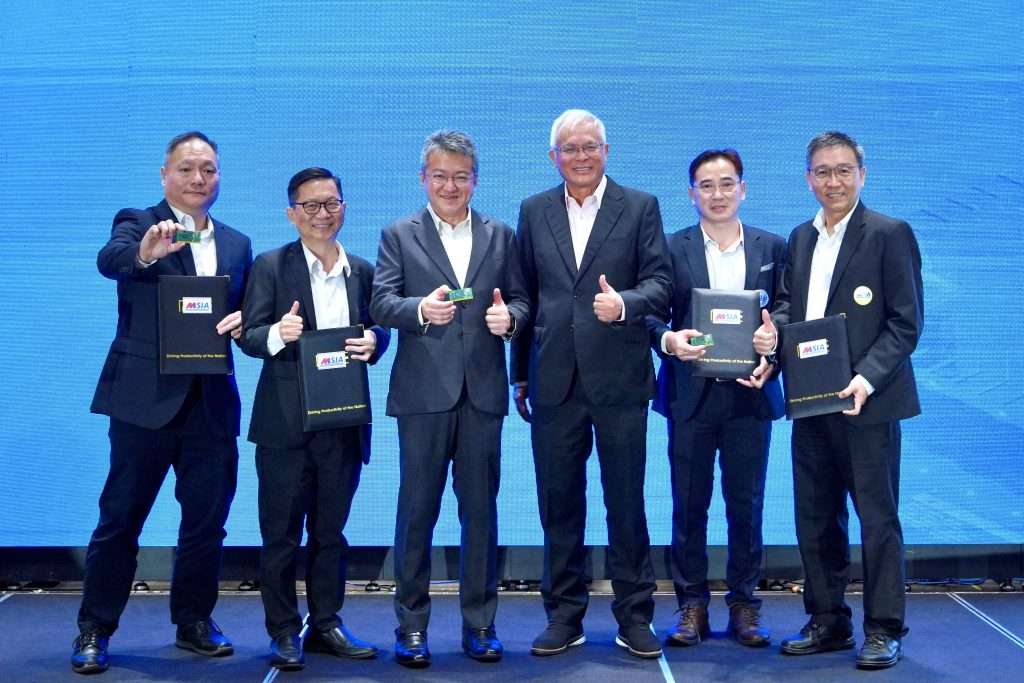
This is my speech delivered at Malaysia Semiconductor Industry Association (MSIA) E&E Forum 2024 on November 15, 2024.

