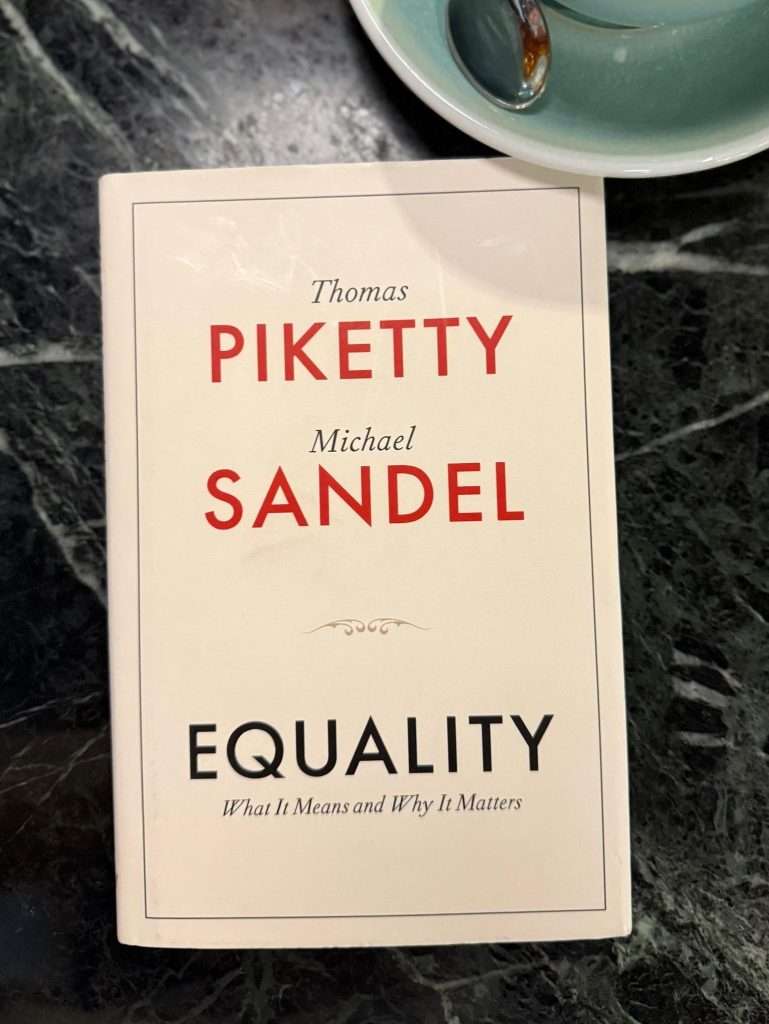
I would like to encourage you to pick up a copy of “Equality: What It Means and Why It Matters” by Thomas Piketty and Michael Sandel.
Piketty is known for tomes like “Capital in the Twenty-First Century” (2014) which even avid readers like me struggle to finish. But his concerns about inequality certainly had a huge impact on how we interpret the world.
Sandel’s “What Money Can’t Buy: The Moral Limits of the Market” (2013) continues to be one of my most favorite books of all time. We have commodified everything from healthcare to education to every facet of our lives. The more we can decommodify our lives, the less money matters, and the happier we will be.
Both of them also published a few more very well argued books in the last decade.
But for when we are too busy to read long, thick, and serious books, here is a good option. “Equality: What It Means and Why It Matters” is the transcript of the conversation between Piketty and Sandel in Paris in May 2024. This 119-page book is very easy to read yet no less profound.
The world is now stuck in a hole. Unfettered globalisation, commodification of our daily lives, and the blind faith in the market, created winners and losers.
Winners thought they became winners through their hard work and merits, thus viewing the losers unworthy of anything. The winners in the market process blame the losers for “not having a degree” or “not working hard”. They lose the sense of solidarity, empathy and humanity, which is the foundation of a decent democracy and a peaceful society.
Losing everything, including their jobs, identity, and dignity, the losers felt insulted and demoralised, and angry that the world is against them. They rose against the world by supporting populists and demagogues who promised to fight for them and to restore their dignity. Sadly, only those populists and demagogues gain the benefits of power.
I hope all policy makers will take a look at this very stimulating book.
Happy Weekend.