
The Social Exchange: Strengthening Malaysia’s Social Finance Ecosystem
The Social Exchange is a great initiative by the Securities Commission Malaysia (SC). It is not just an initiative, but a statement that we are not just thinking about the…

The global energy crisis caused by the West Asia crisis as a result of the US-Israeli attacks on Iran which in turn forced the Islamic republic to close the Strait of Hormuz, despite a two-week ceasefire, may have lasting impacts on the global energy landscape.
There will be many measures to take in addressing the crisis. One important move for us which may carry a deeper meaning of our identity is to embrace batik more actively and in a more meaningful way.
Therefore it was not a trivial matter when Deputy Prime Minister Datuk Seri Fadillah Yusof announced that civil servants are encouraged to wear batik, or at least corporate shirts, to keep themselves comfortable with the air-conditioner temperature of government offices raised to 24℃ or 25℃.
Former Singapore Prime Minister Lee Kuan Yew famously demanded that temperature for air-conditioners be set at lower temperatures as he assumed that the human and economic development of the West was made possible thanks to cooler weather. There is of course no serious scientific evidence to support this.
Perhaps that generation of leaders across the board, whether in government or business, felt that suits and neckties were symbols of decorum, discipline, and status.
Western suits are not suitable for our hot climate. To remedy this, Malaysian buildings set their in-door temperature to freezing cold levels.
Today, Singapore’s Parliament and the civil service are less formal in their dress code while in Indonesia, batik is considered equal to suit and tie at almost all occasions. And most offices in the West have long departed from everyday suit and tie.
For more than a century, many societies have attempted to have a national attire that does not require wearing a tie, which is deemed a western symbol. Cases in point are Nehru jackets in India or Mao suits in China as well as the Barong in the Philippines. And, of course, Iranians refused to wear ties after the Iranian Revolution as a symbol of protest against Western imperialism.
Malaysia’s journey took a bit longer.
On 5 December 2022, at his first Cabinet meeting, Prime Minister Dato’ Seri Anwar Ibrahim and his newly sworn-in cabinet members posed for the official portrait without wearing ties. In February 2023, the Dewan Rakyat Speaker, following the PM’s lead, officially made neckties optional for all MPs during parliamentary sittings.
Nearly three years later, effective October 2025, Malaysian civil servants are no longer required to wear ties during regular working hours or when attending meetings.
As far as batik is concerned, Malaysia Batik Day on 3 December was first established in 2021. From that year onwards, civil servants are encouraged to wear batik on Thursdays. Since August 2023, it has been compulsory for civil servants to wear batik on Thursdays, and they are encouraged to wear them on other days.
The then National Resources, Environment and Climate Change Minister Nik Nazmi Nik Ahmad explained that the Government wanted to implement a 2014 circular to set the temperature of government offices at 24℃ or 25℃.
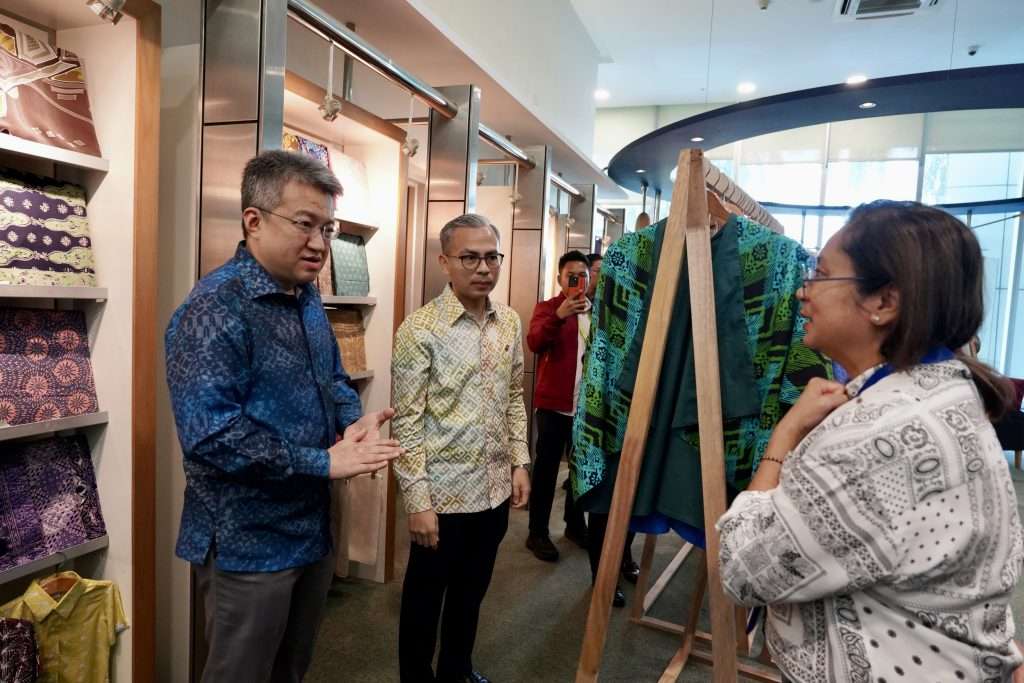
Just recently, Communications Minister Datuk Fahmi Fadzil and I visited the Batik Lestari Gallery located at the Ground Floor of Securities Commission Malaysia. It is a great initiative that supports local batik artisans and elevates Malaysian batik to a level appropriate for today’s sustainability and heritage agenda.
The energy crisis will not simply go away. We will have to adapt to face the crisis for the long haul. If wearing batik means cooling systems can be set to a higher temperature and thus help with energy conservation, it is good for the climate while also helping with demand management of energy.
The ultimate goal is to build energy resilience for Malaysia. One of the ways is by wearing batik.

