
The Social Exchange: Strengthening Malaysia’s Social Finance Ecosystem
The Social Exchange is a great initiative by the Securities Commission Malaysia (SC). It is not just an initiative, but a statement that we are not just thinking about the…

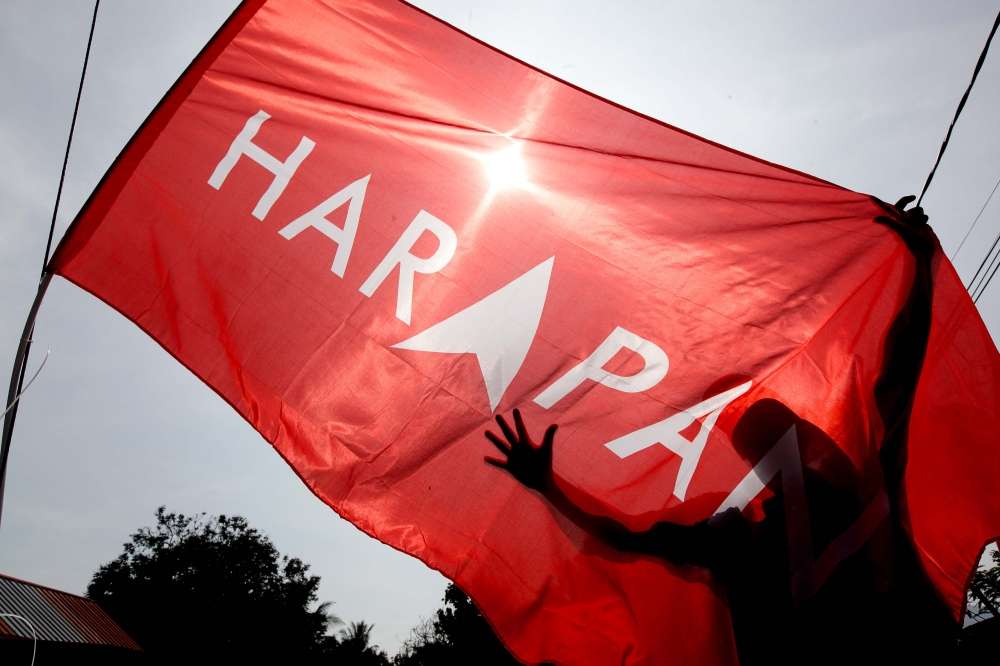
Pakatan Harapan held its convention in Johor Bahru on May 17 to set the tone and direction for the coming general election.
This series is a reflection on the political journey we have gone through together that allowed us to arrive at this juncture. In the previous piece, I shared how Prime Minister Najib Razak, who successfully split PAS in June 2015 and crushed Pakatan Rakyat by imprisoning Anwar Ibrahim, could never have imagined Pakatan Harapan winning power on 9 May 2018.
𝗣𝗮𝗸𝗮𝘁𝗮𝗻 𝗛𝗮𝗿𝗮𝗽𝗮𝗻’𝘀 𝗹𝗼𝘄𝗲𝘀𝘁 𝗲𝗯𝗯
After the collapse of Pakatan Rakyat and the formation of Pakatan Harapan, the coalition’s lowest point came during the Kuala Kangsar and Sungai Besar twin by-elections on 18 June 2016.
While PAS and Pakatan went their separate ways in June 2015, UMNO was also facing internal turmoil. July 2015 was probably the most troubling time for Najib as the 1MDB scandal was at its height, with multiple international media reporting about the case to the most minute details, and UMNO was facing tremendous pressure from both the public and internal party divisions. On 28 July, Najib sacked then-Deputy Prime Minister Muhyiddin Yassin and Sabahan minister Shafie Apdal.
The Kuala Kangsar and Sungai Besar by-elections were such a letdown to Pakatan Harapan because despite such a massive scandal – one that made international headlines and even led to the dismissal of a Deputy Prime Minister – Barisan Nasional won comfortably.
Both were three-cornered fights between Barisan Nasional, Pakatan Harapan, and PAS. This led Najib to believe that cooperating with PAS to engineer three-way contests would be his best strategy against Pakatan Harapan. This eventually shaped the three-cornered fights we saw in the 2018 general election.
Najib’s strategists believed that although many Malay voters were unhappy with him, PAS which had already begun covertly cooperating with Najib would absorb anti-UMNO Malay votes. Believing that the Opposition no longer had Anwar as their unifying figure, he was sure that BN could still hold on to power.
𝗧𝗵𝗲 𝗰𝗵𝗮𝗹𝗹𝗲𝗻𝗴𝗶𝗻𝗴 𝗽𝗲𝗿𝗶𝗼𝗱
I still vividly remember how challenging that period was. It was during this difficult period that Lim Kit Siang boldly reached out to the UMNO factions dissatisfied with Najib, including Dr Mahathir Mohamad and Muhyiddin, in search of a way forward.
But with Mahathir being Anwar’s long-time adversary, and arguably the DAP’s too, bringing everyone together was extremely difficult.
Bersatu was formed in September 2016. We went through countless rounds of negotiations in the first half of 2017, before eventually reaching a consensus in the wee hours of 14 July that Mahathir would be Pakatan Harapan chairman.
Another six months passed before Pakatan Harapan leaders decided during an internal meeting held on 1 and 2 December to hold a convention in January 2018. The plan at the time was to announce the prime ministerial candidate at the convention, and to bring together forces aligned with Mahathir and Anwar.
However, PKR deputy president Azmin Ali and Bersatu president Muhyiddin were not agreeable to this Mahathir-Anwar package. In fact, they actually wanted a Muhyiddin-as-prime-minister and Azmin-as-deputy-prime-minister arrangement. Now you can probably read this as a foreshadow to the 2020 Sheraton Move.
From prison, Anwar insisted that the announcement of Mahathir as the prime minister candidate and him as the future prime minister candidate should only be made after Pakatan Harapan’s seat negotiations had been completed. He also demanded that PKR contest more seats than Bersatu.
𝗧𝗵𝗲 𝘁𝘂𝗿𝗻𝗶𝗻𝗴 𝗽𝗼𝗶𝗻𝘁
From 1 December 2017 to 6 January 2018, Pakatan Harapan leaders responsible for seat negotiations worked through the year-end holidays. The Pakatan Harapan convention was scheduled for 7 January 2018. But by 6pm the day before, negotiations collapsed and an agreement could not be reached. The convention was almost called off.
Eventually, upon mediation from Anthony Loke and then-PKR secretary-general Saifuddin Nasution, all parties returned to the table. Negotiations were concluded around 8pm, and the convention proceeded as planned the next day.
The Pakatan Harapan convention on 7 January 2018 was a huge turning point for the coalition. With the announcement of a Prime Ministerial candidate and the completion of seat negotiations for all parliamentary seats in the Peninsula, Pakatan Harapan could immediately mobilise its election machinery, reversing the pessimism that had plagued the Opposition coalition since the 2013 general election. Against all odds, we managed to provide hope for Malaysia.
Let me also share this bit of information. After BN’s historic defeat, I heard from some UMNO leaders that Najib was actually considering dissolving the Parliament immediately after the Kuala Lumpur Southeast Asian (SEA) Games in August 2017. Had he done so, with Pakatan Harapan and Mahathir’s forces yet to be fully aligned, Barisan Nasional’s chances of victory would have been much higher. And Najib could have still been prime minister today.

